
Euparius
Schoenherr, C.J., 1823
fungus weevils
Species Guides
5- Euparius lugubris(Black and White Fungus Weevil)
- Euparius marmoreus(Marbled Fungus Weevil)
- Euparius paganus(Rustic Fungus Weevil)
- Euparius pictus(fungus weevil)
- Euparius subtesselatus
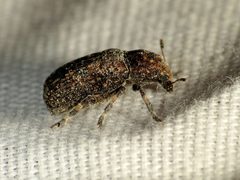
Euparius is a of fungus weevils ( Anthribidae) comprising more than 70 described distributed across the Americas, Asia, Australia, and Africa. These beetles are distinguished from true weevils (Curculionidae) by their unelbowed . The genus was established by Schoenherr in 1823. Species within this genus are generally small, with some tropical representatives measuring only 3-4 mm in length.


Pronunciation
How to pronounce Euparius: /juːˈpɛəriəs/
These audio files are automatically generated. While they are not always 100% accurate, they are a good starting point.
Identification
Members of Euparius can be distinguished from true weevils ( Curculionidae) by their straight, unelbowed . Within Anthribidae, specific identification to level requires examination of subtle morphological characters; the lacks the dramatically elongated rostrum found in some other anthribid genera. Size varies considerably, with some species being notably small (~3-4 mm) for the family.
Images
Distribution
Found in the Americas, Asia, Australia, and Africa. Specific records include Colombia (CO), Vermont (United States), and the United States generally.
Similar Taxa
- PhaenithonAnother of Anthribidae; both are small fungus weevils that can be found on bark and decaying wood, requiring careful examination to distinguish.
- Curculionidae (true weevils)Superficially similar weevil-like beetles, but distinguished by elbowed with a distinct club, versus the straight, unelbowed antennae of Euparius and other Anthribidae.
More Details
Taxonomic note
The Euparius was established by Carl Johan Schoenherr in 1823. Despite containing over 70 , the group remains understudied, with limited working on the and identification of these beetles.