
Euparius subtesselatus
Euparius subtesselatus is a of fungus weevil in the Anthribidae, a group of beetles characterized by elongated snouts and association with fungi. This species belongs to a of small to medium-sized weevils that are often overlooked due to their cryptic habits. Like other members of Anthribidae, it lacks the geniculate (elbowed) typical of true weevils in Curculionidae.
Pronunciation
How to pronounce Euparius subtesselatus: //juːˈpeəriəs ˌsʌbtɛsəˈleɪtəs//
These audio files are automatically generated. While they are not always 100% accurate, they are a good starting point.
Identification
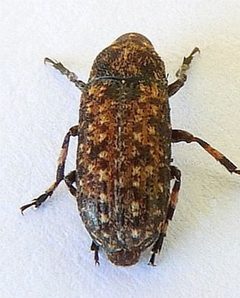
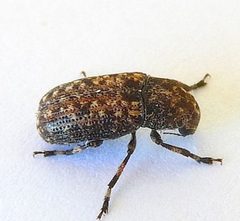
Distinguished from true weevils (Curculionidae) by straight or weakly clubbed that are not elbowed. Within Anthribidae, separation from congeneric such as Euparius marmoreus requires examination of subtle differences in body sculpturing, pattern , and possibly genitalia. The tessellated pattern suggested by the species name may be less pronounced than in E. marmoreus, which has distinct marbled coloration.
Images
Appearance
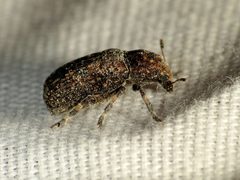
Small with an elongated, somewhat cylindrical body typical of fungus weevils. The body surface appears to have a tessellated or checkered pattern of markings, as suggested by the epithet "subtesselatus" (meaning somewhat tessellated or mosaic-like). are straight or only slightly clubbed, not elbowed as in true weevils. Exact coloration and body proportions require specimen examination.
Habitat
details are not documented for this . Other Euparius species are associated with dead wood, fungi, and decaying plant material in forested and wooded environments.
Distribution
Distribution records are sparse. The Euparius occurs in North America, with related documented in the eastern and central United States. Specific locality data for E. subtesselatus requires verification from specimen records.
Similar Taxa
- Euparius marmoreusSimilar size and body form; distinguished by more pronounced marbled or mottled coloration versus the subtler tessellated pattern of E. subtesselatus. Both occur in similar and require careful examination to separate.
- Other Anthribidae generaGeneral resemblance in body shape and antennal structure; Euparius is distinguished by specific combinations of rostral and antennal characters that require technical keys.
More Details
Taxonomic note
The Euparius is one of several anthribid genera in North America that remain understudied. boundaries and diagnostic characters are based primarily on morphological examination of and scattered collection records. The species epithet "subtesselatus" refers to a body surface with a somewhat checkered or mosaic-like sculpturing pattern.