
Euparius paganus
Gyllenhal in Schoenherr, 1833
Rustic Fungus Weevil
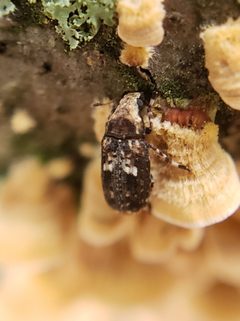
Euparius paganus is a of fungus weevil in the Anthribidae, commonly known as the Rustic Fungus Weevil. It is native to North America, with confirmed records from Canada (New Brunswick, Québec) and the United States. As a member of Anthribidae, it is associated with fungal , though specific ecological details remain limited in published literature.


Pronunciation
How to pronounce Euparius paganus: /juːˈpeɪɹiəs pəˈɡeɪnəs/
These audio files are automatically generated. While they are not always 100% accurate, they are a good starting point.
Identification
Distinguishing Euparius paganus from requires examination of subtle morphological characters including body proportions, punctation patterns, and antennal structure. The Euparius contains multiple North American ; accurate identification to species level typically requires reference to specialized taxonomic keys for Anthribidae and comparison with vouchered specimens.
Images
Habitat
Associated with fungal environments, consistent with the Anthribidae's of fungus weevils. Specific microhabitat preferences for this are not well documented.
Distribution
North America. Confirmed present in Canada: New Brunswick, Québec. Distribution in the United States is implied by North American records but specific state-level documentation is not provided in available sources.
Similar Taxa
- Euparius marmoreusAnother North American Euparius ; both share the and general fungus weevil , requiring careful examination to distinguish
- Other Anthribidae generaFungus weevils in related share similar body form and fungal associations, necessitating attention to antennal club structure and rostrum characteristics for generic placement
More Details
Taxonomic Status
Listed as provisionally accepted in Catalogue of Life; GBIF recognizes as accepted with exact match to Euparius paganus Gyllenhal, 1833
Data Availability
321 iNaturalist observations suggest moderate citizen science documentation, though detailed biological studies appear limited in accessible literature