
Eudiagogus pulcher
Fåhraeus, 1840
Beautiful Clown Weevil, Sesbania Clown Weevil
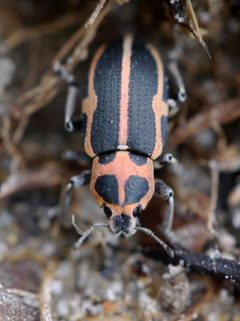
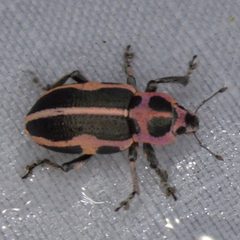
Eudiagogus pulcher is a of broad-nosed weevil in the Curculionidae, first described by Fåhraeus in 1840. It is commonly known as the Beautiful Clown Weevil or Sesbania Clown Weevil. The species is native to North America, with documented occurrence records from Alabama, Arizona, California, Florida, and Georgia. It is a moderately well-observed species with over 1,400 citizen science records on iNaturalist.
Pronunciation
How to pronounce Eudiagogus pulcher: /juːdiːəˈɡoʊɡəs ˈpʊlkər/
These audio files are automatically generated. While they are not always 100% accurate, they are a good starting point.
Identification
Eudiagogus pulcher can be distinguished from other Eudiagogus and similar broad-nosed weevils by its characteristic coloration and patterning that contribute to its "Beautiful Clown Weevil." The Eudiagogus belongs to the tribe Eudiagogini within the Entiminae, and species-level identification typically requires examination of genitalia and detailed morphological features. The specific epithet "pulcher" (Latin for "beautiful") references its distinctive appearance.
Images
Distribution
North America: documented from Alabama, Arizona, California, Florida, and Georgia based on occurrence records. The appears to have a broad distribution across the southern and western United States.
Host Associations
- Sesbania - likely herbivory "Sesbania Clown Weevil" suggests association with Sesbania legumes, though specific feeding records require verification
Similar Taxa
- Other Eudiagogus speciescongeneric share the broad-nosed weevil and tribe-level characteristics; require detailed examination for separation
- Other Entiminae weevilsbroad rostrum and general body form shared across ; Eudiagogini tribe members particularly similar
More Details
Taxonomic history
The was described by Olof Immanuel von Fåhraeus in 1840, a Swedish entomologist who contributed significantly to early coleopteran . The Eudiagogus remains in the tribe Eudiagogini, a relatively small group within the diverse Entiminae.
Nomenclatural note
The "Sesbania Clown Weevil" appears in some sources while "Beautiful Clown Weevil" is the preferred common name on iNaturalist; the relationship to Sesbania plants warrants further investigation.