
Exosternini
Bickhardt, 1914
clown beetles
Genus Guides
5- Baconia
- Operclipygus
- Phelister(clown beetles)
- Strigister
- Yarmister(clown beetles)
Exosternini is a tribe of clown beetles ( Histeridae) containing at least 60 and approximately 800 described . Members are predominantly small, predatory beetles with diverse body forms ranging from compact and rounded to bizarrely flattened. The tribe includes notable genera such as Baconia, known for brilliant metallic coloration, and Operclipygus, characterized by clamshell-like . Many species remain poorly known due to extreme rarity and tropical distribution.
Pronunciation
How to pronounce Exosternini: //ɛk.soʊˈstɜr.nɪˌnaɪ//
These audio files are automatically generated. While they are not always 100% accurate, they are a good starting point.
Identification
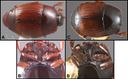
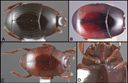
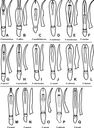
Exosternini can be distinguished from other histerid tribes by combinations of characters including antennal club structure, prosternal configuration, and male genitalia . The tribe includes with highly variable body plans: some are compact and rounded like poppy seeds (e.g., Operclipygus), while others exhibit strongly flattened, disc-like bodies adapted for pursuing prey under bark (e.g., many Baconia species). Male genitalia often provide species-level diagnostic characters; for example, the Phelister panamensis group is characterized by unique hooks on the apex of the male 8th sternite.
Images
Habitat
are diverse and -dependent. Members of Baconia are found under bark of recently killed trees, pursuing wood-boring prey. of Operclipygus occur in forest litter and decomposing organic matter. The Phelister panamensis group is frequently associated with of domestic cattle. Many species inhabit tropical forest , with some showing specific associations with particular decomposition stages or microhabitats.
Distribution
Primarily distributed in the Americas, with major radiations in Central and South America. The Baconia occurs mainly in North and South America. Operclipygus is predominantly Neotropical. The Phelister panamensis group ranges from the United States south to Argentina, with some showing expanded distributions associated with human activity. Many species remain known from extremely limited geographic areas, with nearly half of some newly described species known from only one or two specimens.
Diet
Predatory on other insects, particularly larvae. Baconia stalk and consume wood-boring beetles and their larvae; some are attracted to bark beetle , using these chemical cues to locate prey. Operclipygus species are voracious of fly larvae, including those in decomposing matter. The flattened body form of many species is an for pursuing prey in confined spaces under bark.
Behavior
Some exhibit specialized predatory : Baconia species use their flattened bodies to pursue prey deep under bark, and some are drawn to bark beetle , apparently using these as to locate prey. Many species are secretive and rarely encountered in the open. Activity patterns are poorly documented for most species.
Ecological Role
that help control of other insects, including pestiferous flies and wood-boring beetles. Their abundance in tropical forest litter and decomposition systems suggests significant roles in nutrient cycling and dynamics. Some have been proposed for use in forensic investigations due to their association with carrion-feeding fly larvae.
Human Relevance
Potential utility in due to on carrion-associated fly larvae. Some have expanded distributions in association with domestic cattle. The tribe has been the focus of intensive taxonomic research revealing extraordinary undocumented biodiversity, with studies demonstrating that many tropical insect groups contain 5-6 times more species than currently catalogued.
Similar Taxa
- HisteriniAnother tribe in Histerinae; distinguished by different antennal club and prosternal structures, and typically more robust body forms
- PlatysomatiniTribe in Histerinae with flattened body forms convergent with some Exosternini; distinguished by different antennal and leg
More Details
Taxonomic research significance
Exosternini has become a focal group for demonstrating the magnitude of undocumented tropical biodiversity. Comprehensive revisions have revealed that -level diversity is routinely underestimated by 5-6 fold. The tribe exemplifies challenges in tropical insect : extreme rarity, limited collecting, and cryptic boundaries.
Conservation implications
Many Exosternini are known from single localities or few specimens, making them inherently vulnerable to loss. The rapid disappearance of tropical forests threatens to erase species before they are scientifically described.
Sources and further reading
- BugGuide
- Wikipedia
- iNaturalist taxon
- NCBI Taxonomy
- Catalogue of Life
- Uncategorized | Blog - Part 31
- Little did we know about beetle diversity: Astonishing 138 new species in a single genus | Blog
- 85 New Species of Jewel-like Beetles
- Unearthed: A treasure trove of jewel-like beetles | Blog
- Recognition and revision of the Phelister panamensis group (Histeridae: Histerinae: Exosternini)