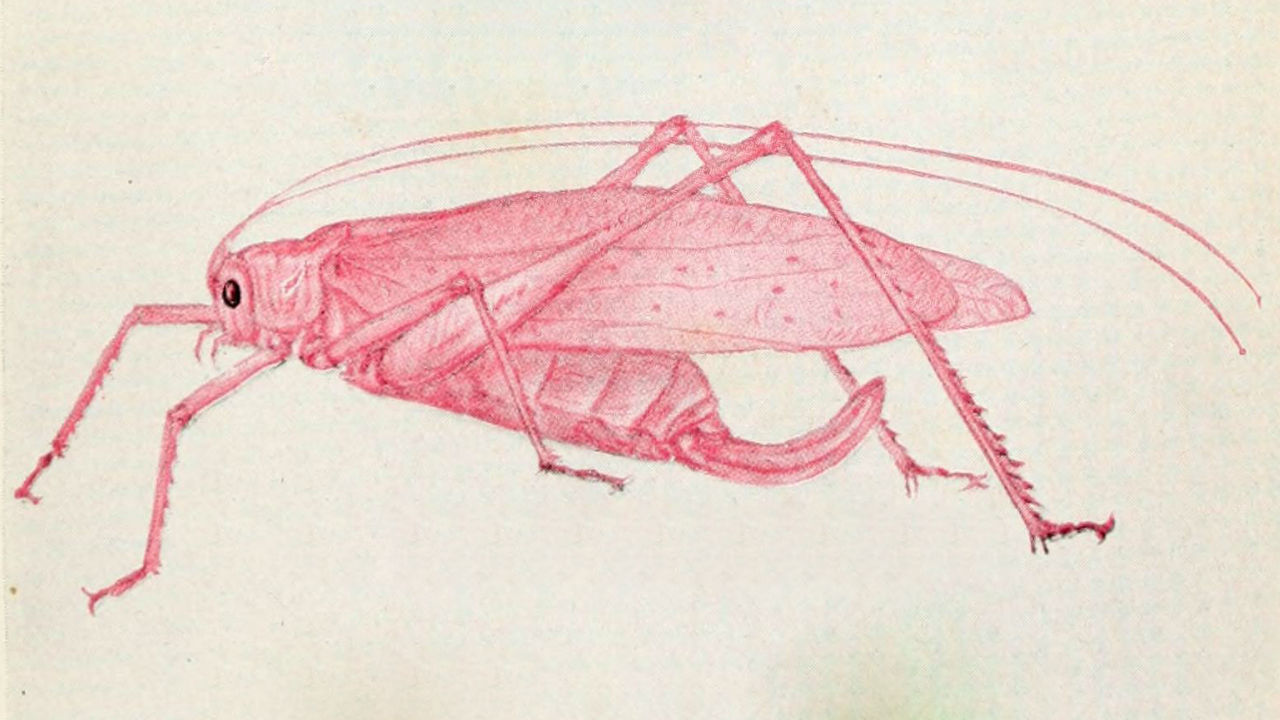
variegated shield-back, variegated shieldback
Idiostatus variegatus, commonly known as the variegated shield-back, is a shield-backed katydid in the family Tettigoniidae. The species was described by Caudell in 1907. It belongs to the genus Idiostatus, which comprises shield-backed katydids characterized by their distinctive pronotal morphology.
Wymore's Shieldback
Idiostatus wymorei is a shieldback katydid described by Caudell in 1934. It belongs to the genus Idiostatus, a group of flightless katydids characterized by reduced wing pads and shield-like pronota. The species is known from California and is among the least documented members of its genus, with very few observations recorded.
Apache Bush Katydid
Insara apache, the Apache Bush Katydid, is a phaneropterine katydid in the family Tettigoniidae. It is a small to medium-sized bush katydid found in North America, with records from Arizona and potentially broader southwestern distribution. As a member of the subfamily Phaneropterinae, it belongs to a group commonly known as bush katydids or false katydids, which are typically associated with shrubby vegetation.
Elegant Bush Katydid
Insara elegans, commonly known as the elegant bush katydid, is a phaneropterine katydid in the family Tettigoniidae. The species occurs in western North America, with records from Mexico and several southwestern U.S. states including Arizona, California, Colorado, and Nevada. It is recognized as prey of the digger wasp Sphex lucae, which paralyzes katydids to provision its nest. Two subspecies have been described: I. e. elegans and I. e. consuetipes.
Gemmate Bush Katydid
Insara gemmicula, commonly known as the gemmate bush katydid, is a species of phaneropterine katydid in the family Tettigoniidae. It is native to North America, with records from California and other western regions. Like other members of the genus Insara, it is a bush-dwelling katydid associated with woody vegetation. The species was described by Rehn and Hebard in 1914.
juniper bush katydid
Insara juniperi is a phaneropterine katydid in the family Tettigoniidae, commonly known as the juniper bush katydid. The species is native to North America and was described by Hebard in 1935. It belongs to the genus Insara, a group of bush katydids. The specific epithet "juniperi" suggests an association with juniper vegetation.
Tessellate Bush Katydid
Insara tessellata, commonly known as the tessellate bush katydid, is a species of phaneropterine katydid in the family Tettigoniidae. It is found in North America, with confirmed records from Arizona. The species was described by Hebard in 1935. As a member of the subfamily Phaneropterinae, it belongs to a group of katydids commonly referred to as bush katydids, which are typically associated with shrubby vegetation.
guinea-cypress katydid, striped bush katydid
Inscudderia strigata is a phaneropterine katydid in the family Tettigoniidae, commonly known as the guinea-cypress katydid or striped bush katydid. It is native to North America, with documented records from Florida and Georgia. The species was described by Scudder in 1898 and belongs to a genus of bush katydids characterized by distinctive morphological features.
Lactista elota is a species of band-winged grasshopper in the family Acrididae, described by Otte in 1984. It belongs to the genus Lactista, which includes other small, desert-adapted grasshoppers such as L. aztecus. The species is recorded from Mexico, though specific details about its biology and appearance remain poorly documented in available literature.
Lactista gibbosa is a species of band-winged grasshopper in the family Acrididae. The genus Lactista includes small to medium-sized grasshoppers with distinctive wing patterns, typically found in arid and semi-arid regions of the southwestern United States and Mexico. Members of this genus are characterized by their banded hindwings and relatively short flight distances compared to some other grasshopper groups.
Lea is a monotypic genus of katydids in the family Tettigoniidae, established by Caudell in 1906. The genus contains a single species, Lea floridensis, commonly known as the Florida true katydid. These insects belong to the subfamily Pseudophyllinae and tribe Pterophyllini. The genus is native to the southeastern United States, with confirmed records from Florida and Georgia.
bush-crickets, katydids
Leptophyes is a genus of bush-crickets in the family Tettigoniidae, erected by Franz Xaver Fieber in 1853. Members are characterized by exceptionally long antennae, often exceeding four times the body length, and elongated legs with tibiae twice the length of the pronotum. The genus belongs to the subfamily Phaneropterinae, a group known for acoustic communication involving sound production by both sexes. Species occur across Africa, Asia, and Europe.
Speckled Bush-cricket
Leptophyes punctatissima, commonly known as the Speckled Bush-cricket, is a flightless bush-cricket species distributed across most of Europe. It belongs to the subfamily Phaneropterinae and exhibits distinctive acoustic behavior where both sexes stridulate. Males produce calling songs to which females respond with brief chirps, creating a duetting communication system. The species has been studied extensively for its auditory physiology and directional hearing capabilities.
Leptysma marginicollis hebardi is a subspecies of grasshopper in the family Acrididae, described by Rehn & Eades in 1961. It belongs to the genus Leptysma, a group of grasshoppers characterized by slender bodies and association with moist habitats. The subspecies designation indicates geographic or morphological variation within the broader species L. marginicollis.
Sierra Pinta Giant Sand-treader Cricket
Macrobaenetes sierrapintae is a species of camel cricket in the family Rhaphidophoridae, endemic to the Sierra Pinta mountains of southwestern Arizona. Described by Tinkham in 1962, it belongs to a genus specialized for life in sandy desert habitats. The species is among the largest members of the genus Macrobaenetes. Like other members of this genus, it possesses enlarged hind tarsi adapted for locomotion on loose sand.
Coachella giant sand treader cricket
Macrobaenetes valgum, the Coachella giant sand treader cricket, is a species of cave cricket in the family Rhaphidophoridae. It is endemic to the United States and has been recorded from California. Like other members of its genus, it is adapted to arid sandy habitats. The species was described by Strohecker in 1960.
Alabama Spur-throat Grasshopper
Melanoplus alabamae is a species of spur-throated grasshopper in the family Acrididae. It is found in North America, with records from Alabama. The species was described by Hebard in 1920. Like other members of the subfamily Melanoplinae, it possesses a peg-like process projecting from beneath the head.
Melanoplus cinereus cyanipes is a subspecies of spur-throated grasshopper in the family Acrididae. It occurs in the western United States, with records from California and Washington. The subspecies was described by Scudder in 1897 and is distinguished from other M. cinereus populations by leg coloration and geographic isolation. It is a member of the diverse Melanoplus genus, which contains over 200 North American species.
Pasture Spur-throat Grasshopper, Pasture Grasshopper, Little Pasture Locust
Melanoplus confusus, commonly known as the Pasture Spur-throat Grasshopper, is a species of short-horned grasshopper in the subfamily Melanoplinae. It is found in North America, with records from the northeastern and central United States. The species inhabits grassland environments, particularly pastures, as suggested by its common names. It was described by Scudder in 1897.
Melanoplus davisi is a species of spur-throated grasshopper in the family Acrididae, described by Hebard in 1918 from the southeastern United States. It belongs to the large genus Melanoplus, which contains numerous economically and ecologically significant grasshopper species. The species appears to be relatively poorly documented in the primary grasshopper literature of the western United States, suggesting it may be of limited distribution or abundance compared to more widespread Melanoplus species.
contrasting spur-throat grasshopper
Melanoplus discolor, known as the contrasting spur-throat grasshopper, is a species of spur-throated grasshopper in the family Acrididae. It is native to North America and has been documented in Colorado, Texas, and northeastern Mexico. The species belongs to the Melanoplus discolor species group, which includes seven newly described flightless grasshopper species from central Texas, highlighting the ecological uniqueness of the Edwards Plateau region.
Larger Fork-tail Grasshopper, Fork-tailed Locust
Melanoplus furcatus is a species of spur-throated grasshopper in the family Acrididae, native to North America. It is commonly known as the larger fork-tail grasshopper or fork-tailed locust. The species was first described by Scudder in 1897 and is classified within the genus Melanoplus, a diverse group of North American grasshoppers.
Glaucus-legged Spur-throat Grasshopper
Melanoplus glaucipes is a species of short-horned grasshopper in the subfamily Melanoplinae, commonly known as the glaucus-legged spur-throat grasshopper. The species was described by Scudder in 1875. It belongs to the large genus Melanoplus, which contains many North American grasshopper species. The specific epithet glaucipes refers to the bluish-gray coloration of the legs.
Gurney's short-wing grasshopper, Gurney's spurthroat grasshopper
Melanoplus gurneyi is a species of spur-throated grasshopper in the family Acrididae, first described by Strohecker in 1960. It is a member of the large and diverse genus Melanoplus, which contains many North American grasshopper species. The species is characterized by reduced wing development, reflected in its common name. It has been documented in Florida and is considered part of the North American grasshopper fauna.
Weldon short-wing grasshopper
Melanoplus mirus is a species of spur-throated grasshopper in the family Acrididae. It is endemic to North America, with confirmed records from North Carolina. The species is characterized by reduced wing development, as indicated by its common name. It was described by Rehn and Hebard in 1916.
Oklahoma spur-throat grasshopper
Melanoplus oklahomae is a species of spur-throated grasshopper described by Hebard in 1937. It belongs to the diverse genus Melanoplus, which contains many North American grasshopper species. The species is endemic to Oklahoma and surrounding regions in North America. Like other members of its genus, it possesses the characteristic spur on the prosternum that gives the group its common name.
Packard's grasshopper
Melanoplus packardii, commonly called Packard's grasshopper, is a species of spur-throated grasshopper in the family Acrididae. It is distributed across North America, with records from Oregon to Texas and north to Saskatchewan. Like other members of the genus Melanoplus, it is a ground-dwelling grasshopper associated with grassland habitats.
Melanoplus peninsularis is a species of grasshopper in the family Acrididae, described by Hubbell in 1932. The specific epithet "peninsularis" refers to its restricted distribution on the Florida peninsula. It is a member of the large genus Melanoplus, which contains many North American grasshopper species. The species appears to be uncommon, with limited observation records.
Plebeian Short-wing Grasshopper, Plebeian Spur-throat Grasshopper
Melanoplus plebejus is a species of spur-throated grasshopper in the family Acrididae, native to North America. It is commonly known as the plebeian short-wing grasshopper or plebeian spur-throat grasshopper. The species belongs to a large genus of grasshoppers that are ecologically significant in western North American grasslands. Specific biological details for this species remain limited in the available literature.
Snow's Short-wing Grasshopper
Melanoplus snowii is a species of short-winged grasshopper in the family Acrididae, endemic to North America. The species is named in honor of the collector, with the specific epithet 'snowii' reflecting this dedication. Very little detailed biological information is available for this species compared to its congeners. It belongs to a genus containing numerous economically significant grasshopper species, though M. snowii itself has not been documented as a pest.
bush crickets, bog bush crickets, meadow bush crickets
Metrioptera is a genus of bush crickets (Tettigoniidae) in the tribe Platycleidini, commonly known as bog and meadow bush crickets. The genus contains approximately 10 species distributed across Eurasia, including notable species such as Metrioptera brachyptera (the bog bush cricket), M. roeselii (Roesel's bush cricket), and M. bicolor. Species within this genus have been extensively studied as model organisms for understanding insect dispersal, population genetics, and acoustic communication. Several species exhibit wing dimorphism, with both fully winged and short-winged or flightless forms occurring within populations.
Roesel's Bush-cricket
Metrioptera roeselii, commonly known as Roesel's Bush-cricket, is a medium-sized bush-cricket native to continental Europe that has undergone significant range expansion in northern Europe since the 1980s. The species is characterized by a distinctive yellow-green coloration with a prominent yellow stripe along the lateral margin of the pronotum. It exhibits wing dimorphism, with both short-winged (brachypterous) and long-winged (macropterous) forms occurring in populations; the long-winged form is associated with range expansion. The species has been introduced to Britain and Scandinavia, with genetic evidence indicating human-mediated dispersal in some isolated populations.
bog katydid
Metrioptera sphagnorum, the bog katydid, is a shield-backed katydid in the family Tettigoniidae. It is found in North America, particularly in Canada. The species is notable for its distinctive acoustic behavior: males produce a prolonged trill song that alternates regularly between two intensity levels, with corresponding audio and ultrasonic frequency modes.
angle-wing katydids, angle-winged katydids
Microcentrini is a tribe of katydids within the subfamily Phaneropterinae, commonly known as angle-winged katydids. The tribe comprises approximately 17 genera and 102 species with a Neotropical distribution, centered in the Amazon Rainforest. Members are characterized by their distinctive wing morphology, with expanded, often angular forewings. The tribe has been the subject of recent taxonomic revision, with numerous new genera and species described from Amazonian localities.
California Angle-winged Katydid, California Anglewing
Microcentrum californicum, the California Angle-winged Katydid, is the smallest member of its genus, with adults measuring 41-52 millimeters. Males possess a brown stridulation area on the shoulders, similar to the Lesser Angle-wing Katydid, but the species' geographic range prevents confusion. It is nocturnal and attracted to lights.
Texas Angle-wing Katydid, Texas Anglewing
Microcentrum minus, commonly known as the Texas Angle-wing Katydid, is the smallest species in the genus Microcentrum. It is a leaf-mimicking katydid found only in extreme south Texas, making it the most geographically restricted member of its genus in the United States. Like other angle-wing katydids, it exhibits cryptic green coloration and produces sound through stridulation.
lesser angle-winged katydid, Lesser Anglewing
Microcentrum retinerve, commonly known as the lesser angle-winged katydid, is a North American species in the family Tettigoniidae. Adults range from 44-53 millimeters in length, smaller than the related Greater Angle-wing Katydid (M. rhombifolium). Males produce a calling song consisting of 3-5 rapid pulses repeated about once per second. The species is found in deciduous forest habitats from the eastern United States west to Missouri and extreme east Texas.
Microtes is a genus of band-winged grasshoppers (Acrididae) endemic to western North America. The genus contains at least three described species, including the little buzzer grasshopper (M. occidentalis). Members of this genus are placed in the tribe Sphingonotini within the subfamily Oedipodinae, a group characterized by enlarged hind wings with dark bands used in courtship displays.
little buzzer grasshopper
Microtes occidentalis, commonly known as the little buzzer grasshopper, is a species of band-winged grasshopper in the family Acrididae. It is native to North America, with documented presence in California. The species is classified as vulnerable by NatureServe.
Western Striped Cricket
Miogryllus lineatus, commonly known as the western striped cricket, is a cricket species in the family Gryllidae. It is native to North America and has been recorded from the southwestern United States. The species is relatively poorly documented compared to other North American crickets, with limited published information on its biology and ecology.
eastern striped cricket
Miogryllus saussurei, commonly known as the eastern striped cricket, is a cricket species in the family Gryllidae. It is native to the eastern United States. The species was described by Scudder in 1877.
Scaly Crickets and Allies
Mogoplistidae is a family of scaly crickets within the superfamily Grylloidea, comprising over 370 species in approximately 30 genera worldwide. The family is considered monophyletic and sister to the true crickets (Gryllidae). Members are distinguished by scales covering the abdomen and parts of the thorax, resembling those of Lepidoptera. The family includes three subfamilies: Mogoplistinae, Malgasiinae (restricted to Madagascar and Indian Ocean islands), and the extinct †Protomogoplistinae known from Burmese amber.
Timberlake's Desert Long-horned Grasshopper
Mohavacris timberlakei is a species of desert grasshopper in the family Tanaoceridae, endemic to arid regions of California. It belongs to a small family of specialized orthopterans adapted to extreme desert environments. The species was described by Rehn in 1948 and named in honor of the entomologist P.H. Timberlake, who extensively collected insects in the southwestern United States.
Chaparral Monkey Grasshopper
Morsea californica, commonly known as the chaparral monkey grasshopper, is a species of monkey grasshopper in the family Eumastacidae. It is endemic to California and associated with chaparral habitats. The species was described by Scudder in 1898. As a member of the Eumastacidae, it belongs to a family of grasshoppers known for their slender bodies and preference for woody vegetation.
Catalina monkey grasshopper
Morsea catalinae, described by Rentz and Weissman in 1981, is a species of monkey grasshopper endemic to the family Eumastacidae. The common name "Catalina monkey grasshopper" references its association with Santa Catalina Island, California. Like other eumastacids, it possesses a distinctive body plan with elongated hind legs adapted for jumping and a pronotum that extends backward over the abdomen. The species has been documented from California and is considered present in North America, though specific habitat details and ecological data remain limited in published literature.
yavapai monkey grasshopper
Morsea dumicola, commonly known as the yavapai monkey grasshopper, is a species of monkey grasshopper in the family Eumastacidae. The species was described by Rehn and Hebard in 1918. It is found in North America, with confirmed records from Arizona. Monkey grasshoppers (family Eumastacidae) are a distinctive group of orthopterans characterized by their aposematic coloration and diurnal habits.
kaibab monkey grasshopper
Morsea kaibabensis is a species of monkey grasshopper in the family Eumastacidae, endemic to the Kaibab Plateau region of northern Arizona. The species was described by Rehn and Grant in 1958 and is one of few documented members of its genus. Monkey grasshoppers in this family are characterized by their distinctive body proportions and reduced wing development compared to typical grasshoppers.
Piute Monkey Grasshopper
Morsea piute, commonly known as the Piute Monkey Grasshopper, is a species of monkey grasshopper in the family Eumastacidae. The species was described by Rehn & Grant in 1958. It belongs to the genus Morsea, which comprises small, slender grasshoppers often associated with arid and semi-arid habitats. The specific epithet "piute" references the Paiute people, indigenous to regions of the Great Basin where this species occurs. Like other eumastacids, it exhibits the characteristic reduced wings and jumping hind legs typical of this orthopteran group.
tamalpais monkey grasshopper
Morsea tamalpaisensis, described by Rehn & Hebard in 1909, is a species of monkey grasshopper endemic to the family Eumastacidae. The common name references Mount Tamalpais in California, indicating a restricted geographic distribution. Like other eumastacids, this species exhibits the characteristic morphology of monkey grasshoppers, including a compact body form and specialized hind legs adapted for jumping. The species has been documented through limited observations, with 20 records in iNaturalist suggesting it is not frequently encountered.
ant crickets
Myrmecophilus is a genus of minute crickets commonly known as ant crickets, containing the majority of species in the family Myrmecophilidae. These insects are obligate myrmecophiles, living exclusively within ant colonies. Species vary in size from less than 1.5 mm to 4.7 mm, generally correlating with the body size of their host ant species. The genus has a worldwide distribution with numerous described species across Europe, Asia, North America, and other regions.