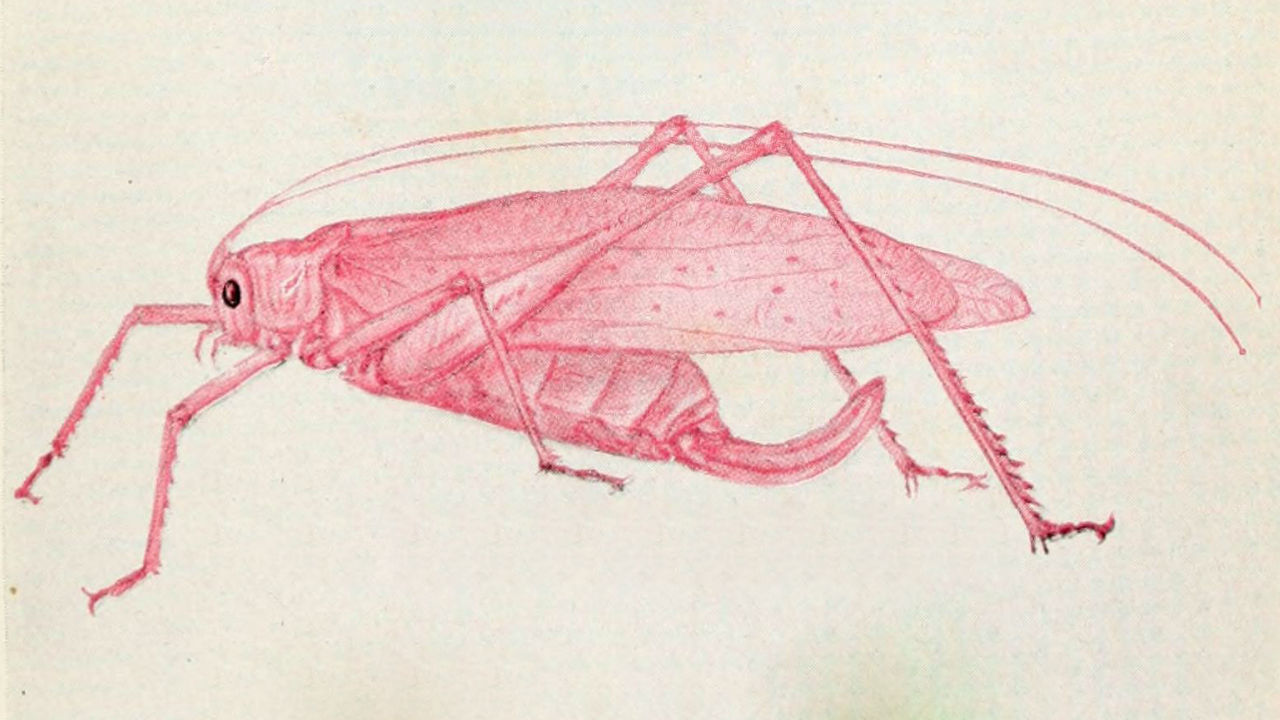
Esselenia vanduzeei violae is a subspecies of grasshopper in the family Acrididae, subfamily Gomphocerinae, described by Rentz in 1966. It is known from California in western North America. The genus Esselenia is classified within the short-horned grasshoppers, a diverse group of primarily herbivorous insects. This subspecies represents one of the few documented taxa within this genus, which appears to have restricted geographic distribution.
Tawney's Cave Cricket, tawneys cave cricket
Euhadenoecus fragilis is a species of camel cricket in the family Rhaphidophoridae. It was described by Hubbell in 1978. The species is known from cave environments in North America, with documented occurrences in Virginia. Like other members of the family Rhaphidophoridae, it is wingless and adapted to subterranean habitats.
Allegheny Crevice Cricket, puteanus camel cricket
Euhadenoecus puteanus is a species of camel cricket in the family Rhaphidophoridae. It is known from the Appalachian region of eastern North America, particularly in North Carolina. The species is commonly referred to as the Allegheny Crevice Cricket, reflecting its association with rocky crevice habitats. It belongs to a genus of cave- and crevice-dwelling camel crickets.
Monkey Grasshoppers, Matchstick Grasshoppers
Eumastacidae is a family of grasshoppers commonly known as monkey grasshoppers or matchstick grasshoppers. They are considered primitive within the Orthoptera and are characterized by their distinctive body posture with thin legs held at right angles to the body, often near the horizontal plane. Many species are wingless. The family exhibits its greatest diversity in the Neotropics, with most species inhabiting tropical regions. They feed on algae, ferns, and gymnosperms—ancient plant groups that reflect their primitive evolutionary status.
Ball's monkey grasshopper, Pinaleno monkey grasshopper
Eumorsea is a genus of monkey grasshoppers in the family Eumastacidae, established by Hebard in 1935. The genus contains at least three described species, including Eumorsea balli, Eumorsea pinaleno, and Eumorsea truncaticeps. These grasshoppers are found in the southwestern United States and northwestern Mexico. Members of Eumastacidae are characterized by their slender bodies and elongated hind legs adapted for jumping.
huachuca monkey grasshopper, Ball's monkey grasshopper
Eumorsea balli is a species of monkey grasshopper (family Eumastacidae) native to North America. It was described by Hebard in 1935 and is commonly known as the huachuca monkey grasshopper or Ball's monkey grasshopper. The species belongs to a group of orthopterans characterized by their distinctive morphology and behavior.
Pinaleno monkey grasshopper
Eumorsea pinaleno is a wingless grasshopper endemic to the Pinaleno Mountains of Arizona. It belongs to the family Eumastacidae, commonly known as monkey grasshoppers. The species is known from very few observations, and its biology remains poorly documented.
Even-spurred Ground Crickets
Eunemobius is a genus of ground crickets in the family Trigonidiidae, established by Hebard in 1913. The genus is commonly known as Even-spurred Ground Crickets and contains at least four recognized species distributed across North America. These small crickets are part of the diverse ground cricket fauna and are characterized by features of their hind leg spurs.
Carolina Ground Cricket
Eunemobius carolinus, the Carolina ground cricket, is a small orthopteran in the family Trigonidiidae. It is widely distributed across North America, with records from Alabama, Arizona, Arkansas, California, Colorado, and other states. The species was first described by Scudder in 1877 and includes three recognized subspecies. It inhabits ground-level environments typical of ground crickets.
Eupnigodes is a genus of slant-faced grasshoppers in the family Acrididae. The genus contains at least two described species, both restricted to the western United States. As members of the subfamily Gomphocerinae and tribe Aulocarini, these grasshoppers share morphological features with related genera in this group. The genus was established by McNeill in 1897.
Sierran White-whiskered Grasshopper
Eupnigodes sierranus, commonly known as the Sierran White-whiskered Grasshopper, is a species of slant-faced grasshopper in the family Acrididae. It is native to the western United States, with confirmed records from California. The species was first described by Rehn and Hebard in 1909. It belongs to the subfamily Gomphocerinae, a group characterized by their slanted facial profiles.
Floridacris is a genus of grasshoppers in the family Acrididae, subfamily Melanoplinae. It was described by Otte in 2014 and is endemic to Florida. The genus belongs to the tribe Melanoplini, which contains many North American short-horned grasshoppers. Based on iNaturalist observations, the genus appears to be represented by relatively few documented occurrences.
Wingless Florida Grasshopper
Floritettix aptera, commonly known as the wingless Florida grasshopper, is a species of spur-throated grasshopper in the family Acrididae. The specific epithet "aptera" refers to its wingless condition, a distinctive trait among grasshoppers. The species is endemic to Florida and belongs to the genus Floritettix, which is part of the diverse Melanoplinae subfamily.
Floritettix floridana is a species of grasshopper in the family Acrididae, described by Otte in 2014. It belongs to the genus Floritettix, which is part of the Melanoplinae subfamily. The species is known from Florida, though detailed information about its biology and ecology remains limited.
Floritettix hubbelli is a species of grasshopper in the family Acrididae, subfamily Melanoplinae. It was described by Hebard in 1936 and is endemic to Florida. The genus Floritettix is part of the Melanoplini tribe, a diverse group of North American grasshoppers. The species is documented in entomological collections and has been recorded in citizen science observations.
Floritettix osceola is a species of grasshopper in the family Acrididae, described by Otte in 2014. It belongs to the genus Floritettix, a North American group of spur-throated grasshoppers in the subfamily Melanoplinae. The species is known from a small number of observations in Florida, suggesting it may be uncommon or have a restricted range. Like other melanopline grasshoppers, it is likely associated with grassland or open habitat vegetation.
Floritettix saturiba is a species of grasshopper in the family Acrididae, described by Hebard in 1936. It belongs to the subfamily Melanoplinae, a diverse group of North American grasshoppers. The species is known from Florida, with limited observational records available.
raspy crickets, leaf-rolling crickets
Gryllacrididae is a family of non-jumping orthopterans in the suborder Ensifera, commonly known as raspy crickets or leaf-rolling crickets. The family occurs worldwide and contains over 600 species across more than 90 genera, organized into two subfamilies: Gryllacridinae and Hyperbaeninae. Members are distinguished by their unique ability to produce silk independently from other insects, which they use to construct shelters from folded leaves or to seal burrows in soil, sand, or wood. Historically, the family was broadly defined to include Stenopelmatidae and Rhaphidophoridae, which are now recognized as separate families.
True crickets
Gryllidae, commonly known as true crickets, is a family of insects in the order Orthoptera, suborder Ensifera. Members are characterized by long, thread-like antennae, cylindrical bodies, enlarged hind femora adapted for jumping, and forewings modified for sound production. The family has undergone significant taxonomic revision, with many former subfamilies (including tree crickets, ground crickets, and sword-tail crickets) elevated to family status. True crickets exhibit worldwide distribution except Antarctica and are known for their acoustic communication, with males producing species-specific calling songs to attract females.
crickets
Gryllidea is an infraorder within the suborder Ensifera comprising crickets and their relatives. The group contains two superfamilies—Grylloidea (true crickets, tree crickets, scaly crickets, and allies) and Gryllotalpoidea (mole crickets and ant crickets)—encompassing more than 6,000 described species globally. Members are characterized by acoustic communication through stridulation, with males producing species-specific songs to attract mates. The infraorder originated in the Triassic period approximately 250–200 million years ago and represents the third most diverse group within Orthoptera.
Field Crickets
Gryllinae, commonly known as field crickets, is a subfamily of true crickets in the family Gryllidae. These insects are characterized by their ability to produce sound through stridulation of the forewings, with males generating species-specific calling songs to attract females. Field crickets exhibit hemimetabolous development, with nymphs undergoing multiple molts before reaching adulthood. The subfamily includes numerous genera distributed worldwide, with many species serving as important model organisms in studies of behavioral ecology, neurophysiology, and evolutionary biology.
Gryllita is a genus of crickets in the family Gryllidae, subfamily Gryllinae, established by Hebard in 1935. The genus contains at least 26 described species, with most described by Otte & Perez-Gelabert in 2009. Species are distributed in the southwestern United States and Mexico, with some Caribbean records. The type species is Gryllita arizonae, commonly known as the Arizona cricket.
Arizona cricket
Gryllita arizonae, known as the Arizona cricket, is a species of cricket in the subfamily Gryllinae. The species was described by Hebard in 1935 and is found in North America. It is a member of the genus Gryllita, which belongs to the family Gryllidae. Available information on this species is limited, with only 19 observations recorded on iNaturalist as of the source date.
mole crickets
Gryllotalpa is a genus of mole crickets in the family Gryllotalpidae, characterized by highly modified fossorial front legs adapted for digging. The genus contains numerous species distributed across Africa, Europe, Asia, Australia, and the Americas, with several cryptic species complexes distinguished primarily by song patterns. Species within this genus are found in diverse habitats ranging from steppe zones and wet grasslands to gardens and agricultural fields. Some species, particularly Gryllotalpa gryllotalpa, are of conservation concern in parts of Europe while also being agricultural pests in other regions.
Gryllus alogus is a species of field cricket described by Rehn in 1902. It is currently recognized as a synonym of Gryllus vocalis (Gryllus (Gryllus) vocalis). The species was originally described from specimens collected in California. As a member of the genus Gryllus, it shares the general characteristics of field crickets, including acoustic communication through stridulation.
Short-tailed Field Cricket
Gryllus brevicaudus, commonly known as the short-tailed field cricket, is a species of field cricket in the family Gryllidae. It was described by Weissman, Rentz, and Alexander in 1980. The species is found in North America, with distribution records from California. As a member of the genus Gryllus, it shares characteristics with other field crickets, though specific details distinguishing it from congeners are limited in available sources.
Western Trilling Cricket
Gryllus integer, the western trilling cricket, is a field cricket species distinguished by its nearly continuous trilling song rather than discrete chirps. It occurs in the western United States, where males produce species-specific calling songs to attract females. The species has been extensively studied for its behavioral ecology, including alternative mating tactics, personality traits, and antipredator responses. Populations show geographic variation in song structure, with some California males producing chirped songs rather than continuous trills.
Long-chirp Field Cricket
Gryllus multipulsator is a field cricket species described by Weissman in 2009, known by the common name Long-chirp Field Cricket. It belongs to the genus Gryllus, which includes many common field crickets found in North America. The species is distinguished by its characteristic long chirp pattern. It is native to California and has been documented through 90 iNaturalist observations.
Badlands Cricket, Badlands Field Cricket
Gryllus personatus, commonly known as the badlands cricket or badlands field cricket, is a species of field cricket in the family Gryllidae. It inhabits arid and semi-arid regions of southwestern North America, including desert and dry grassland environments. The species is named for its association with badlands terrain. Like other field crickets in the genus Gryllus, it produces characteristic chirping sounds through stridulation of specialized wing structures.
Western Rock-loving Field Cricket
Gryllus saxatilis is a species of field cricket described in 2019. It belongs to the genus Gryllus, which includes several North American field cricket species. Like other Gryllus species, it is expected to share characteristics such as chirping communication, ground-dwelling habits, and annual life cycles. The specific epithet "saxatilis" (rock-loving) suggests an association with rocky habitats.
Texas Beach Field Cricket
Gryllus thinos is a field cricket species described in 2019 from Texas coastal habitats. Commonly known as the Texas Beach Field Cricket, it inhabits sandy beach environments, distinguishing it from other Gryllus species that typically occupy inland grasslands and fields. The species is characterized by its specialized coastal habitat association and relatively recent taxonomic recognition.
Northern Wood Cricket
Gryllus vernalis, the northern wood cricket, is a species of field cricket endemic to deciduous woodlands of the midwestern United States. It is distinguished by its predominantly black exoskeleton, occasionally marked with red patches on the femora, and a notably wide pronotum. The species inhabits leaf litter and shows evidence of reproductive isolation mechanisms, particularly strong female discrimination against heterospecific mates in sympatric populations.
Barr's Cave Cricket
Hadenoecus barri is a species of camel cricket described by Thomas H. Hubbell in 1978. It belongs to the family Rhaphidophoridae, a group of wingless, humpbacked crickets commonly known as cave crickets or camel crickets. The species occurs in North America, with confirmed records from Tennessee. Like other members of its genus, it is likely adapted to dark, humid cave environments.
Short-winged Bush Cricket, Short-winged Meadow Katydid
Hapithus brevipennis is a small bush cricket species in the family Gryllidae, native to the southeastern United States. Adults are distinguished by their abbreviated wings, which give the species its common name. Males produce a distinctive song consisting of buzzes and ticks interspersed with pauses to attract females. The species is active in late summer and autumn, with females using a prominent ovipositor to deposit eggs in protected locations.
Mount Whitney grasshopper (for H. albida)
Hebardacris is a genus of spur-throated grasshoppers in the family Acrididae, established by Rehn in 1952. The genus contains at least three described species: H. albida (Mount Whitney grasshopper), H. excelsa, and H. mono. These species are native to western North America, with records concentrated in California. The genus belongs to the tribe Podismini within the subfamily Melanoplinae.
Mount Whitney grasshopper
Hebardacris albida, known as the Mount Whitney grasshopper, is a species of spur-throated grasshopper in the family Acrididae. The species was described by Hebard in 1920. It belongs to the subfamily Melanoplinae and tribe Podismini. The specific epithet "albida" refers to its whitish coloration.
Hebardacris excelsa is a species of spur-throated grasshopper in the family Acrididae, first described by Rehn in 1907. It is placed in the tribe Podismini within the subfamily Melanoplinae. The species is known from North America, with confirmed records from California.
Hesperotettix curtipennis is a spur-throated grasshopper species in the family Acrididae, first described by Scudder in 1897. It belongs to the subfamily Melanoplinae, a group known for their economic significance as agricultural pests. The species has been documented in North America, with confirmed records from Colorado. Information regarding its biology, ecology, and specific identification features remains limited in published literature.
Florida purple-striped grasshopper, Florida purple-striped locust
Hesperotettix floridensis is a species of spur-throated grasshopper in the family Acrididae. It is endemic to Florida and belongs to the genus Hesperotettix, which includes several North American grasshopper species. The species was described by Morse in 1901. Very few observations of this species have been documented, with only nine records in iNaturalist as of the available data.
band-winged grasshoppers
Hippiscini is a tribe of band-winged grasshoppers within the subfamily Oedipodinae and family Acrididae. Members are characterized by their distinctive banded or patterned wings, which are often brightly colored and visible during flight. The tribe has a worldwide distribution, with many species inhabiting xeric, open habitats including grasslands, prairies, and weedy fields. Some species within this group have historically been considered important locust pests due to their potential for population outbreaks and gregarious behavior.
Apache grasshopper
Hippopedon capito, commonly known as the Apache grasshopper, is a band-winged grasshopper species in the family Acrididae. It was first described by Stål in 1873 under the basionym Psinidia capito. The species is distributed across parts of North America and Central America, with confirmed records from the southwestern United States and Mexico.
scaly crickets
Hoplosphyrum is a genus of scaly crickets comprising approximately six described species. Members of this genus are distributed across Africa and the Americas, with records from Mexico, the southwestern United States, and southern South America. The genus was established by Rehn & Hebard in 1912 and belongs to the family Mogoplistidae, a group characterized by minute crickets with distinctive scale-like body covering.
Hypsalonia tioga is a species of spur-throated grasshopper in the family Acrididae, first described by Gurney and Eades in 1961. The species is known from California and is part of the North American grasshopper fauna. It belongs to the genus Hypsalonia, which is placed within the tribe Podismini of the subfamily Melanoplinae.
shield-backed katydids
Idionotus is a genus of shield-backed katydids in the family Tettigoniidae, containing seven described species. These insects are endemic to western North America, with records from California and Oregon. The genus was established by Scudder in 1894 and includes species such as the siskiyou shieldback (I. siskiyou) and tehachapi shieldback (I. tehachapi).
Tehachapi Shieldback, tehachapi shielback
Idionotus tehachapi, the Tehachapi Shieldback, is a shield-backed katydid species in the family Tettigoniidae. It was described by Hebard in 1934. The species is known from a small number of observations and limited geographic records, primarily from California. As a member of the genus Idionotus, it belongs to a group of katydids characterized by their distinctive shield-like pronotum.
Idiostatus is a genus of katydids in the family Tettigoniidae, tribe Platycleidini, native to western North America. The genus was established by Pictet in 1888 and contains approximately 28 species. A diagnostic feature is the lateral lobes of the prothorax, which are as deep as they are long. These insects are part of the diverse bush-cricket fauna of the region.
Aberrant Shieldback
Idiostatus aberrans is a species of katydid in the family Tettigoniidae, described by David C. F. Rentz in 1973. It belongs to the shieldback katydid group, characterized by a flattened, shield-like pronotum that extends backward over the abdomen. The species occurs in California and is one of several Idiostatus species endemic to western North America. Based on iNaturalist records, it has been observed at least 61 times, indicating it is documented but not extensively studied.
uniform shieldback
Idiostatus aequalis, commonly known as the uniform shieldback, is a species of shield-backed katydid in the family Tettigoniidae. It is native to western North America and is characterized by its distinctive shield-like pronotum that extends backward over the abdomen. The species was first described by Scudder in 1899 under the basionym Cacopteris aequalis. Like other members of the genus Idiostatus, it belongs to the tribe Platycleidini within the subfamily Tettigoniinae.
Apollo Shieldback
Idiostatus apollo, commonly known as the Apollo Shieldback, is a species of shield-backed katydid in the family Tettigoniidae. It was described by Rentz in 1973 and is found in western North America, specifically in California, Nevada, and Oregon. The species belongs to the subfamily Tettigoniinae and tribe Platycleidini.
Bechtel's Shieldback
Idiostatus bechteli is a species of shieldback katydid in the family Tettigoniidae, described by Rentz in 1973. It belongs to a genus of flightless katydids restricted to western North America. The species is known from Nevada and represents one of several Idiostatus species adapted to arid and semi-arid environments of the Great Basin region.