
Idiostatus aequalis
(Scudder, 1899)
uniform shieldback
Idiostatus aequalis, commonly known as the uniform shieldback, is a of shield-backed katydid in the Tettigoniidae. It is native to western North America and is characterized by its distinctive shield-like pronotum that extends backward over the . The species was first described by Scudder in 1899 under the basionym Cacopteris aequalis. Like other members of the Idiostatus, it belongs to the tribe Platycleidini within the Tettigoniinae.
Pronunciation
How to pronounce Idiostatus aequalis: /ˌɪdiˈɒstətəs eɪˈkwɑːlɪs/
These audio files are automatically generated. While they are not always 100% accurate, they are a good starting point.
Identification
The shield-like pronotum that covers the is the primary diagnostic feature for this and the Idiostatus as a whole. This structure distinguishes shield-backed katydids from other Tettigoniidae where the pronotum is small and does not extend over the abdomen. Within the genus, specific identification requires examination of detailed morphological characters including genitalic structures and subtle differences in pronotal shape and body proportions. The uniform coloration helps distinguish I. aequalis from some with more patterned or contrasting coloration.
Images
Appearance
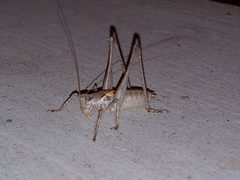
Shield-backed katydid with a notably enlarged, shield-like pronotum that extends posteriorly over much of the , giving the its . The body is relatively robust and compact compared to more slender species. Coloration is typically uniform and subdued, consistent with the specific epithet 'aequalis' and common name 'uniform shieldback'. The pronotal shield is a defining structural feature that distinguishes this species from typical katydids with unmodified pronota.
Habitat
Found in arid and semi-arid environments of the western United States, including shrublands, grasslands, and open woodlands. Specific microhabitat preferences include areas with sufficient ground cover and low vegetation where these flightless or poorly flying insects can move and find shelter. The occurs in ranging from sagebrush steppe to pinyon-juniper woodlands and open montane forests.
Distribution
Western North America, with confirmed records from California, Nevada, and Utah. The distribution spans the Great Basin and adjacent regions of the western United States, occurring in suitable arid and semi-arid across this range.
Seasonality
are active during the warmer months, with peak activity typically occurring in late spring through summer. As with many Orthoptera in temperate regions, the likely has a seasonal with in the stage and nymphal development proceeding through spring.
Life Cycle
(hemimetabolous) typical of Orthoptera, with , nymph, and stages. Eggs are likely deposited in soil or plant tissue. Nymphs resemble smaller versions of adults without fully developed wings and reproductive structures. The extended pronotum is present in nymphal stages, though proportionally smaller. Development proceeds through multiple instars before reaching adulthood.
Behavior
Shield-backed katydids are generally ground-dwelling or low-vegetation dwelling insects. The enlarged pronotum provides physical protection and may aid in or camouflage. Like other Tettigoniidae, males produce stridulatory sounds by rubbing forewings together, though the specific characteristics of the call in I. aequalis have not been documented in the provided sources. The is likely primarily or in activity pattern.
Ecological Role
As a herbivorous insect, contributes to nutrient cycling through consumption of plant material and serves as prey for various including birds, small mammals, reptiles, and other insects. The shield-backed provides defense against . The is part of the in western North American shrubland and grassland .
Human Relevance
No significant direct economic or medical importance. The may be encountered by entomologists, naturalists, and hikers in its native range. As a native component of western North American , it contributes to biodiversity and ecosystem function. No documented agricultural pest status.
Similar Taxa
- Other Idiostatus species share the diagnostic shield-backed pronotum but differ in specific morphological details, coloration patterns, and geographic distribution. I. aequalis is distinguished by its relatively uniform coloration.
- Other Platycleidini genera (e.g., Atlanticus, Neduba)Other shield-backed katydid in the same tribe share the enlarged pronotum but differ in body proportions, pronotal shape, and geographic distribution. Atlanticus occur primarily in eastern North America, while Neduba species have different pronotal and wing characteristics.
- Typical Tettigoniidae (unshielded katydids)Easily distinguished by the dramatically different pronotal structure—typical katydids have a small, unmodified pronotum that does not extend over the , while I. aequalis has the enlarged shield-like structure covering most of the abdomen.
More Details
Taxonomic history
Originally described as Cacopteris aequalis by Scudder in 1899, the was later transferred to the Idiostatus. The genus name Idiostatus, meaning 'peculiar' or 'distinctive status,' references the unusual pronotal modification that characterizes these insects.
Flight capability
Many shield-backed katydids, including in Idiostatus, have reduced wings or are flightless. This trait is associated with their ground-dwelling habits and the protective function of the enlarged pronotum.