Microtes
Scudder, 1900
Species Guides
2- Microtes occidentalis(little buzzer grasshopper)
- Microtes pogonata
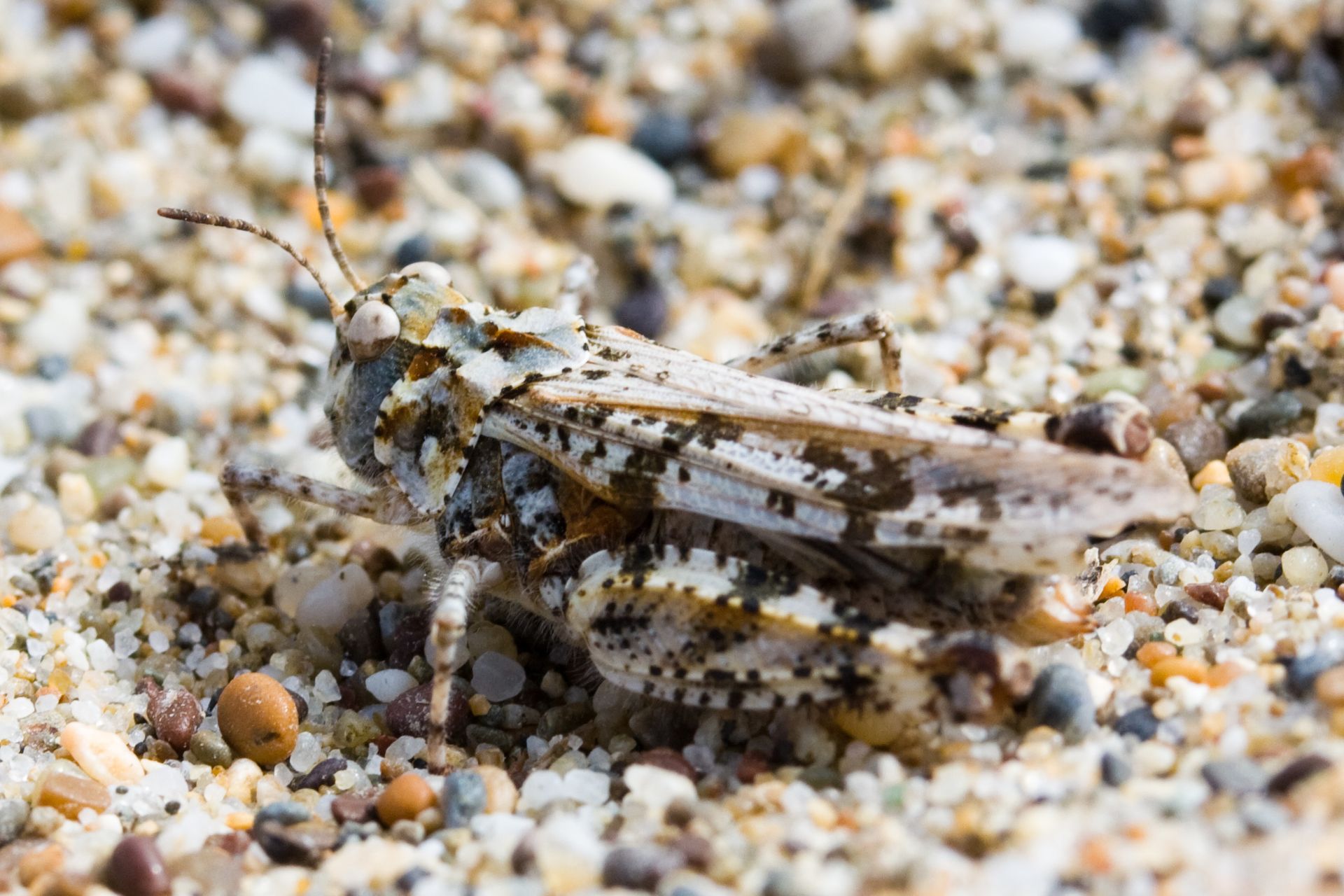
Microtes is a of band-winged grasshoppers (Acrididae) to western North America. The genus contains at least three described , including the little buzzer (M. occidentalis). Members of this genus are placed in the tribe Sphingonotini within the Oedipodinae, a group characterized by enlarged hind wings with dark bands used in .
Pronunciation
How to pronounce Microtes: //ˈmaɪ.kroʊˌtiːz//
These audio files are automatically generated. While they are not always 100% accurate, they are a good starting point.
Identification
Microtes can be distinguished from other Sphingonotini by subtle differences in male genitalia and wing venation patterns. The banded hind wings typical of Oedipodinae are present but may be less dramatically patterned than in related genera such as Trimerotropis or Circotettix. Specific identification to level requires examination of internal genitalic structures.
Images
Habitat
Arid and semi-arid grasslands, sagebrush steppe, and open rocky slopes in western North America. occupy low-elevation to montane with sparse vegetation cover.
Distribution
Western North America, with records from California and surrounding states. The appears to be restricted to the western United States.
Behavior
Band-winged grasshoppers in Oedipodinae produce audible sounds during , created by the wings snapping against the body. This '' is used in courtship and territorial displays. Whether Microtes produce distinctive buzzing sounds has not been specifically documented, though the 'little buzzer ' for M. occidentalis suggests this .
Ecological Role
Herbivorous members of grassland and sagebrush steppe . As primary consumers, they contribute to nutrient cycling and serve as prey for birds, reptiles, and insectivorous mammals.
Similar Taxa
- TrimerotropisOverlapping distribution and ; Trimerotropis generally have more prominently banded hind wings and differ in male genitalic structure.
- CircotettixSimilar band-winged ; Circotettix tend to be larger with more robust bodies and different wing patterns.
- SphingonotusCongeneric tribe member with similar overall form; Sphingonotus is primarily Palearctic and differs in genitalic .
More Details
Taxonomic history
The was established by Scudder in 1900. The three currently recognized were described between 1893 and 1963, with M. occidentalis being the earliest described and most widely known.