
Myrmecophilus
Berthold, 1827
ant crickets
Species Guides
5- Myrmecophilus americanus(American ant cricket)
- Myrmecophilus manni(Desert Ant Cricket)
- Myrmecophilus nebrascensis(Nebraska ant cricket)
- Myrmecophilus oregonensis(Oregon ant cricket)
- Myrmecophilus pergandei(Eastern Ant Cricket)
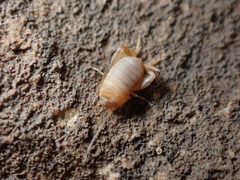
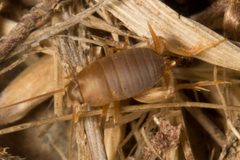
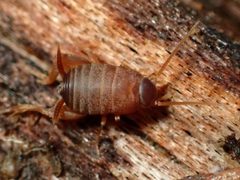
Myrmecophilus is a of minute crickets commonly known as ant crickets, containing the majority of in the Myrmecophilidae. These insects are obligate myrmecophiles, living exclusively within colonies. Species vary in size from less than 1.5 mm to 4.7 mm, generally correlating with the body size of their ant species. The genus has a worldwide distribution with numerous described species across Europe, Asia, North America, and other regions.
Pronunciation
How to pronounce Myrmecophilus: //mɪərˈmiːkəfɪləs//
These audio files are automatically generated. While they are not always 100% accurate, they are a good starting point.
Identification
Distinguished from other orthopterans by the combination of: extremely small size (under 5 mm), complete absence of wings, reduced or absent with no ocelli, long filamentous , and enlarged covered in sensory setae. The wingless condition and reduction separate Myrmecophilus from most other crickets. Found exclusively in association with ants; free-living individuals outside nests are exceptional occurrences. -level identification requires examination of male genitalia and comparison with .
Images
Habitat
Obligate inhabitants of nests, including subterranean chambers, cavities under stones, and galleries within dead wood. Recorded from nests of various ant including Camponotus, Crematogaster, Lepisiota, and others. Some occupy arboreal ant nests. span open scrubland, pine forests, and other environments where ants occur.
Distribution
Worldwide distribution with records from Europe (including northern latitudes in Latvia), Asia (Middle Asia, China, Malesia, Afghanistan), North America (eastern and western United States, southern Canada), Australia, and other regions. Specific have more restricted ranges: M. pergandei occurs from Maryland to Florida and west to Texas; M. oregonensis ranges from southern British Columbia through Oregon, Washington, and California; M. acervorum has expanded its known range northward with recent records from Latvia representing the northernmost observations.
Diet
Has been observed actively licking ants and the walls of underground nests, presumably feeding on oily secretions from ant . The precise nutritional requirements and whether additional food sources are utilized remain incompletely documented.
Host Associations
- Camponotus - of some found in nests of large Camponotus species
- Crematogaster - Juveniles of some recorded from nests of small Crematogaster species
- Lepisiota - Juveniles of some recorded from nests of small Lepisiota species
- Tetramorium - for M. tetramorii
Life Cycle
Development includes , nymph, and stages. Some appear to change species during ontogeny: juveniles in nests of small ant species, adults in nests of larger ant species. may occur in some ; males are rare or absent in some northern European populations of M. acervorum.
Behavior
Highly agile, capable of rapid running to escape aggression. Uses oversized with sensory hairs to detect air currents generated by approaching ants or other threats. Has been observed actively licking ants and nest substrate. Ants typically tolerate but may attack or kill crickets; crickets demonstrate remarkable escape capabilities. Some exhibit switching escape strategies depending on threat context.
Ecological Role
Myrmecophilous living as commensals or within colonies. May impose minor energetic costs on colonies through consumption of ant secretions and occasional by ants. linked to host ant colony health and size.
Human Relevance
Occasional accidental occurrence in human dwellings when nests are nearby. Not considered pests; ants may regard them as minor nuisances within colonies. Of scientific interest for studying myrmecophily and - .
Similar Taxa
- MyrmecophilaDifferent of ant-loving beetles (Staphylinidae), not crickets; distinguished by coleopteran including hardened forewings
- Gryllidae (typical crickets)Myrmecophilus lacks wings and has reduced ; typical crickets possess wings and well-developed with ocelli, and are not myrmecophilous
More Details
Morphological adaptation to host specificity
Research on four Myrmecophilus indicates that morphological characteristics, particularly body size and proportions, reflect both food sources and degree of specificity. Crickets associated with different host ant species show corresponding morphological divergence.
Cryptic speciation
Intraspecific diversity in M. acervorum suggests ongoing cryptic speciation, with genetically distinct lineages potentially representing unrecognized .
Parthenogenesis
Some , particularly at northern range limits, appear to reproduce parthenogenetically with extremely rare or absent males. Historical male records from the Pomeranian Lakeland are now considered uncertain.
Sources and further reading
- BugGuide
- Wikipedia
- GBIF taxonomy match
- iNaturalist taxon
- NCBI Taxonomy
- Catalogue of Life
- Bug Eric: OrThoptera Thursday: Eastern Ant Cricket
- Two new Clown beetle genera and 4 new species | Blog
- THREE MYRMECOPHILUS MITES
- First record of the Ant-loving cricket Myrmecophilus ochraceus for Zakynthos (Greece) with notes on the synonymy of Myrmecophilus salomonis (Orthoptera: Myrmecophilidae)
- Distribution of Myrmecophilus acervorum (Panzer, 1799) (Orthoptera: Myrmecophilidae) in Poland
- The ant cricket Myrmecophilus orientalis on the Dodecanese Islands, Greece (Orthoptera: Myrmecophilidae)
- Myrmecophilus balcanicus, a new species of ant-loving cricket from the Former Yugoslav Republic of Macedonia, with notes on the synonymy of Myrmecophilus zorae
- The Common Ant Cricket Myrmecophilus acervorum (Panzer, [1799]), new to the fauna of Georgia, southern Caucasus ecoregion (Orthoptera: Myrmecophilidae), with additional data on Myrmecophilus hirticaudus Fischer von Waldheim, 1846
- The northernmost known observation of Myrmecophilus acervorum and the first records of Myrmecophilidae (Orthoptera, Ensifera) from Latvia
- Morphological characteristics reflect food sources and degree of host ant specificity in four Myrmecophilus crickets
- Switching escape strategies in the parasitic ant cricket Myrmecophilus tetramorii.
- Intraspecific diversity of Myrmecophilus acervorum (Orthoptera: Myrmecophilidae) indicating an ongoing cryptic speciation.