
Microterys
Thomson, 1876
Species Guides
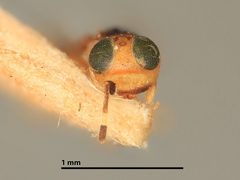
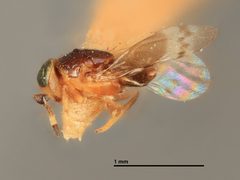
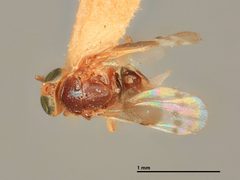
1Microterys is a large of in the Encyrtidae (Chalcidoidea), with its center of distribution in the northern parts of the Northern Hemisphere. are important natural enemies of various scale insects (Coccoidea), including soft scales (Coccidae), wax scales (Ceroplastes), and mealybugs (Pseudococcidae). The genus has been extensively studied for applications, particularly for managing pest scale insects on citrus and other crops. Several species have been introduced to new regions as biocontrol agents, including Microterys flavus in California.
Pronunciation
How to pronounce Microterys: //ˌmaɪ.kroʊˈtɛr.ɪs//
These audio files are automatically generated. While they are not always 100% accurate, they are a good starting point.
Identification
Microterys can be distinguished from other Encyrtidae by features of the mesosoma and metasoma, though specific diagnostic characters require microscopic examination. Intraspecific variation and the validity of morphological diagnostic characters have not been critically evaluated across the . Species-level identification typically requires examination of type material and reference to original descriptions, particularly for the numerous species described by A.A. Girault from Australia.
Images
Distribution
Widespread across the Northern Hemisphere with highest diversity in northern regions; also present in Australia, China (Zhejiang, Fujian, Yunnan, Guangdong, Jilin, Northeast China), India, Europe (Czech Republic), and California. The M. flavus has been recorded from multiple continents.
Host Associations
- Coccus hesperidum - brown soft scale, of M. flavus
- Coccus pseudomagnoliarum - , of M. nietneri
- Parthenolecanium corni - European fruit lecanium, of new from Northeast China
- Metaceronema japonica - on Camellia oleosa
- Cerococcus muratae - on Magnolia officinalis
- Ceroplastes ceriferus -
- Ceroplastes japonicus - Japanese
- Chloropulvinaria aurantii - citrus snow scale
- Kerria lacca - lac insect
- Chaetococcus - mealybug from India
- Phenacoccus aceris - cottony maple scale, of M. chalcostomus
- Kermes - gall-like , of M. chalcostomus
- Gascardia destructor - soft , of M. australicus
- Sphaerolecanium prunastri - plum , of M. turanicus
- Laccifer lacca - lac insect
Behavior
Female Microterys flavus exhibit a complex oviposition process consisting of body penetration, assessment of internal organs, envenomation, deposition, and potential host feeding. The ovipositor system includes two pairs of valvifers, three pairs of valvulae, female T9, and nine paired ovipositor muscles. Three muscles (1st valvifer-genital muscle, 2nd valvifer-venom gland muscle, T9-genital membrane muscle) were recently discovered in related and described for encyrtids in M. flavus. Behavioral analysis shows distinct motion patterns during different phases of parasitization.
Ecological Role
agent of pest scale insects (Coccoidea). in this act as primary that can significantly reduce of economically important insect pests on citrus, other fruit crops, and ornamental plants. However, hyperparasitoids such as Cheiloneurus claviger, Pachyneuron muscarum, and Marietta leopardine can attack Microterys nietneri and reduce its as a biocontrol agent.
Human Relevance
Important for of agricultural and horticultural pests. Microterys flavus was introduced to California for control of lecaniine coccids, with -specific or races being selected for particular target pests. Multiple have been evaluated or deployed in programs against scale insects damaging citrus and other crops.
Similar Taxa
- EncyrtusFormerly included now placed in Microterys; distinguished by mesosomal and metasomal characters requiring microscopic examination
- MetaphycusAnother large encyrtid parasitizing scale insects; separation requires careful examination of antennal structure and wing venation
- AnagyrusSimilar encyrtid of mealybugs and soft scales; differs in details of the , funicle, and ovipositor structure
Sources and further reading
- BugGuide
- GBIF taxonomy match
- iNaturalist taxon
- NCBI Taxonomy
- Catalogue of Life
- Encyrtid Holdings | Entomology Research Museum
- First record of Microterys turanicus Sugonjaev, 1965 (Hymenoptera: Encyrtidae) from Europe
- A new species ofMicroterys(Hymenoptera: Encyrtidae), parasitoid ofChaetococcus(Hemiptera: Pseudococcidae) from India
- THE AUSTRALIAN SPECIES OF MICROTERYS THOMSON (HYMENOPTERA: ENCYRTIDAE)*
- Response of the Parasitoid Microterys flavus to the Brown Soft Scale and its Honeydew 1
- Correction to: A new species of Microterys (Hymenoptera: Encyrtidae) from Northeast China, parasitoid of Parthenolecanium corni (Bouché) (Hemiptera: Coccidae)
- NOTES ON EIGHT AUSTRALIAN SPECIES OF MICROTERYS (HYMENOPTERA: ENCYRTIDAE) DESCRIBED BY A. A. GIRAULT*
- SIX NEW SPECIES OF THE GENUS MICROTERYS OF CHINA (HYMENOPTERA: ENCYRTIDAE) *
- A New Biological Race of Microterys flavus Introduced into California for the Control of Lecaniine Coccids, with an Analysis of its Behavior in Host Selection1
- A new species of Microterys (Hymenoptera: Encyrtidae) from Northeast China, parasitoid of Parthenolecanium corni (Bouché) (Hemiptera: Coccidae)
- Redescription of Microterys chalcostomus (Dalman) (Hymenoptera: Chalcidoidea: Encyrtidae), a parasitoid associated with Phenacoccus aceris (Signoret) (Hemiptera: Pseudococcidae) and Kermes spp. (Hemiptera: Kermesidae), with comments on its host relationship
- Structure and function of the ovipositor of the encyrtid wasp Microterys flavus
- A Taxonomic Study of Some Species of Hyperparasitoids Attacking the Primary Parasitoid Microterys nietneri of the Citricola Scale Insect, Coccus pseudomagnoliarum in Syria