
Cheiloneurus
Westwood, 1833
parasitic wasp
Cheiloneurus is a of parasitic in the Encyrtidae. within this genus function primarily as hyperparasitoids, attacking other wasps that develop within scale insects, mealybugs, and other hemipteran . The genus is characterized by distinctive morphological features including a group of coarse bristles at the apex of the scutellum and a long on the fore wings. Cheiloneurus species have been recorded from multiple continents including Asia, Europe, North America, and South America, with some species being utilized or studied for applications.
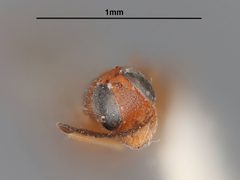
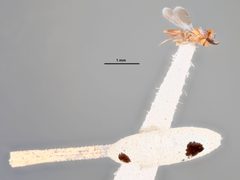
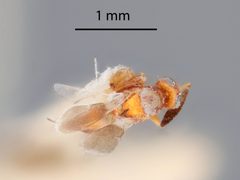
Pronunciation
How to pronounce Cheiloneurus: /kaɪˌloʊˈnʊərəs/
These audio files are automatically generated. While they are not always 100% accurate, they are a good starting point.
Identification
Cheiloneurus can be distinguished from other Encyrtidae by the presence of coarse bristles at the apex of the scutellum and the long of the fore wings. Species-level identification relies on wing infuscation patterns, coloration (particularly the 5th funicular segment in females), and other subtle morphological characters. For example, C. claviger females show incomplete infuscation of the fore wings and have only the 5th funicular segment blackish.
Images
Habitat
Agricultural and natural environments where scale insects (Coccidae) and mealybugs (Pseudococcidae) occur; olive groves, pistachio orchards, and other settings with hemipteran .
Distribution
Recorded from Bihar (India), Bolivia, California, Florida, Western Australia, Greece (Corfu), Italy, Iran, and China. The has a distribution with described from multiple biogeographic regions.
Host Associations
- Saissetia oleae - indirect (via Metaphycus lounsburyi) insect of primary
- Metaphycus lounsburyi - primary /hyperparasitoid targetprimary of Saissetia oleae
- Kermes spp. - indirect reported from Italy, via other on Pinoideae
- Kermania pistaciella - indirect pistachio , via primary Chelonus kermakiae
- Chelonus kermakiae - primary /hyperparasitoid targetbraconid of Kermania pistaciella
- Phenacoccus solenopsis - indirect cotton mealybug, of primary attacked by Cheiloneurus
Behavior
Hyperparasitoid : females oviposit into primary that are developing within their hemipteran . emerge from parasitized hosts after . Some show gregarious development. Host selection behavior is influenced by physical characteristics of the host and prior host deprivation.
Ecological Role
Hyperparasitoid in parasitic complexes of scale insects and mealybugs; can potentially limit of primary used in . Population levels are typically low relative to primary parasitoids, suggesting limited impact in most systems. Some may be introduced or in new regions.
Human Relevance
Studied for applications and as potential limiting factors for primary effectiveness. Some may interfere with biological control programs by attacking beneficial primary parasitoids. New species continue to be described from economically important agricultural systems.
Similar Taxa
- MetaphycusBoth are Encyrtidae associated with scale insects; Cheiloneurus attacks Metaphycus as hyperparasitoid, while Metaphycus is a primary
- CoccophagusBoth Encyrtidae associated with coccid ; Cheiloneurus distinguished by scutellar bristles and wing venation
- ProchiloneurusRelated encyrtid with similar ; distinguished by morphological characters including antennal structure and wing venation
Sources and further reading
- BugGuide
- Wikipedia
- GBIF taxonomy match
- iNaturalist taxon
- NCBI Taxonomy
- Catalogue of Life
- cheiloneurus_izhevskyi_trjapitzin_triapitsyn_holotype_female_ucrc_ent_138958_lateral.jpg | Entomology Research Museum
- Primary Type List | Entomology Research Museum
- Encyrtid Holdings | Entomology Research Museum
- Publications | Entomology Research Museum
- First Record of Cheiloneurus clαviger (Thomson) (Hymenoptera: Encyrtidae) on Corfu Island
- Biology of Cheiloneurus noxius,1 with Emphasis on Host Relationships and Oviposition Behavior
- Sense Organs of the Hyperparasite Cheiloneurus noxius (Hymenoptera: Encyrtidae) Important in Host Selection Processes
- Influence of Primary (Parasite) Hosts on Host Selection of the Hyperparasite Cheiloneurus noxius (Hymenoptera: Encyrtidae)
- Influence of Host Deprivation and Physical Host Characteristics on Host Selection Behavior of the Hyperparasite Cheiloneurus noxius (Hymenoptera: Encyrtidae)
- Figure 2 from: Li Z, Yao T, Xu Z, Meng L, Li B (2020) A new species of Cheiloneurus Westwood (Hymenoptera, Encyrtidae) as a hyperparasitoid of the invasive cotton mealybug, Phenacoccus solenopsis Tinsley, in China. ZooKeys 974: 23-29. https://doi.org/10.3897/zookeys.974.55528
- Cheiloneurus pistaciae sp. nov. (Hymenoptera: Encyrtidae) a facultative hyperparasitoid of Kermania pistaciella Amsel (Lepidoptera: Tineidae), a pest of pistachio trees in Iran
- Longevity and development of the egg-parasitoid,Cheiloneurus pyrillae [Hymenoptera: Encyrtidae] at different combinations of temperature and relative humidity
- Oviposition and developmental performances of the gregarious hyperparasitoid Cheiloneurus nankingensis in relation to host age
- A taxonomic study of Cheiloneurus Westwood (Hymenoptera, Encyrtidae) from China.