
Encyrtinae
Walker, 1837
Genus Guides
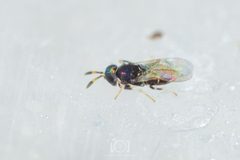
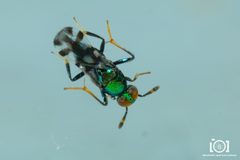
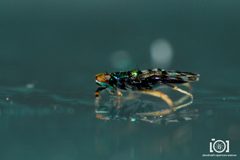
44Encyrtinae is a large of within the Encyrtidae (Hymenoptera: Chalcidoidea). Members are primarily endoparasitoids of insect and stages, with documented including hemipterans (pentatomoid , whiteflies, scale insects), lepidopterans, , and even ticks ( Ixodiphagus). The subfamily contains over 300 genera and is distributed worldwide. Several have been deployed or have arrived adventively as agents of agricultural and urban pests.
Pronunciation
How to pronounce Encyrtinae: /ˌɛn.sɪrˈtaɪni.iː/
These audio files are automatically generated. While they are not always 100% accurate, they are a good starting point.
Images
Habitat
correspond to availability: agricultural fields, forest , urban domestic environments, and vegetation supporting herbivorous host insects. Laboratory rearing successful at 25–27°C, 60–82% humidity, 16L:8D with honey provided as food.
Distribution
Worldwide distribution. Documented occurrences include: North America (Alabama, Florida with unique haplotype), Europe (new records for Comperia merceti), Central America (passion vine ), Japan, China, Mexico, Israel, Australasia, and Macaronesia.
Diet
feed on honeydew and nectar; laboratory rearing uses honey ad libitum. Larvae are endoparasitoids developing within or stages.
Host Associations
- Megacopta cribraria (bean plataspid, Hemiptera: Plataspidae) - primary for Ooencyrtus nezarae pest of leguminous crops in southeastern United States
- Domestic cockroaches (Blattodea) - for Comperia mercetiUrban agent in Europe
- Ticks (Ixodidae) - for Ixodiphagus Australasian show potential novel switches
- Heliconiini butterflies (Lepidoptera: Nymphalidae) - for Ooencyrtus marcelloi on passion vines (Passifloraceae) in Central America
- Whiteflies (Hemiptera: Aleyrodidae) - for Metaphycus Neotropical region
- Scale insects (Hemiptera: Coccoidea) - for multiple Ceroplastes rubens and other Coccidae in Japan
- Psyllids (Hemiptera: Psyllidae) - for Psyllaephagus specialized on
Life Cycle
Development includes , larval, and pupal stages within . Ooencyrtus nezarae: 14 days post-exposure at 25–27°C, with emergence continuing over several days. Two observed in laboratory rearing. Some can develop in frozen host eggs stored 6–14 months.
Behavior
Fortuitous introductions documented: Ooencyrtus nezarae arrived in North America without regulatory approval, with Alabama and Florida showing 1.3% COI sequence divergence suggesting separate introduction events. High laboratory rates observed (66.2% in second ). Female-biased sex ratios common (~0.62 proportion female). require food sources for survival and .
Ecological Role
Important agents of agricultural pests (pentatomoid , whiteflies, scale insects, psyllids) and urban pests (). Part of that suppress herbivore . Ixodiphagus may regulate populations in Australasian .
Human Relevance
Deployed and agents for crop protection and urban pest management. Ooencyrtus nezarae controls Megacopta cribraria, an pest of soybean and other legumes. Comperia merceti used against domestic . Molecular barcoding (COI) used to track origins and introduction . Laboratory rearing protocols established for mass propagation.
Similar Taxa
- TetracneminaeAlso within Encyrtidae; distinguished by antennal structure and wing venation patterns, though reliable separation often requires microscopic examination
- CopidosomatinaeEncyrtid with polyembryonic development; Encyrtinae typically produce single offspring per
- Scelionidae of similar size and habitus; distinguished by wing venation, mesosomal structure, and lack of metallic coloration common in many Encyrtinae
More Details
Molecular diversity
COI barcoding reveals cryptic diversity and structure; 1.3% sequence divergence detected between Alabama and Florida populations of Ooencyrtus nezarae, suggesting separate introduction events for this agent.
Taxonomic scope
Contains over 300 described including major genera: Metaphycus (scale insects), Psyllaephagus (psyllids), Copidosoma ( of Lepidoptera), Anicetus (scale insects), and Ooencyrtus (eggs of Hemiptera and Lepidoptera).
Sources and further reading
- BugGuide
- Wikipedia
- iNaturalist taxon
- NCBI Taxonomy
- Catalogue of Life
- A fortuitous find: a unique haplotype of Ooencyrtus nezarae Ishii (Encyrtidae: Encyrtinae) discovered in Florida
- Molecular characterisation of Australasian Ixodiphagus (Hymenoptera; Encyrtidae; Encyrtinae) reveals unexpected diversity and a potential novel host switch
- New Distributional Records ofComperia merceti(Compere, 1938) (Hymenoptera: Chalcidoidea; Encyrtidae; Encyrtinae), a Natural Enemy of Domestic Cockroaches, in Europe
- Descriptions and Biology of New or little known Coccids from Japan; Observations on the Hymenopterous Parasites of Ceroplastes rubens Mask., with Descriptions of New Genera and Species of the Subfamily Encyrtinae . By Tei Ishii (Dept. Agr. and Comm. Japan, Imp. Plant Quar. Sta., Bull. 3, Aug. 1923, p. 1-68, pl. I-XIV, fig. 1-5 (Art. I.) and pp. 69-114, pl. XV-XIX (Art. II.).
- Descriptions and Biology of New or little known Coccids from Japan; Observations on the Hymenopterous Parasites of Ceroplastes rubens Mask., with Descriptions of New Genera and Species of the Subfamily Encyrtinae . By Tei Ishii (Dept. Agr. and Comm. Japan, Imp. Plant Quar. Sta., Bull. 3, Aug. 1923, p. 1-68, pl. I-XIV, fig. 1-5 (Art. I.) and pp. 69-114, pl. XV-XIX (Art. II.).