
Chelonus
Jurine, 1807
Chelonus is a of parasitic in the Braconidae, Cheloninae. These wasps are internal of larvae, particularly those in superfamilies Tortricoidea and Pyraloidea. The genus contains approximately 139 in North America north of Mexico. Chelonus wasps exhibit a distinctive abdominal structure where the first three segments are into a single plate, making them relatively easy to identify among braconids.
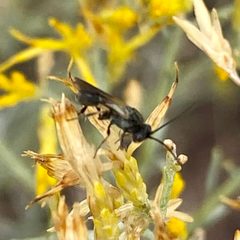
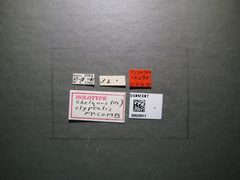
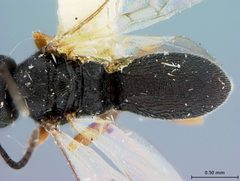
Pronunciation
How to pronounce Chelonus: /ˈkɛləˌnʊs/
These audio files are automatically generated. While they are not always 100% accurate, they are a good starting point.
Identification
Chelonus can be distinguished from other braconid wasps by the first three urotergites ( abdominal segments), creating the appearance of a single-segmented . The side of the abdomen retains more normal segmentation. This contrasts with most other braconids and ichneumon wasps, which have clearly segmented abdomens. Wing venation also differs from ichneumon wasps. Members of this are small, averaging around 5 mm in length, with a robust build.
Images
Habitat
Found in diverse environments where occur. frequently observed on late summer and fall flowers such as wild carrot, where they search for host .
Distribution
Widespread in North America with approximately 139 recorded north of Mexico. Distribution records from GBIF include Denmark and Norway, suggesting Holarctic distribution.
Seasonality
active in late summer and fall, coinciding with flowering periods of plants such as wild carrot.
Host Associations
- Phthorimaea operculella - ; for C. kellieae and C. phthorimaeae
- Tortricoidea - superfamily of
- Pyraloidea - superfamily of
Life Cycle
Females use a hair-like ovipositor to insert directly into eggs. The larva hatches but remains in its first instar while the host caterpillar matures. Development resumes only when the host prepares to pupate or spin a cocoon, at which point the wasp larva consumes the host. At least one documented case exists where altered host timing, causing premature attempt.
Behavior
Females search flowers for that have been deposited in plant tissue. The larva exhibits developmental arrest, remaining during host growth before resuming development at host .
Ecological Role
agent of pests, particularly pyralid and tortricid moths. Some used in management of agricultural pests such as the .
Human Relevance
Some studied for potential against crop pests. Chelonus phthorimaeae and C. kellieae have been investigated for management of (Phthorimaea operculella).
Similar Taxa
- IchneumonidaeSimilar general appearance but distinguished by wing venation and abdominal structure; Cheloninae have abdominal segments not seen in ichneumonids
- Other BraconidaeMost other braconids have clearly segmented rather than the single-plate appearance of Cheloninae
Sources and further reading
- BugGuide
- Wikipedia
- GBIF taxonomy match
- iNaturalist taxon
- NCBI Taxonomy
- Catalogue of Life
- Bug Eric: Wasp Wednesday: Chelonus
- Bug Eric: 2010
- Biology and temperature responses ofChelonus KellieaeandChelonus phthorimaeae(Hymenoptera: Braconidae) and their host, the potato tuberworm,Phthorimaea operculella(Lepidoptera: Gelechiidae)