
Pachyneuron
Walker, 1833
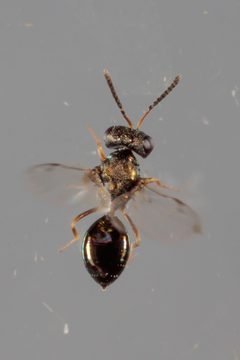
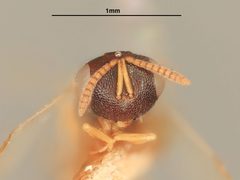
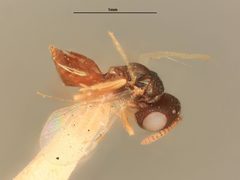
Pachyneuron is a of in the Pteromalidae, comprising approximately 60 valid . Species are primarily hyperparasitoids of Sternorrhyncha (aphids, coccids, and psyllids), attacking the primary parasitoids of these herbivores. Some species also hyperparasitize predatory insects such as ladybird beetles (Coccinellidae) and lacewings (Chrysopidae) via their parasitoids. Certain species, including P. aphidis and P. albutius, have been documented as direct parasitoids of dipteran larvae or pupae. The genus has been studied in the context of , where hyperparasitism may interfere with pest management programs.
Pronunciation
How to pronounce Pachyneuron: //ˌpækɪˈnjʊərɒn//
These audio files are automatically generated. While they are not always 100% accurate, they are a good starting point.
Images
Habitat
occur in diverse environments including agricultural fields, forests, and urban areas where their are present. Pachyneuron aphidis has been observed foraging on Cirsium arvense in field conditions. Pachyneuron albutius was recorded on Lagerstroemia indica in Panama.
Distribution
distribution. Documented from North America (California, New York), Central America (Panama), Asia (Iran, Kazakhstan, China, Taiwan, India, Jilin, Buryat), and the Caribbean (Saint Vincent and the Grenadines). Specific distribution varies by ; P. muscarum is widely distributed in the Palaearctic with records from the Oriental region and Caribbean.
Seasonality
In the Pacific Northwest, associated with Leucotaraxis argenticollis show highest rates in June and July, with increasing from February through July as fly activity progresses.
Host Associations
- Hemiptera: Sternorrhyncha (aphids, coccids, psyllids) - hyperparasitoidPrimary are hymenopteran of these herbivores
- Coleoptera: Coccinellidae (ladybird larvae) - hyperparasitoidVia primary such as Homalotylus (Encyrtidae); at least eight Pachyneuron worldwide reported from ladybird larvae
- Neuroptera: Chrysopidae (predatory lacewing larvae) - hyperparasitoid
- Diptera: Chamaemyiidae (Leucotaraxis argenticollis, L. piniperda) - Pachyneuron parasitizes larvae or pupae; prefers L. argenticollis over L. piniperda
- Diptera: Syrphidae (Ocyptamus gastrostactus) - pupal P. albutius first recorded as in Panama
- Hymenoptera: Encyrtidae (Homalotylus spp., Diaphorencyrtus aligarhensis) - hyperparasitoidP. muscarum and P. crassiculme documented as hyperparasitoids of these primary
- Hymenoptera: Eulophidae (Tamarixia radiata) - possible hyperparasitoidP. crassiculme possibly hyperparasitizes this
- Hymenoptera: Aphidiidae (Aphidius gifuensis) - hyperparasitoidP. aphidis hyperparasitizes this primary of Myzus persicae
Life Cycle
Solitary endoparasitoid development. Females lay inside . Larvae develop and pupate within the host; in hyperparasitoid relationships, emerge from mummified hosts. Specific developmental stages targeted vary: some parasitize larvae, others pupae, or both.
Behavior
Females perform slow, extended search within patches, with 40% of flights resulting in targeted landings near colonies. This flight appears to compensate for reduced speed compared to other hyperparasitoids. Phototactic behavior has been documented in P. aphidis.
Ecological Role
Hyperparasitoid in involving Sternorrhyncha herbivores and their natural enemies. May disrupt of aphids, coccids, and psyllids by parasitizing both the herbivores' and the parasitoids of their . In hemlock woolly adelgid management programs, Pachyneuron reduce the effectiveness of silver fly biocontrol agents.
Human Relevance
Relevant to programs, particularly as a potential interference agent. Hyperparasitism by Pachyneuron may reduce the efficacy of primary and predatory insects released or conserved for pest management. Plant extracts (Azadirachta excelsa, Xanthium italicum) have been tested for to Pachyneuron species to selectively reduce hyperparasitoid pressure on beneficial insects.
Similar Taxa
- MelanipsAlso a attacking Leucotaraxis flies; Melanips prefers L. piniperda while Pachyneuron prefers L. argenticollis
- AsaphesAnother hyperparasitoid in Pteromalidae associated with aphids; co-occurs with Pachyneuron in some systems
More Details
Morphological adaptations
Geometric morphometric studies of P. aphidis show narrow forewing shape and widened as significant characteristics of high-altitude . Body size (centroid size, forewing and thorax dimensions) increases at higher elevations.
Sensilla morphology
P. aphidis possesses seven types of : Böhm bristle, chaetica sensilla, basiconic sensilla, trichoid sensilla (with subtypes on and wings), placodea sensilla, coeleoconica sensilla, and basiconic peg sensilla. Sensilla are most abundant on antennae. in sensilla location exists: coeleoconica sensilla occur on the fourth flagellomere in males and eighth flagellomere in females.
Sources and further reading
- BugGuide
- Wikipedia
- GBIF taxonomy match
- iNaturalist taxon
- NCBI Taxonomy
- Catalogue of Life
- Leucotaraxis argenticollis fly and Pachyneuron wasp - Entomology Today
- hemlock woolly adelgid, Leucotaraxis argenticollis fly, and Pachyneuron wasp - Entomology Today
- hemlock-woolly-adelgid-leucotaraxis-argenticollis-pachyneuron-socialmedia - Entomology Today
- Pests, Predators, and Parasitoids: Wasps Target Flies That Eat Hemlock Woolly Adelgid
- Aspectos biológicos de Ocyptamus gastrostactus y controlador biológico Pachyneuron albutius, en Panamá
- Pachyneuron (Hymenoptera: Pteromalidae) and its relationship to ladybirds (Coleoptera: Coccinellidae): new data from Iran and review of the literature
- Review of Kazakhstan species of the genus Pachyneuron Walker, 1833 (Hymenoptera: Chalcidoidea: Pteromalidae)
- Within‐patch search flights by Pachyneuron aphidis (Hym., Pteromalidae): a potential strategy to compensate reduced foraging speed by foot
- Geometric Morphometrics and Genetic Diversity Analysis of Chalcidoidea (Diglyphus and Pachyneuron) at Various Elevations
- Bioefficiency of the Extracts of Azadirachta and excelsa (Jack) Xanthium, itaricum Moretti on the Mortarity of Aphis fabae scopoli and its nyferparasitoids, Asaphes suspensus (Nees) and Pachyneuron aptriois Bouche (Hymenoptera:Pteromalidae)
- Phototactic behaviour ofPachyneuron aphidis(Hymenoptera: Pteromalidae) – hyperparasitoid ofMyzus persicae(Hemiptera: Aphidiae)
- Chartocerussp. (Hymenoptera: Signiphoridae) andPachyneuron crassiculme(Hymenoptera: Pteromalidae) are Obligate Hyperparasitoids ofDiaphorencyrtus aligarhensis(Hymenoptera: Encyrtidae) and PossiblyTamarixia radiata(Hymenoptera: Eulophidae)
- Morphological analysis of sensilla on different organs in Pachyneuron aphidis, a hyperparasitoid of Myzus persicae