
Melanips
Walker, 1835
Melanips is a of in the Figitidae. These wasps are solitary endoparasitoids that target fly larvae, with documented association to Leucotaraxis piniperda, a silver fly used as a agent for hemlock woolly adelgid. Research indicates a preference for this , though the specificity of this relationship remains under investigation. The genus has been recorded in Europe and is implicated in biocontrol programs in North America.
Pronunciation
How to pronounce Melanips: /mɛˈlæ.nɪps/
These audio files are automatically generated. While they are not always 100% accurate, they are a good starting point.
Identification
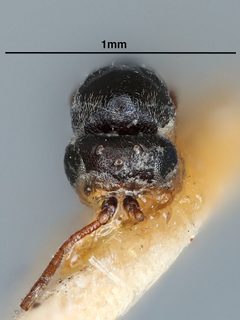
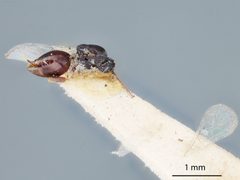
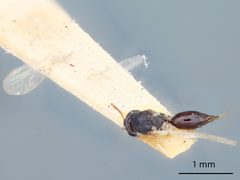
Melanips are small, cryptic that require expert taxonomic identification. Specimens collected from Leucotaraxis fly biocontrol programs in the Pacific Northwest were identifiable only to level by Smithsonian experts. Distinction from the related genus Pachyneuron, which also parasitizes Leucotaraxis flies, requires specialized examination.
Images
Habitat
Associated with hemlock forests where the fly Leucotaraxis piniperda occurs. In the native range, this includes Pacific Northwest hemlock . The has been transported to eastern North America through the importation of hemlock foliage containing host flies for biocontrol programs.
Distribution
Native to Europe (recorded from Denmark and Sweden). Introduced to eastern North America through biocontrol agent importation from the Pacific Northwest, United States.
Seasonality
peaks in June and July, lagging behind the fly emergence period which begins around February and continues through July. rates increase over the fly activity season.
Host Associations
- Leucotaraxis piniperda - Preferred ; laid in fly larvae, development completed within fly
Life Cycle
Solitary endoparasitoid development: female lays inside fly larvae. larvae develop within the host and pupate inside the fly's . Adult wasps emerge from the pupal case. Specific details of larval development stages remain unclear.
Behavior
Has been observed parasitizing fly larvae and emerging from pupal cases. Host preference for Leucotaraxis piniperda over Leucotaraxis argenticollis has been documented, though whether this represents strict host specificity or opportunistic preference requires further study through behavioral tests and choice assays.
Ecological Role
Acts as a natural enemy of predatory flies that consume hemlock woolly adelgid. In the native range, likely contributes to of silver flies. In biocontrol contexts, may reduce effectiveness of Leucotaraxis piniperda as a control agent for hemlock woolly adelgid.
Human Relevance
Significant to programs targeting hemlock woolly adelgid, an pest devastating eastern North American hemlock forests. The 's of Leucotaraxis piniperda may compromise fly biocontrol efficacy. Researchers monitor wasp to assess impacts on biocontrol agent establishment and to evaluate potential competition between fly and biocontrol agents.
Similar Taxa
- PachyneuronAlso a figitid of Leucotaraxis flies; distinguished by preference for Leucotaraxis argenticollis rather than L. piniperda. Both are small, cryptic, and require expert identification.
More Details
Research Context
Studied at Cornell University's Hemlock Woolly Adelgid Biocontrol Research Lab as part of investigations into trophic interactions affecting biocontrol of Adelges tsugae. Lead researcher Sabrina Celis documented that Melanips was the most frequently collected from imported Pacific Northwest hemlock foliage aside from the target biocontrol agents.
Taxonomic Uncertainty
Despite collection of numerous specimens, taxonomic experts at the Smithsonian Institution were unable to identify Melanips to level, indicating either undescribed species or the need for specialized taxonomic revision of the .