
Arhopalus
Audinet-Serville, 1834
burnt pine longhorn beetle (A. ferus), black pine sawyer (A. rusticus)
Species Guides
4- Arhopalus asperatus
- Arhopalus foveicollis(Pitted Longhorn Beetle)
- Arhopalus productus(New House Borer)
- Arhopalus rusticus(rust pine borer)
Arhopalus is a of longhorn beetles (Cerambycidae: Spondylidinae: Asemini) distributed across the Northern Hemisphere, with several introduced to the Southern Hemisphere as pests of conifers. The genus comprises approximately 20 described species, with A. rusticus and A. ferus being the most extensively studied due to their economic importance. Species develop in dead or fire-damaged conifer wood, with some exhibiting strong attraction to burnt pine volatiles. Several species produce male-emitted - containing fuscumol and geranylacetone. Invasive in New Zealand, Australia, South America, and South Africa require monitoring at ports and sawmills for timber export compliance.
Pronunciation
How to pronounce Arhopalus: //ɑːrˈhoʊpələs//
These audio files are automatically generated. While they are not always 100% accurate, they are a good starting point.
Identification
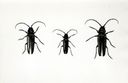
Arhopalus are distinguished from other cerambycid by their association with coniferous , typically robust body form, and relatively short compared to many longhorn beetles. Species-level identification requires examination of elytral , pronotal shape, and antennal segment proportions. A. rusticus and A. ferus are particularly similar; A. ferus tends to have more pronounced elytral asperities and different geographic distribution. A. syriacus is distinguished by its Middle Eastern origin and slightly smaller size. Accurate identification often requires dissection of male genitalia or molecular analysis, especially for introduced outside native ranges.
Images
Habitat
Coniferous forests, particularly pine plantations; fire-damaged or stressed conifer stands; sawmills, ports, and timber yards where infested wood is stored. develop in stumps, large branches, and trunks of dead or dying conifers. Fire-damaged pines are especially attractive to some species.
Distribution
Native to Europe, Asia, and North Africa; in New Zealand (first detected 1963), Australia, South America (Argentina, Chile), and South Africa. In native range, occurs across northern and central Europe, extending east through Russia and into Asia. Climate modeling indicates potential for further range expansion under future warming scenarios.
Seasonality
are active primarily during spring and summer months in native ranges, with some exhibiting or activity patterns. A. ferus reaches sexual maturity 10-14 days after . In laboratory conditions at 20°C, ovarian development completes in approximately 12 days. Winter activity has been observed for some species in mild climates or under bark of dead trees.
Diet
Larvae are wood-borers, feeding on phloem and sapwood of conifers, particularly Pinus . of some species feed on pine needles, though this is not required for reproductive maturation.
Life Cycle
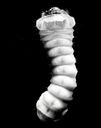
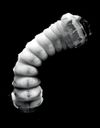
Complete with extended larval development. Larvae develop through 6-9 instars, pupating under bark in distinctive -lined . duration approximately 10 months (298 days at 25°C for A. syriacus), though highly variable depending on temperature and condition. emerge from pupal cells and require a maturation period before mating.
Behavior
of several are attracted to volatiles from freshly cut logs and fire-damaged pines. A. tristis exhibits strong upwind anemotaxis toward burnt pine odors and preferentially oviposits on burnt logs (79% of ). and activity patterns observed, with peak activity from dusk to midnight. Males produce - that attract both sexes. Cardboard-chewing observed in laboratory-reared adults, possibly mimicking natural clearing of exit holes.
Ecological Role
Primary decomposers of dead conifer wood; contribute to nutrient cycling in forest . function as timber pests, causing economic damage and complications. A. rusticus is a suspected of Bursaphelenchus xylophilus ( ), though its oviposition (surface deposition without deep wood penetration) likely limits transmission compared to Monochamus .
Human Relevance
Significant economic pest in pine plantations and timber export industries. A. ferus is one of the most common forest insects in New Zealand pine plantations and requires monitoring at high-risk sites for export compliance. -based trapping systems using fuscumol and geranylacetone are being developed for detection and monitoring. restrictions apply to timber exports from infested regions.
Similar Taxa
- AsemumBoth belong to tribe Asemini and share conifer-associated ; Asemum typically have more elongate bodies and different antennal proportions
- SpondylisSame (Spondylidinae); Spondylis buprestoides is attracted to A. rusticus lures in field trials, indicating chemical similarity
- TetropiumRelated spondylidine with similar wood-boring habits in conifers; often found together on dead pine material
Sources and further reading
- BugGuide
- Wikipedia
- GBIF taxonomy match
- iNaturalist taxon
- NCBI Taxonomy
- Catalogue of Life
- A winter longhorned beetle | Beetles In The Bush
- Very wary tigers! | Beetles In The Bush
- Eumastacidae | Beetles In The Bush
- NOTES ON THE BIOLOGY OF ARHOPALUS FERUS MULSANT (COLEOPTERA: CERAMBYCIDAE)
- Exploring the Nature of Arhopalus ferus (Coleoptera: Cerambycidae: Spondylidinae) Pheromone Attraction
- Behavioral and Electrophysiological Responses of Arhopalus tristis to Burnt Pine and Other Stimuli
- Geostatistical analysis of the spatial distribution of Arhopalus rusticus larvae and adults
- Ovarian development in <i>Arhopalus ferus</i> (Coleoptera Cerambycidae)
- Biological traits and field distribution of introduced Arhopalus species in Central Argentina
- Tiempo de desarrollo y supervivencia de Arhopalus syriacus (Reitter) (Coleoptera: Cerambycidae), una plaga potencialmente perjudicial de Pinus sp. en Argentina Development time and survival of Arhopalus syriacus (Reitter) (Coleoptera: Cerambycidae), a potential pest of Pinus sp. in Argentina
- Identification and distribution ofArhopalusspecies (Coleoptera: Cerambycidae: Aseminae) in Australia and New Zealand
- Potential fecundity, larval development, and survival of two invasive species of <i>Arhopalus</i> (Coleoptera: Cerambycidae) coexisting in southern South America
- Arhopalus syriacus(Reitter) (Coleoptera: Cerambycidae): a potential economic pest ofPinusin Australia, with notes on its biology and distribution
- Prediction of the Global Distribution of Arhopalus rusticus under Future Climate Change Scenarios of the CMIP6
- Can forest pattern affect the distribution and abundance of Arhopalus rusticus (Coleoptera: Cerambycidae)? A landscape perspective in central Argentina
- Morphological Anatomy, Developmental Characteristics of the Reproductive System in Arhopalus rusticus (Coleoptera: Cerambycidae) and Their Impacts on the Transmission Potential of Bursaphelenchus xylophilus (Aphelenchida: Parasitaphelenchidae)
- Effect of Host Volatile Release Rate and Racemic Fuscumol on Trap Catch of Hylurgus ligniperda, Hylastes ater (Coleoptera: Curculionidae), and Arhopalus ferus (Coleoptera: Cerambycidae)
- A male-produced aggregation-sex pheromone of the beetle Arhopalus rusticus (Coleoptera: Cerambycidae, Spondylinae) may be useful in managing this invasive species
- Chromosome-level genome assembly of the longhorn beetle Arhopalus rusticus (Coleoptera: Cerambycidae).