
Arhopalus asperatus
(LeConte, 1859)
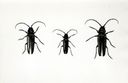
Arhopalus asperatus is a longhorned beetle in the Cerambycidae, described by John Lawrence LeConte in 1859. range from 18 to 33 mm in length, with measuring approximately 50-75% of body length. The occurs across western North America, with records from Canada (Alberta, British Columbia, Manitoba) through the western United States. Like other members of the , it is associated with coniferous wood, particularly pines.
Pronunciation
How to pronounce Arhopalus asperatus: /ɑːrˈhɒpələs æsˈpɛrətəs/
These audio files are automatically generated. While they are not always 100% accurate, they are a good starting point.
Identification
Arhopalus asperatus can be distinguished from by its moderately large size (18-33 mm), relatively short (about half to three-quarters body length), and the characteristic 'asperatus' (rough) sculpturing implied by its specific epithet. The Arhopalus is separated from similar longhorned beetle genera by its association with coniferous , activity, and the presence of a stridulatory organ on the . Within Arhopalus, A. asperatus is larger than A. rusticus and differs in proportional antennal length and body sculpturing details.
Images
Habitat
Coniferous forests, particularly those containing Pinus . are attracted to recently dead or dying conifers, where larvae develop under bark and in sapwood.
Distribution
Western North America. Recorded from Canadian provinces: Alberta, British Columbia, and Manitoba. Present throughout western United States including the Rocky Mountain region, Great Basin, and Pacific Northwest.
Seasonality
are active primarily in summer months. One observation record from early August in the Sierra Nevada region of California suggests peak activity in late summer.
Diet
Larvae feed on coniferous wood, particularly pine (Pinus spp.), developing under bark and in the sapwood of dead or dying trees.
Host Associations
- Pinus - larval primary ; larvae develop in dead or dying pine wood
- Abies - potential larval congeneric A. foveicollis associated with fir; may apply to A. asperatus
Life Cycle
Complete with wood-boring larval stage. Larvae feed under bark and in sapwood of conifers, creating galleries. occurs in wood. emerge and are , often attracted to lights and to freshly dead wood.
Behavior
are and frequently attracted to artificial light sources. They are also attracted to freshly dead or injured coniferous wood, where they may congregate to mate and oviposit.
Ecological Role
Decomposer in coniferous forest , contributing to nutrient cycling by breaking down dead wood. Serves as prey for woodpeckers and other .
Human Relevance
Occasionally attracted to outdoor lighting. Of interest to entomologists and collectors due to its size and western distribution. May be encountered during forestry operations or firewood collection.
Similar Taxa
- Arhopalus rusticusSimilar size range and conifer association; distinguished by proportional antennal length and body sculpturing
- Arhopalus foveicollisCongeneric with similar ; distinguished by pronotal sculpturing and geographic distribution (more northern)
- Arhopalus productusLarger congeneric with longer ; both attracted to fire and fresh coniferous wood