
Asemum
Eschscholtz, 1830
Species Guides
4- Asemum australe
- Asemum caseyi
- Asemum nitidum
- Asemum striatum(black spruce borer)
Asemum is a of longhorn beetles (Cerambycidae) in the Spondylinae, described by Eschscholtz in 1830. are primarily associated with coniferous forests and share the pyrophilous (fire-loving) trait of seeking out burned or fire-killed trees. The genus has a Holarctic distribution, with notable range expansion documented for A. tenuicorne into northern Europe. A. striatum, the type species, is among the most widespread and serves as for specialized tylenchid .
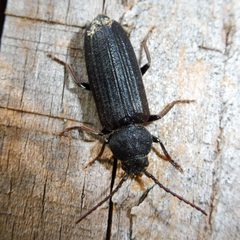
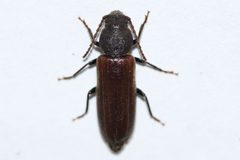
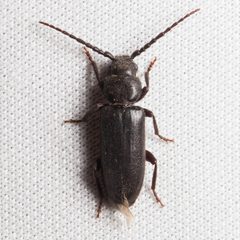
Pronunciation
How to pronounce Asemum: /əˈsiːməm/
These audio files are automatically generated. While they are not always 100% accurate, they are a good starting point.
Identification
Asemum are distinguished from related by their association with conifer and pyrophilous . A. tenuicorne can be separated from the widespread A. striatum by external , male copulatory organ shape, wing venation, and morphometric measurements. of A. tenuicorne have been documented from southern Europe, Sweden, and Poland, showing a pattern of northern range expansion.
Images
Habitat
Coniferous forests, particularly areas with fire-killed or recently burned pine trees. A. tenuicorne has been documented in Białowieża Primeval Forest in northeastern Poland, indicating association with mature forest capable of supporting pyrophilous .
Distribution
Holarctic. A. striatum is widely distributed across the northern hemisphere. A. tenuicorne was historically known from southern Europe and Gotska Sandön island (southern Sweden), with new records from Poland (2009, 2016) documenting northern spread. GBIF records indicate presence in Denmark, Norway, and Sweden.
Host Associations
- Pinus - larval conifers, especially pines, favored for breeding
- Picea - larval spruce , particularly noted for European
- Abies - larval fir documented for some
- Tylenchid nematodes - parasitic isolated from A. striatum in New York State
Behavior
Pyrophilous (fire-loving); are attracted to and breed in fire-killed conifers. Larvae develop under bark of dead conifer trunks.
Ecological Role
Primary decomposer of fire-killed conifer wood; creates and galleries used by other saproxylic organisms.
Similar Taxa
- RhagiumBoth are pyrophilous longhorn beetles associated with conifers, but Rhagium inquisitor is distinguished by its heavily ribbed , big-shouldered build, and unusually short ; it also uniquely overwinters as an under bark rather than as a larva
- ArhopalusShares conifer association and pyrophilous tendencies, but Arhopalus typically have different antennal proportions and elytral
- Asemum tenuicorne / A. striatumThese two require careful morphological comparison using external features, male genitalia, wing venation, and morphometrics for reliable identification
Sources and further reading
- BugGuide
- Wikipedia
- GBIF taxonomy match
- iNaturalist taxon
- NCBI Taxonomy
- Catalogue of Life
- A winter longhorned beetle | Beetles In The Bush
- Eumastacidae | Beetles In The Bush
- Tylenchid entomoparasites isolated from Spondylis buprestoides (L.) and Asemum striatum (L.) (Coleoptera: Cerambycidae)
- New data on the distribution, biology and morphology of Asemum tenuicorne Kraatz, 1879 (Coleoptera: Cerambycidae), with new records from Poland