
Ixodes affinis
Neumann, 1899
Ixodes affinis is a hard-bodied distributed across the southeastern United States, Mexico, Central America, and South America. Unlike its Ixodes scapularis, this species does not bite humans but serves as a competent for Borrelia burgdorferi sensu stricto, the causative agent of . stages feed on birds and small mammals, while parasitize larger mammals including deer and dogs. Its expanding range into southeastern Virginia and association with migratory birds has raised concerns about its role in .
Pronunciation
How to pronounce Ixodes affinis: /ɪkˈsoʊdiːz əˈfɪnɪs/
These audio files are automatically generated. While they are not always 100% accurate, they are a good starting point.
Identification
Ixodes affinis is morphologically similar to other Ixodes , particularly Ixodes scapularis (blacklegged ). Engorged stages are described as "almost impossible to identify morphologically" in the larval stage. can be distinguished through careful morphological examination, though specific diagnostic characters are not detailed in available sources. Molecular identification via sequencing is recommended for definitive identification, especially for engorged specimens.
Images
Habitat
Forested environments including medium sub-deciduous forest, low deciduous forest patches, and forest edges. In the southeastern United States, associated with pine plantations frequented by migratory birds. In Yucatán, Mexico, found in rural localities adjacent to forested areas where dogs used for hunting have higher rates.
Distribution
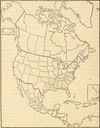
Southeastern United States (Georgia, Virginia, North Carolina region), extending northward into southeastern Virginia; Mexico (Yucatán); Central America (Belize, Rica, Guatemala, Panama); South America (Ecuador, Peru). Range expansion into southeastern Virginia documented as recent invasion, suspected to occur via bird-mediated .
Seasonality
Seasonal activity documented in Georgia; specific seasonal patterns not detailed in available sources. active in spring in some regions.
Diet
Obligate blood-feeding . stages (larvae and nymphs) feed on birds and small mammals. feed on larger mammals including white-tailed deer (Odocoileus virginianus), domestic dogs (Canis lupus familiaris), and other medium to large mammals.
Host Associations
- Thryothorus ludovicianus - Carolina wren; stages, Georgia and Virginia
- Toxostoma rufum - Brown thrasher; stages, Virginia
- Turdus migratorius - American robin; stages, Virginia
- Pipilo erythrophthalmus - Eastern towhee; stages, Virginia
- Cardinalis cardinalis - Northern cardinal; stages, Virginia
- Zonotrichia albicollis - White-throated sparrow; stages, Virginia; long-distance migrant
- Canis lupus familiaris - Domestic dog; , Mexico
- Odocoileus virginianus - White-tailed deer; , Georgia
- Blarina carolinensis - Southern short-tailed shrew; Georgia
- Scalopus aquaticus - Eastern mole; Georgia
- Oryzomys palustris - Marsh rice rat; Georgia
- Peromyscus gossypinus - Cotton mouse; Georgia
- Sciurus carolinensis - Eastern gray squirrel; Georgia
- Procyon lotor - Raccoon; Georgia
Life Cycle
Three- with four life stages: , larva (6 legs), nymph (8 legs), and (8 legs). Larvae hatch from eggs and feed on first host, then to nymphs. Nymphs feed on second host, then molt to adults. Adults feed on third host, mate, and females lay eggs. stages described but detailed morphological descriptions not provided in available sources. Laboratory rearing has been achieved.
Behavior
Exhibits "questing" typical of Ixodes ticks: climbs vegetation and extends forelegs to encounter . Frequently found co-feeding on birds with other including Amblyomma americanum, Ixodes brunneus, Ixodes dentatus, Ixodes scapularis, and Haemaphysalis leporispalustris. Co-feeding creates opportunities for transfer between tick species.
Ecological Role
Primary maintenance of Borrelia burgdorferi sensu stricto in the southeastern United States. Maintains enzootic transmission of among wildlife without directly infecting humans. Birds serve as agents, potentially expanding range and pathogen distribution. Co-feeding with other tick may facilitate pathogen exchange.
Human Relevance
Does not bite humans; therefore poses no direct public health threat through human . However, contributes to by maintaining Borrelia burgdorferi in wildlife . Range expansion and increasing overlap with Ixodes scapularis distribution may enhance overall transmission in , indirectly increasing human Lyme disease risk. Dogs in rural forested areas of Mexico have shown 11% .
Similar Taxa
- Ixodes scapularisBlacklegged ; primary of to humans in eastern North America. Morphologically similar, especially in stages where differentiation is challenging. I. scapularis bites humans while I. affinis does not; molecular identification often required for definitive separation.
- Ixodes brunneusAnother Ixodes found co-feeding on birds with I. affinis in Virginia; morphological similarity in stages.
- Ixodes dentatusRabbit tick; found co-feeding on birds with I. affinis; morphological similarity in field collections.
Sources and further reading
- BugGuide
- Wikipedia
- GBIF taxonomy match
- iNaturalist taxon
- NCBI Taxonomy
- Catalogue of Life
- A Tick that Feeds on Birds May Increase the Range of Lyme Disease
- Just in the tick of time: American dog tick, Dermacentor variabilis, and Black-legged tick, Ixodes scapularis — Bug of the Week
- A trio of trouble – Black-legged ticks Ixodes spp., American dog tick Dermacentor variabilis, and lone star tick Amblyomma americanum — Bug of the Week
- Destination Potomac, Maryland – Spring arrives and with it, ticks: Lone star tick, Amblyomma americanum, and Blacklegged ticks, Ixodes spp. — Bug of the Week
- Time for ticks: Lone star tick, Amblyomma americanum, Blacklegged ticks, Ixodes spp., and American dog tick, Dermacentor variabilis — Bug of the Week
- Take 2 on tropical tiger moths: Spotted oleander caterpillar moth, Empyreuma affinis — Bug of the Week
- New Records of Ixodes affinis (Acari: Ixodidae) Parasitizing Avian Hosts in Southeastern Virginia
- Ixodes affinis Neumann (Acari: Ixodidae): New Host and Distribution Records, Description of Immatures, Seasonal Activities in Georgia, and Laboratory Rearing
- Ixodes affinis (Acari: Ixodidae) in dogs from rural localities of Yucatán, Mexico: Prevalence, abundance and associated factors