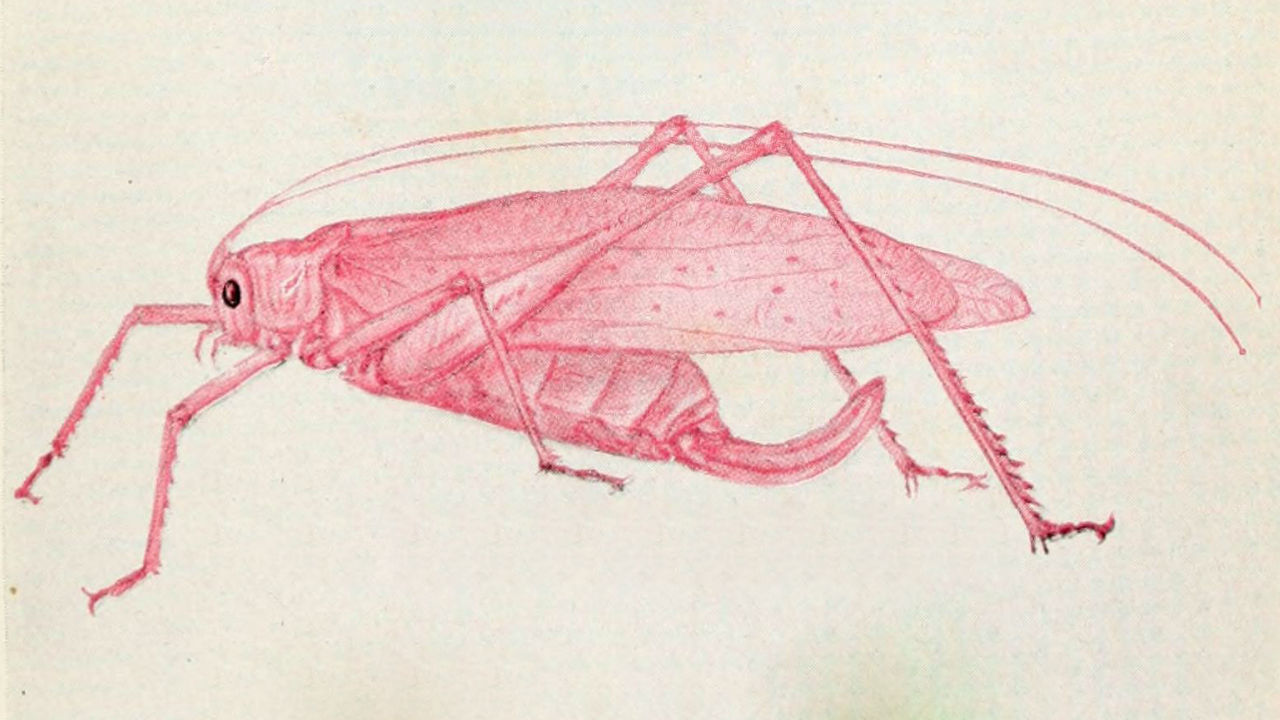
Hook-faced Conehead
Pyrgocorypha uncinata, commonly known as the hook-faced conehead, is a katydid species in the family Tettigoniidae. It is distinguished by its distinctive hook-shaped cone (fastigium), which curves downward at the tip and gives the species its common name. The species occurs in the southeastern United States, with records extending to northern Arkansas at the western edge of its range. Like other conehead katydids, it produces sound by stridulation and is active during the warmer months.
sand-treader crickets
Rhachocnemis is a genus of sand-treader crickets in the family Rhaphidophoridae. The genus was described by Caudell in 1916 and contains one described species, R. validus. These crickets are adapted to sandy desert environments, where they burrow through loose substrate. They are part of the diverse camel cricket lineage, though specialized for psammophilic (sand-dwelling) habitats.
Coast Sand-treader Cricket
Rhachocnemis validus, known as the Coast Sand-treader Cricket, is a species of camel cricket in the family Rhaphidophoridae. It is native to coastal regions of California and is distinguished from similar taxa by its specialized adaptations for life in sandy habitats. Unlike the unrelated "plasterer bees" (genus Colletes) that share a similar common name pattern, this species is an orthopteran with nocturnal habits and is not a pollinator.
Scelio is a large genus of parasitoid wasps containing at least 240 and possibly 500 species, making it the most diverse genus within the family Scelionidae. These wasps are solitary egg parasitoids of grasshoppers (Acrididae, Orthoptera), including economically important pest locusts such as Schistocerca. They have a cosmopolitan distribution and have been studied extensively for their potential as biological control agents against orthopteran agricultural pests.
White-lined Bird Grasshopper
Schistocerca albolineata, commonly known as the white-lined bird grasshopper, is a species of bird grasshopper in the family Acrididae. It is found in North America, particularly near the U.S.-Mexico border region. The species belongs to the genus Schistocerca, which includes several other bird grasshoppers and locust species, though S. albolineata itself is not among the well-documented locust species known for phase polyphenism and swarming behavior.
American grasshopper, American bird grasshopper
Schistocerca americana is a large grasshopper native to eastern North America, Mexico, and the Bahamas. Adults reach 4.5–5.5 cm in length, with yellow-brown bodies and pale wings marked with large brown spots. The species exhibits temperature-dependent color polyphenism in nymphs, producing green, yellow, or red forms with black patterning influenced by thermal conditions. Two generations occur annually, with adults overwintering rather than eggs. Though occasionally called a 'locust' during localized outbreaks, it lacks the true swarming morph of its congener S. gregaria.
Schistocerca camerata is a grasshopper species in the genus Schistocerca, described by Scudder in 1899. It belongs to the bird grasshopper group within this large genus, which includes several species capable of density-dependent phase polyphenism. The species is recorded from Mexico and North America. Like other members of Schistocerca, it is likely a large, strong-flying grasshopper, though specific biological details remain poorly documented in the available literature.
spotted bird grasshopper, birdwing grasshopper
Schistocerca lineata is a bird grasshopper in the family Acrididae, commonly known as the spotted bird grasshopper or birdwing grasshopper. It is native to North America and belongs to a genus containing several locust species capable of density-dependent phase polyphenism, though S. lineata itself is not documented as a major agricultural pest. The species occurs in grassland and open habitats across its range.
Cuban bird grasshopper
Schistocerca serialis, commonly known as the Cuban bird grasshopper, is a large-bodied acridid grasshopper in the genus Schistocerca. The genus includes several species capable of density-dependent phase polyphenism, though specific documentation of this trait in S. serialis is limited. The species is distributed across Caribbean islands and has been recorded in Oklahoma, suggesting potential for long-distance movement or migratory capability. As a member of the bird grasshopper group, it likely shares morphological and ecological traits with congeners, though species-level studies are sparse.
A Caribbean subspecies of bird grasshopper in the genus Schistocerca, closely related to locust species capable of density-dependent phase polyphenism. As a member of the Alutacea group within Schistocerca, it shares traits with migratory relatives though specific behavioral data for this subspecies remains limited.
Scudder's Bush Katydids, bush katydids
Scudderia is a genus of bush katydids in the subfamily Phaneropterinae, established by Stål in 1873. Species in this genus are medium-sized insects, 30–40 mm in length, with a transcontinental distribution across North America. They are herbivorous, feeding on flowers as nymphs and woody deciduous plants as adults. Several species are economically significant as pests in citrus orchards and stone fruit production, particularly Scudderia furcata, the fork-tailed bush katydid. Males produce species-specific calling songs using file-and-scraper structures on their forewings, and species identification typically requires examination of the male supra-anal plate morphology.
treetop bush katydid, black-striped katydid
Scudderia fasciata is a species of bush katydid in the family Tettigoniidae, commonly known as the treetop bush katydid or black-striped katydid. It is native to North America, with documented records from the northeastern and north-central United States. Like other members of the genus Scudderia, it is an arboreal insect associated with trees and shrubs. The species was described by Beutenmüller in 1894 and is classified within the subfamily Phaneropterinae.
Broad-winged Bush Katydid
Scudderia pistillata is a species of bush katydid in the family Tettigoniidae, commonly known as the broad-winged bush katydid. It is native to North America and is one of eight recognized species in the genus Scudderia found in the United States and southern Canada. Like other bush katydids, it is primarily nocturnal and well-camouflaged in vegetation.
Northern Bush Katydid
Scudderia septentrionalis, the northern bush katydid, is a phaneropterine katydid in the family Tettigoniidae. It is found in North America. Like other Scudderia species, it is a bush-dwelling katydid with males that produce species-specific songs to attract mates. The species can be difficult to distinguish from congeners without examination of male genitalic structures.
Texas bush katydid
Scudderia texensis, the Texas bush katydid, is a medium-sized katydid species in the family Tettigoniidae. Adults range from 40–56 mm in length, with geographic variation in size correlated with generation number and growing season length. The species exhibits bivoltine (two-generation) reproduction in the southern portion of its range and univoltine (single-generation) reproduction in the north. It is the most abundant Scudderia species throughout most of its range.
spanistic desert grasshoppers
Spaniacris is a genus of desert grasshoppers in the family Romaleidae, established by Hebard in 1937. The genus contains at least one described species, S. deserticola. These insects are associated with arid environments and are part of the diverse grasshopper fauna of western North America.
Orangelegged Grasshopper, Say's Grasshopper
Spharagemon equale equale is a relatively large bandwinged grasshopper native to western North American grasslands. Adults are distinguished by orange hind tibiae and orange inner hind femora marked with dark bands. The subspecies is polyphagous, feeding on diverse grasses and forbs with documented regional variation in plant preferences. It is a subdominant member of rangeland grasshopper assemblages, typically occurring at low densities with minor economic impact except during rare population increases. The species is a strong flier with long wings extending beyond the abdomen, and both sexes crepitate in flight.
Noisy Shield-backed Katydid, noisy shieldback, shield-backed katydid
Steiroxys strepens is a shield-backed katydid in the family Tettigoniidae, first described by Fulton in 1930. It is known from limited observations in North America, particularly Oregon. The species belongs to a genus characterized by a distinctive dorsal shield-like structure formed by the pronotum extending over the abdomen.
Stethophyma celata is a grasshopper species described by Otte in 1979. It is listed as a probable species for Wyoming, specifically anticipated to occur in the Black Hills region, though it was not documented in the 1988-2019 Wyoming grasshopper survey. The species is currently treated as a synonym of Stethophyma celatum in some taxonomic databases. Its biology and ecology remain poorly documented due to its absence from systematic survey collections.
fastigial range grasshopper
Sticthippus californicus, commonly known as the fastigial range grasshopper, is a species of band-winged grasshopper in the family Acrididae. It was first described by Scudder in 1892. The species belongs to the subfamily Oedipodinae, which are characterized by their banded wings. It is found in western North America, with confirmed records from California.
Neotropical Giant Katydids
Stilpnochlora is a genus of phaneropterine katydids in the family Tettigoniidae, native to tropical and subtropical parts of the Americas. The genus contains approximately 15 described species. Members are relatively large, leaf-like katydids, mostly green in coloration, with body lengths ranging from 5 to 10 cm depending on species. Females generally exceed males in size within the same species. Stilpnochlora couloniana is the largest katydid in the United States.
thick-headed fly, needle-tailed fly
Stylogaster is a genus of conopid flies distinguished by extreme morphological and biological specializations. Adults possess an elongated proboscis exceeding body length when extended, and females have a dramatically elongated abdomen folded beneath the body—the 'needle tail' referenced in the generic name. The genus is the sole member of subfamily Stylogastrinae and comprises approximately 92 species with predominant Neotropical distribution. Unlike other conopids that parasitize aculeate Hymenoptera, Stylogaster species are endoparasitoids of orthopteroid insects (crickets, cockroaches) with documented host associations also including various calyptrate Diptera.
Tafalisca is a genus of silent bush crickets in the family Oecanthidae, established by Walker in 1869. The genus comprises species distributed primarily in Central and South America, with one species recorded from Java. Members of this genus are characterized by their lack of stridulatory apparatus, rendering them acoustically silent. The genus is classified within the subfamily Tafaliscinae and tribe Tafaliscini.
desert long-horned grasshoppers
Tanaoceridae is a small family of grasshoppers comprising two genera, Mohavacris and Tanaocerus. These insects are notable for their exceptionally long, thread-like antennae that equal or exceed body length, a trait unusual among Caelifera that can cause confusion with crickets (Ensifera). They are nocturnal, winter-active insects of arid regions, with apterous (wingless) bodies and cryptic coloration adapted to desert environments.
desert long-horned grasshoppers
Tanaocerus is a genus of desert-dwelling grasshoppers in the family Tanaoceridae, containing at least two described species: T. koebelei and T. rugosus. These insects are restricted to arid regions of the southwestern United States and northwestern Mexico. The genus is notable for its elongated antennae, a distinctive trait that separates it from most other grasshopper groups.
Koebele's desert long-horned grasshopper, Desert Long-horned Grasshopper
Tanaocerus koebelei is a species of desert long-horned grasshopper in the family Tanaoceridae, endemic to arid regions of western North America. The species was described by Bruner in 1906 and is distinguished by its elongated antennae and desert-adapted morphology. It belongs to a small family of grasshoppers specialized for xeric environments.
pygmy grasshoppers, groundhoppers, pygmy devils, grouse locusts
Tetrigidae is an ancient family of minute orthopterans with over 2,000 described species and a fossil record extending more than 230 million years. Members are characterized by an elongated pronotum that extends backward over the abdomen, often reaching the wing tips. The family exhibits exceptional morphological diversity, particularly in tropical regions where species display elaborate pronotal modifications including leaf mimicry, spines, and horns. Despite their ancient lineage and species richness, Tetrigidae remain among the most understudied orthopteran families.
ground-hoppers, pygmy grasshoppers
Tetrix is a genus of ground-hoppers (family Tetrigidae) comprising at least 180 described species of minute jumping insects. These pygmy grasshoppers are characterized by their small size (typically around 1 cm), enlarged pronotum that often extends over the abdomen, and association with moist habitats near water. The genus has a Holarctic distribution with particular research focus on European and North American species, though this represents only a small fraction of global diversity. Some Tetrix species exhibit incomplete reproductive isolation where sympatric, with documented heterospecific courtship and mating between closely related species.
Brunner's pygmy grasshopper, Brunner's grouse locust
Tetrix brunnerii is a species of pygmy grasshopper in the family Tetrigidae. It is found in North America, with records from eastern Canada, Alberta, British Columbia, and Maine. As a member of the genus Tetrix, it belongs to one of the most frequently observed and studied tetrigid genera in the Nearctic region. The species was described by Bolívar in 1887.
Sierra Pygmy Grasshopper
Tetrix sierrana is a species of pygmy grasshopper in the family Tetrigidae, endemic to California in the western United States. Like other members of the genus Tetrix, it is a minute jumping insect with a highly modified pronotum that extends backward over the abdomen. The species was described in 1956 and remains poorly known, with very few documented observations.
groundhoppers, pygmy grasshoppers
Tettigidea is a genus of pygmy grasshoppers in the family Tetrigidae, tribe Batrachideini. The genus contains at least 40 described species distributed across the Americas, from the United States through Mexico to South America. Members are characterized by their small size, cryptic coloration, and the distinctive pronotum that extends backward over the abdomen.
black-sided pygmy grasshopper, black-sided grouse locust, sedge grouse locust
Tettigidea lateralis is a species of pygmy grasshopper in the family Tetrigidae, commonly known as the black-sided pygmy grasshopper or sedge grouse locust. It is one of the most frequently observed pygmy grasshoppers in North America, with over 4,000 iNaturalist observations. The species is notable for its relatively large size among Tetrigidae, reaching approximately 15 mm in length, and for its distinctive bold white femoral markings that contrast with otherwise cryptic coloration. It occurs across a broad geographic range including North America, the Caribbean, and parts of Central America.
cone-head pygmy grasshopper, coneheaded grouse locust
Tettigidea prorsa is a North American species of pygmy grasshopper in the family Tetrigidae. It is commonly known as the cone-head pygmy grasshopper or coneheaded grouse locust. The species was described by Scudder in 1877. As a member of the Tetrigidae, it belongs to an ancient family that has existed for over 230 million years.
katydids, bush crickets, long-horned grasshoppers
Tettigoniidae is a large family of orthopteran insects containing over 8,000 described species, commonly known as katydids in North America and bush crickets in the United Kingdom. The family is the only extant member of the superfamily Tettigonioidea within the suborder Ensifera. Members are characterized by extremely long, thread-like antennae that often exceed body length, distinguishing them from true grasshoppers. The family exhibits remarkable diversity in size, ranging from 5 mm to 130 mm, and occupies varied habitats from tropical rainforests to temperate grasslands across all continents except Antarctica.
Katydids, wētā, and allies, katydids, wētā, bush crickets, king crickets, grigs
Tettigoniidea is an infraorder of Orthoptera comprising katydids, wētā, king crickets, and grigs. It includes six extant families distributed across four superfamilies: Tettigonioidea (katydids), Stenopelmatoidea (wētā and king crickets), Hagloidea (grigs), and the extinct Phasmomimoidea. Members are characterized by elongated antennae, enlarged hind legs adapted for jumping, and sound production via stridulation. The group contains at least 440 described species, with substantial diversity in tropical and temperate regions worldwide.
Shield-backed katydids, Shield-backed bush crickets
A subfamily of katydids (Tettigoniidae) comprising hundreds of species across approximately twelve tribes. Members are characterized by an enlarged, shield-like pronotum that covers much of the thorax. The subfamily exhibits a disjunct Gondwanan distribution pattern, with major faunas in the Americas, Australia, southern Africa, and the Palaearctic region. North American representatives include both ancient Gondwanan lineages (Nedubini) and more recently diversified northern groups.
Oak-leaf Grasshopper
Tomonotus ferruginosus, commonly known as the oak-leaf grasshopper, is a band-winged grasshopper species in the family Acrididae. It is distributed across Central America and North America, with records from Arizona. The species was described by Caudell in 1905 and belongs to the tribe Arphiini within the subfamily Oedipodinae.
Mexican Oak-leaf Grasshopper
Tomonotus mexicanus is a grasshopper species in the family Acrididae, described by Saussure in 1861. It belongs to the tribe Arphiini within the subfamily Oedipodinae, commonly known as banded-winged grasshoppers. The species is endemic to Mexico, with records from central and northeastern regions. It is known in English as the Mexican Oak-leaf Grasshopper, though the origin of this common name is not documented in available sources.
Trachitropis arizonicus is a species of grasshopper in the family Pamphagidae, a group commonly known as the toad grasshoppers. The genus Trachitropis is native to arid and semi-arid regions of western North America. Species in this genus are characterized by their robust, toad-like body form and are typically associated with rocky or gravelly desert habitats. The specific epithet "arizonicus" indicates its primary association with Arizona.
Trichochrous insignis is a species of jumping stick (family Proscopiidae), an exclusively Neotropical group of grasshoppers characterized by their stick-like appearance and elongated morphology. The species was described by Hebard in 1931 from Formosa Province, Argentina. Members of this family are commonly known in Spanish as 'bicho palito' (stick bug) and are distinguished from true walkingsticks (order Phasmida) by their jumping ability and grasshopper affinities. The taxonomy of Proscopiidae remains incomplete, with many species potentially undescribed.
Pygmy Mole Crickets, Pygmy Sand Crickets, Pygmy Mole Grasshoppers
Tridactylidae are a family of minute orthopterans commonly called pygmy mole crickets, though they are not closely related to true mole crickets (Gryllotalpidae). Adults typically measure 5–10 mm, with some species reaching 20 mm. They inhabit moist sandy soils near water bodies, where they construct shallow burrows 2–3 cm deep. The family is distinguished by extraordinary jumping abilities powered by enlarged hind femora, and by unique natatory lamellae on the hind tibiae that function as swimming paddles. Some species can jump from water surfaces and even dive. Despite their common name, they are basal grasshoppers (Caelifera), not crickets.
trigs, sword-tail crickets, winged bush crickets
Trigonidiinae is a subfamily of true crickets (family Trigonidiidae) in the order Orthoptera, suborder Ensifera. Commonly known as trigs, sword-tail crickets, or winged bush crickets, this group contains small crickets with diverse morphological adaptations. The subfamily includes tribes Phylloscyrtini (Americas distribution) and Trigonidiini (worldwide except Antarctica), along with numerous genera distributed across tropical and temperate regions globally. Many species exhibit distinctive traits such as enlarged maxillary palps, sword-shaped ovipositors, and specialized acoustic communication including substrate-borne vibrational signals.
Belfrage's cricket (for T. belfragei)
Trigonidomimus is a genus of crickets in the family Gryllidae, subfamily Pentacentrinae, established by Caudell in 1912. The genus comprises five described species distributed across the Americas, from the southern United States through Central America to South America. Members are classified among the 'anomalous crickets,' a group characterized by distinctive morphological features that set them apart from more typical gryllids. The genus includes the species T. belfragei, commonly known as Belfrage's cricket.
Belfrage's Cricket
Trigonidomimus belfragei, commonly known as Belfrage's Cricket, is a species of cricket in the family Gryllidae, first described by Caudell in 1912. The species is classified within the subfamily Pentacentrinae, a group sometimes referred to as anomalous crickets. It occurs in parts of North America including Texas, Oklahoma, and Mexico. The genus Trigonidomimus is small and poorly documented, with limited biological information available for this species.
Occidental Grasshopper
Trimerotropis occidentalis, commonly known as the occidental grasshopper, is a band-winged grasshopper species in the family Acrididae. It is native to western North America, with documented occurrence in California. As a member of the subfamily Oedipodinae, it possesses the enlarged hind wings characteristic of band-winged grasshoppers. The species was described by Bruner in 1889.
narrow-beaked katydid (for T. rostrata)
Turpilia is a genus of phaneropterine katydids in the family Tettigoniidae, established by Stål in 1874. The genus comprises nine described species distributed in the Caribbean, Florida, and parts of Mexico. Species in this genus are characterized by their placement in the tribe Turpiliini, a group within the subfamily Phaneropterinae. The genus includes the narrow-beaked katydid (T. rostrata), one of the few species with a documented common name.
Turpiliodes is a genus of katydids in the family Tettigoniidae, established by Hebard in 1932. It belongs to the tribe Turpiliini within the subfamily Phaneropterinae. The genus is endemic to Mexico, with records from the northeast, Gulf, and southwest regions. As of 2024, iNaturalist documents over 500 observations of this genus.
Furnace Heat Lubber
Tytthotyle maculata is a species of lubber grasshopper in the family Romaleidae, commonly known as the Furnace Heat Lubber. It is native to arid regions of western North America, particularly California and surrounding areas. As a member of the Romaleidae, it belongs to a family known for large, flightless or poorly flying grasshoppers with aposematic coloration. The specific epithet 'maculata' refers to spotted or mottled patterning.
Robust Camel Cricket
Udeopsylla robusta, commonly known as the Robust Camel Cricket, is a species of camel cricket in the family Rhaphidophoridae. First described by Haldeman in 1850 under the name Phalangopsis robustus, this species is native to North America and has been recorded from the United States and Mexico. The species is characterized by its robust body form typical of camel crickets, with a humpbacked appearance and long antennae. It is primarily nocturnal and has been observed in various habitats including oak-juniper woodlands and montane environments.
Xanthippus brooksi is a species of band-winged grasshopper in the family Acrididae, first described by Vickery in 1967. It belongs to the subfamily Oedipodinae and tribe Hippiscini. The species is found in North America, with confirmed records from the Northwest Territories of Canada. Information on its biology and ecology remains limited in published literature.