
Scudderia septentrionalis
(Serville, 1838)
Northern Bush Katydid
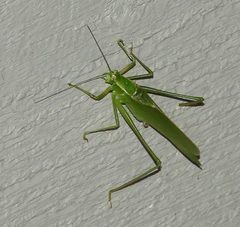
Scudderia septentrionalis, the northern bush , is a phaneropterine katydid in the Tettigoniidae. It is found in North America. Like other Scudderia , it is a bush-dwelling katydid with males that produce species-specific songs to attract mates. The species can be difficult to distinguish from without examination of male genitalic structures.
Pronunciation
How to pronounce Scudderia septentrionalis: /skəˈdɛɹiə sɛptɛnˈtɹiənɑːlɪs/
These audio files are automatically generated. While they are not always 100% accurate, they are a good starting point.
Identification
Reliable identification of Scudderia septentrionalis requires examination of the male supra-anal plate ( process), a horn-like structure at the rear of the . The specific shape of this structure distinguishes it from other Scudderia . Females and nymphs generally cannot be identified to species with confidence. Live specimens in the field are typically indistinguishable from because folded wings conceal diagnostic structures. Males possess stridulatory files on the forewings for sound production.
Images
Habitat
Occupies shrubby vegetation and bushes. Associated with woody and herbaceous plants where it feeds on foliage.
Distribution
North America. Documented distribution records include Georgia, Illinois, Indiana, Iowa, Kansas.
Diet
Folivorous. Feeds on leaves of shrubs and trees. Has been observed feeding on foliage of various woody plants.
Life Cycle
Females deposit between layers of leaf tissue using a curved, knife-like ovipositor, creating kidney bean-shaped bulges in leaves. Nymphs undergo six instars before reaching adulthood. Nymphs develop wing pads progressively through instars. occurs in the egg stage, with in spring.
Behavior
Males produce -specific calling songs by rubbing forewing stridulatory structures together. The song pattern is discontinuous, consisting of short, intermittent rasps. Males transfer a protein-rich to females during copulation. Both sexes are capable of . Primarily in activity.
Ecological Role
Herbivore in shrub and bush . Serves as prey for various including birds, spiders, and other arthropods.
Human Relevance
Occasionally considered a minor pest in orchards and citrus groves when reach high densities. Attracted to outdoor lights at night. Subject of ecological and behavioral study due to its distinctive .
Similar Taxa
- Scudderia furcataFork-tailed bush katydid is transcontinental and overlaps in range; distinguished by fork-shaped supra-anal plate in males versus different shape in S. septentrionalis
- Other Scudderia speciesAll eight recognized Scudderia in North America are extremely similar in external appearance; only male supra-anal plate provides reliable separation
More Details
Acoustic behavior
The discontinuous calling song, with its pattern of short intermittent rasps, is thought to reduce risk by making it more difficult for to localize the singing male.
Taxonomic history
Originally described as Phaneroptera septentrionalis by Serville in 1838 (or 1839 in some sources), later transferred to Scudderia.