superb meadow katydid
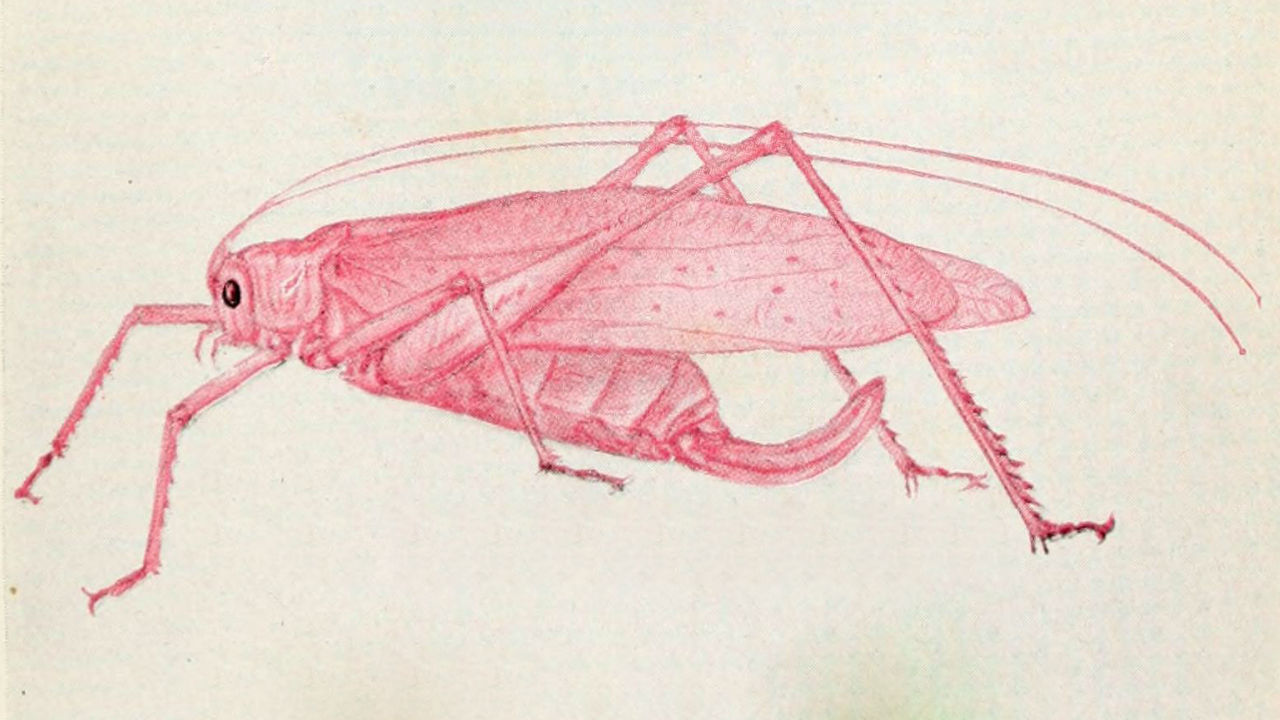
Orchelimum superbum, the superb meadow katydid, is a species of meadow katydid in the family Tettigoniidae. It is native to North America, with confirmed records from Florida, Georgia, Louisiana, Maryland, Mississippi, and Oklahoma. As a member of the genus Orchelimum, it shares characteristics with other meadow katydids, including long antennae and association with grassy or marshy habitats. The species was described by Rehn and Hebard in 1915.
Orocharis luteolira is a cricket species in the family Podoscirtidae, described by T.J. Walker in 1969. The genus Orocharis is part of the tribe Hapithini, a group of crickets commonly known as 'hapithine crickets' or 'bush crickets' found primarily in the Americas. The species is currently accepted in GBIF but listed as a synonym in Catalogue of Life, suggesting ongoing taxonomic revision. It has been recorded from North America.
Orocharis saltator is a cricket species in the family Oecanthidae (formerly placed in Gryllidae), described by Uhler in 1864. The genus Orocharis is currently classified within the tribe Hapithini, subfamily Podoscirtinae. This species is known from North America.
western true katydids
Paracyrtophyllus is a genus of western true katydids in the family Tettigoniidae, established by Caudell in 1906. The genus contains at least two described species: P. excelsus (Chisos katydid) and P. robustus (truncated true katydid). These insects are found in the southwestern United States and northeastern Mexico, with observations concentrated in Texas.
Central Texas Leaf-Katydid, Truncated True Katydid
Paracyrtophyllus robustus is a true katydid species in the family Tettigoniidae, described by Caudell in 1906. It is endemic to central Texas and surrounding regions of North America. The species is commonly known as the central Texas leaf katydid or truncated true katydid, reflecting both its geographic restriction and its leaf-mimicking appearance. It is among the more frequently observed katydid species in its range, with over 2,400 documented observations.
mimic grasshopper
Paraidemona is a genus of spur-throated grasshoppers in the family Acrididae, established by Brunner von Wattenwyl in 1893. The genus contains approximately nine described species distributed primarily in North America. One species, P. mimica, is commonly known as the mimic grasshopper. Members of this genus have been documented as prey for the parasitoid wasp Prionyx thomae.
mimic grasshopper
Paraidemona mimica is a species of spur-throated grasshopper in the family Acrididae, commonly known as the mimic grasshopper. It occurs in North America, with records from Texas and northeastern Mexico. The species has been documented as prey for the solitary wasp Prionyx thomae, which paralyzes and provisions grasshoppers for its offspring.
Paraidemona olsoni is a species of spur-throated grasshopper in the family Acrididae, described by Yin & Smith in 1989. It belongs to the subfamily Melanoplinae and tribe Dactylotini. The species is known from North America, with distribution records from Texas. It has been documented as prey for the parasitoid wasp Prionyx thomae.
Paraidemona species-a is a grasshopper in the family Acrididae, recorded as prey for the sphecid wasp Prionyx thomae. The genus Paraidemona belongs to the order Orthoptera, a group of herbivorous insects commonly known as grasshoppers, crickets, and locusts. This particular species designation ('species-a') suggests it may be an undescribed or provisionally identified taxon.
Paraidemona species-c is a grasshopper in the family Acrididae, documented as a recorded host of the sphecid wasp Prionyx thomae. The genus Paraidemona belongs to the band-winged grasshopper group, characterized by patterned hindwings. This species has been observed in the southwestern United States.
Parapleurini is a tribe of band-winged grasshoppers within the subfamily Oedipodinae. The tribe was established by Brunner von Wattenwyl in 1893. Members of this tribe share characteristics typical of Oedipodinae, including banded or colored hindwings that are visible in flight. The tribe is part of the large and diverse Acrididae family, commonly known as short-horned grasshoppers.
short-winged pygmy grasshopper
Paratettix brevipennis, commonly known as the short-winged pygmy grasshopper, is a minute orthopteran in the family Tetrigidae. As its common name indicates, this species possesses abbreviated wings relative to body size. It belongs to a family with over 2000 described species that has persisted for more than 230 million years. The species is found in North America, with distribution records from Texas.
Mexican pygmy grasshopper
Paratettix mexicanus is a species of pygmy grasshopper in the family Tetrigidae. It is one of the most frequently observed Tetrigidae species in North America on citizen science platforms. The species belongs to a family that has existed for over 230 million years, making pygmy grasshoppers one of the oldest lineages of modern insects.
rough-back pygmy grasshopper, rough-backed grouse locust
Paratettix rugosus is a pygmy grasshopper in the family Tetrigidae, characterized by its small size and distinctive rough-textured pronotum. It is one of approximately 35 pygmy grasshopper species in North America, part of a family that has persisted for over 230 million years. The species is found primarily in the southeastern United States, with records from Alabama and Florida.
Brunner's grasshopper
Paratylotropidia brunneri is a species of spur-throated grasshopper in the family Acrididae, first described by Scudder in 1897. The species has been the subject of cytogenetic study due to its unusual chromosome structure, with 19 chromosomes in diploid male cells including four V-shaped multiples. It is found in North America, primarily in the north-central United States.
virgata toothpick grasshopper
Paropomala virgata, the virgata toothpick grasshopper, is a species of slant-faced grasshopper in the family Acrididae. It is found in Central America and North America. The species was described by Scudder in 1899. Very little species-specific biological information is documented in available sources.
Pediodectes daedalus is a species of shieldback katydid in the family Tettigoniidae. The genus Pediodectes comprises wingless or short-winged katydids distributed across the Great Plains of North America. Adults of this genus are typically found in prairie and grassland habitats, often associated with herbaceous vegetation. Species in Pediodectes are known for their cryptic coloration, though some individuals may exhibit more contrasting markings. The genus is taxonomically challenging, with species identification often requiring examination of morphological details beyond external coloration.
grand shieldback
Pediodectes grandis, commonly known as the grand shieldback, is a species of shield-backed katydid in the family Tettigoniidae. The species was first described by Rehn in 1904 under the basionym Stipator grandis. It is distributed across parts of Central America and North America, with records from northeastern Mexico and Texas. Like other members of the genus Pediodectes, adults are wingless, which can complicate distinguishing adults from nymphs. The species is part of a genus where identification from photographs alone is challenging due to variable color patterns that change with individual age and condition.
Black-margined Shieldback
Pediodectes nigromarginatus, commonly known as the black-margined shieldback, is a species of shield-backed katydid in the family Tettigoniidae. It is found in central North America, with records from Iowa, Kansas, Nebraska, Oklahoma, and northeastern Mexico. The species belongs to a genus of wingless or short-winged katydids adapted to grassland and prairie habitats. Two subspecies are recognized: P. n. nigromarginatus and P. n. griseis.
Stevenson's shieldback
Pediodectes stevensonii, known as Stevenson's shieldback, is a species of shield-backed katydid in the family Tettigoniidae. It belongs to the genus Pediodectes, which comprises flightless katydids distributed across the Great Plains of North America. The species is characterized by its wingless condition and distinctive coloration patterns that differ from the more cryptic green typical of many katydids.
Tinkham's Shieldback, Tinkham's shieldback katydid
Pediodectes tinkhami, or Tinkham's shieldback, is a species of shield-backed katydid in the family Tettigoniidae. It is found in North America, with records from Texas and northeastern Mexico. Like other members of the genus Pediodectes, it is wingless as an adult, which can make distinguishing adults from nymphs difficult. Species identification within Pediodectes is challenging from photographs alone due to variable color patterns and age-related changes in appearance.
Silent Litter Crickets
A subfamily of crickets (family Gryllidae) distributed across tropical Asia, Africa, and the Americas. Members are commonly known as 'Silent Litter Crickets,' though the basis for this common name is not explicitly documented in available sources. The subfamily comprises four recognized tribes (Aphemogryllini, Homalogryllini, Nemobiopsini, Pentacentrini) and several unplaced genera, including fossil taxa. The tribe Lissotrachelini was moved to Nemobiinae.
spur-throated grasshopper
Phaedrotettix accola is a species of spur-throated grasshopper in the family Acrididae, first described by Scudder in 1897. It belongs to the subfamily Melanoplinae, a diverse group of grasshoppers commonly known as spur-throated grasshoppers due to a distinctive peg or spine on the prosternum. The species has been documented in North America with specific records from Texas.
Phaedrotettix concinnus is a species of spur-throated grasshopper in the family Acrididae, described by Scudder in 1897. It belongs to the subfamily Melanoplinae, a diverse group of North American grasshoppers. The genus Phaedrotettix is part of the tribe Melanoplini. Available records indicate occurrence in Texas, though detailed biological information remains limited.
Phaedrotettix dumicola is a species of spur-throated grasshopper belonging to the family Acrididae. It is native to North America. As a member of the subfamily Melanoplinae, it shares characteristics with other spur-throated grasshoppers, including a distinctive projection on the prosternum.
Phaedrotettix palmeri is a species of spur-throated grasshopper in the family Acrididae, described by Scudder in 1897. The species belongs to the subfamily Melanoplinae, a diverse group of grasshoppers commonly known as spur-throated grasshoppers due to the presence of a ventral projection on the pronotum. Available records indicate this species occurs in northeastern Mexico, though specific ecological details remain limited.
Leaf Katydids, Sickle-bearing Bush Crickets, False Katydids, Round-headed Katydids
Phaneropterinae is a large subfamily of katydids (family Tettigoniidae) comprising approximately 2,060 species in 85 genera worldwide. Members are commonly known as leaf katydids, sickle-bearing bush crickets, false katydids, or round-headed katydids. The subfamily name derives from the type genus Phaneroptera, meaning 'visible wing,' referring to the exposed tips of the inner wings in many species. The group was first erected by Hermann Burmeister in 1838 and represents one of the most diverse lineages within Tettigoniidae.
Phaulotettix ablusus is a species of grasshopper in the family Acrididae, described in 2011 from Mexico. It belongs to a genus of flightless desert grasshoppers that inhabit aridland scrub environments. The species is known from northeastern Mexico and shares behavioral traits with related taxa, including sheltering from extreme heat beneath vegetation.
Phaulotettix compressus is a species of grasshopper in the family Acrididae, described by Scudder in 1897. Records indicate a distribution in northeastern Mexico. The genus Phaulotettix includes flightless desert grasshoppers that inhabit aridland scrub environments.
Philocleon is a genus of grasshoppers in the family Acrididae, subfamily Melanoplinae. It was established by Scudder in 1897 and is endemic to Mexico. The genus comprises short-horned grasshoppers with distributions concentrated in central, northeastern, and southwestern regions of the country.
large-headed grasshopper, largeheaded grasshopper, red-nosed grasshopper, big head, large-headed locust
Phoetaliotes nebrascensis is a medium-sized, slim spur-throated grasshopper distinguished by its disproportionately large head relative to body size. It is a dominant species in North American tallgrass prairie and common in lush patches of mixedgrass prairie. The species exhibits wing dimorphism: most adults have short, non-functional wings, while a small percentage possess long wings enabling flight. It feeds almost exclusively on grasses, an unusual trait among spur-throated grasshoppers.
robust toad lubber, robust toad hopper
Phrynotettix robustus is a species of lubber grasshopper in the family Romaleidae, commonly known as the robust toad lubber or robust toad hopper. It is found in North America, with records from Arizona, Texas, and northeastern Mexico. The species was first described by Bruner in 1889. Three subspecies are recognized: P. r. robustus, P. r. manicola, and P. r. occultus.
handsome trig, red-headed bush cricket
Phyllopalpus is a genus of small, colorful winged bush crickets in the family Trigonidiidae. The genus contains approximately six described species distributed across the Americas, with P. pulchellus being the most well-known and widespread in North America. Members are distinguished by their striking coloration, enlarged maxillary palps, and arboreal habits. The genus was established by Uhler in 1864.
Red-headed Bush Cricket, Handsome Trig, Handsome Bush Cricket
Phyllopalpus pulchellus is a small, colorful cricket species in the subfamily Trigonidiinae, notable for its striking red head and thorax contrasting with dark wings and pale legs. Adults are active during mid- to late summer and are among the most frequently photographed North American crickets due to their distinctive appearance. The species exhibits several unusual traits including sexually dimorphic wing morphology, enlarged paddle-like maxillary palps of uncertain function, and a loud, high-pitched trilling song.
shield-backed katydids
Plagiostira is a North American genus of shield-backed katydids (family Tettigoniidae) containing at least three described species. It is the sole genus in the monotypic tribe Plagiostirini, established by Storozhenko in 1994. The genus was erected by Scudder in 1876, with Plagiostira albonotata designated as the type species. Species in this genus are large, robust katydids associated with arid and semi-arid habitats of the southwestern United States.
white-marked shieldback
Plagiostira albonotata, commonly known as the white-marked shieldback, is a species of shield-backed katydid in the family Tettigoniidae. It is a large, robust katydid found in arid regions of the southwestern United States. The species is characterized by distinctive white markings on its body. Observations indicate activity during summer months in desert and semi-desert habitats.
shield-backed-katydidOrthopteraTettigoniidaedesertsouthwestern-United-Statesnocturnalbrachypterouskatydidinsectarid-habitatyucca-associationsummer-activitywhite-markingslarge-body-sizePlagiostiriniTettigoniinaeNew-MexicoArizonaUtahwest-Texassand-dunesdesert-scrubcrepuscularlimited-flightScudder-1876Plagiostira-albonotatawhite-marked-shieldbackEnsiferaTettigoniideaTettigonioideaHexapodaArthropodaInsectaAnimaliaEukaryotaMetazoagrasshoppers,-crickets-&-katydidsPlagiostira28-observationsiNaturalistGBIFCatalogue-of-LifeNCBI-TaxonomyWikipediaBeetles-In-The-Bush2018-New-Mexico/Texas-Insect-Collecting-TripTed-C.-MacRaeJeff-HuetherJune-2–9,-2018southeastern-New-MexicoMescalero-Sand-DunesKermit,-TexasHwy-380San-AntonioBinghamSandia-MountainsWalking-Sands-Rest-AreaValley-of-Fire-National-Recreation-AreaSierra-Blanca-MountainsSunset,-New-MexicoHobbs,-New-MexicoKermit-Sand-DunesI-10-Rest-AreaFabens,-TexasCarlsbad,-New-MexicoLoco-Hills,-New-MexicoCarrizozo,-New-MexicoBingham,-New-MexicoSocorro,-New-MexicoThe-BoxyuccaProsopis-glandulosamesquiteOpuntia-imbricatachollaJuniperus-monospermajuniperSapindus-drummondiisoapberryAcacia-greggiicatclaw-acaciaAcacia-rigidablack-acaciaThelespermaDaleaPenstemonRobiniaCeltisGaillardiaOenetheraBaccharisSphaeralceaEphedraCacamacactus-dodger-cicadaTragidion-armatumPrionus-arenariusPrionus-palparisPrionus-integerPolyphyllaMoneilemacactus-beetleGyascutusAcmaeoderaChrysobothrisAgrilusEnoclerusActenodesParatyndarisAcmaeoderopsisBrachysNeoclytusCleridaeCerambycidaeBuprestidaeScarabaeidaeCarabidaeTenebrionidaeMeloidaeCoreidaePompilidaetarantula-hawkCicindelidaeCylindera-lemniscatatiger-beetleLycaenidaeBrephidium-exiliswestern-pygmy-blueEchinargus-isolaReakirt's-blueshieldbackdesert-insectnocturnal-insectbrachypterous-insectsummer-insectarid-land-insectyucca-associated-insectNew-Mexico-insectArizona-insectUtah-insectTexas-insectsouthwestern-US-insectNorth-American-insectNearctic-insectTettigoniidae-insectOrthoptera-insectEnsifera-insectTettigoniinae-insectPlagiostirini-insectPlagiostira-insectP.-albonotatawhite-marked-shieldback-katydidgiant-katydidlarge-katydiddesert-katydidsand-dune-katydidyucca-katydidnocturnal-katydidbrachypterous-katydidsummer-katydidScudder's-katydid1876-katydidOrthopterankatydid-speciesshieldback-speciesTettigoniidae-speciesPlagiostira-speciesdesert-speciesarid-speciesnocturnal-speciesbrachypterous-speciessummer-speciesNew-Mexico-speciesArizona-speciesUtah-speciesTexas-speciessouthwestern-US-speciesNorth-American-speciesNearctic-species Gillette's shieldback
Plagiostira gillettei is a shield-backed katydid in the family Tettigoniidae, first described by Caudell in 1907. The species occurs in arid and semi-arid regions of western North America, with records from California, Colorado, Nevada, and Utah. One subspecies, P. g. utahensis, is endemic to the Coral Pink Sand Dunes in Kane County, Utah. The common name honors an individual named Gillette, likely the collector or an entomological colleague.
Plagiostira gillettei utahensis is a subspecies of katydid in the family Tettigoniidae, described by Tinkham in 1962. It belongs to a genus characterized by large body size and brachypterous (short-winged) adults. The subspecies is distributed across the western United States including California, Colorado, Nevada, and Utah. Like other members of its genus, it is associated with arid and semi-arid habitats.
Mescalero Shieldback
Plagiostira mescaleroensis is a species of shield-backed katydid in the family Tettigoniidae, first described by Tinkham in 1960. It is endemic to the Mescalero Sands region of southeastern New Mexico, where it inhabits sand dune ecosystems. The species belongs to a genus characterized by distinctive morphological adaptations to arid environments. Like other members of Tettigoniidae, it is nocturnal and possesses sound-producing capabilities, though specific behavioral details remain poorly documented.
Gila Shieldback
Platyoplus gilaensis, commonly known as the Gila Shieldback, is a species of shield-backed katydid in the family Tettigoniidae. It is the sole described species in the monotypic genus Platyoplus. The species was described by Tinkham in 1973 and is known from the southwestern United States.
Red-lined Grasshopper
Poecilotettix sanguineus, commonly known as the red-lined grasshopper, is a species of spur-throated grasshopper in the family Acrididae. It is native to North America, with documented occurrences in Arizona and California. The species was described by Scudder in 1897 and belongs to the tribe Dactylotini within the subfamily Melanoplinae.
Arizona camel cricket
Pristoceuthophilus arizonae is a species of camel cricket (family Rhaphidophoridae) described by Hebard in 1935. As a member of the Rhaphidophoridae, it belongs to a group of wingless, nocturnal orthopterans commonly associated with dark, moist microhabitats. The species is endemic to the southwestern United States, with confirmed records from Arizona.
grigs, primitive katydids
Prophalangopsidae is the sole extant family of the ancient superfamily Hagloidea (Orthoptera). The family comprises a small number of relict species in North America and Asia, alongside numerous extinct genera known from Jurassic and Cretaceous deposits. Extant members are known as "grigs" in North America. The family diverged from its closest living relatives, the katydids (Tettigoniidae), over 230 million years ago during the Permian, making it one of the most phylogenetically isolated orthopteran lineages. Fossil evidence documents substantial diversity during the Middle Jurassic to Early Cretaceous, with sparse records thereafter.
Snow's Toothpick Grasshopper
A slender toothpick grasshopper species described by Rehn in 1911. Known from Arizona and parts of the southwestern United States and Middle America. Exhibits strong cryptic coloration adapted to blend with lichen-encrusted substrates in its arid habitat.
Caudell's Long-horned Grasshopper
Psinidia amplicornus, commonly known as Caudell's Long-horned Grasshopper, is a species of band-winged grasshopper in the family Acrididae. It belongs to the tribe Psinidiini within the subfamily Oedipodinae, a group characterized by often having colorful hind wings. The species was described by Caudell in 1903 and is native to the south-central United States.
longhorn band-wing grasshopper, long-horned grasshopper, long-horned locust, sand locust
Psinidia fenestralis is a species of band-winged grasshopper in the family Acrididae, commonly known as the longhorn band-wing grasshopper. It is distributed across the Caribbean and North America, with records from Cuba, Florida, Georgia, and Texas. The species belongs to the tribe Psinidiini within the subfamily Oedipodinae, a group characterized by banded hindwings and associated with open, often sandy habitats.
Psinidiini is a tribe of band-winged grasshoppers within the subfamily Oedipodinae, established by Otte in 1970. Members of this tribe are classified under the family Acrididae and share the characteristic banded wing patterns typical of the Oedipodinae. The tribe comprises multiple genera distributed primarily in arid and semi-arid regions.
White Mountain Grasshopper
Psychomastax inyo, commonly known as the White Mountain Grasshopper, is a species of monkey grasshopper in the family Eumastacidae. It was described by Rehn and Grant in 1959. The species is found in North America, with distribution records from California. As a member of Eumastacidae, it belongs to a group commonly referred to as monkey grasshoppers, characterized by their distinctive morphology and behavior. Available information on this species is limited, with only three observations recorded in iNaturalist.
San Jacinto monkey grasshopper
Psychomastax psylla, commonly known as the San Jacinto monkey grasshopper, is a species of monkey grasshopper in the family Eumastacidae. It was described by Rehn and Hebard in 1918. The species is endemic to North America, with records from California. Monkey grasshoppers are a distinct group within Orthoptera characterized by their small size and unusual morphology compared to typical grasshoppers.
coneheads
Pyrgocorypha is a genus of conehead katydids in the family Tettigoniidae, established by Carl Stål in 1873. The genus comprises approximately 16 described species distributed across the Americas and southern and eastern Asia. Members of this genus are recognized by their distinctive head morphology, particularly the modified fastigium (cone) that projects forward from the vertex. The hook-faced conehead (Pyrgocorypha uncinata) is among the most distinctive North American species, characterized by a pronounced hook at the tip of its cone.