
Pediodectes stevensonii
(Thomas, 1870)
Stevenson's shieldback
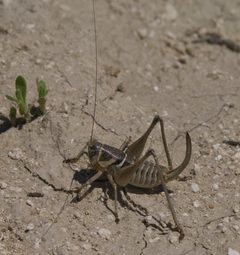
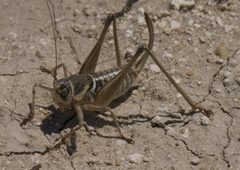
Pediodectes stevensonii, known as Stevenson's shieldback, is a of shield-backed katydid in the Tettigoniidae. It belongs to the Pediodectes, which comprises flightless katydids distributed across the Great Plains of North America. The species is characterized by its wingless condition and distinctive coloration patterns that differ from the more cryptic green typical of many katydids.

Pronunciation
How to pronounce Pediodectes stevensonii: //ˌpiːdi.oʊˈdɛktiːz ˌstiːvənˈsoʊni.aɪ//
These audio files are automatically generated. While they are not always 100% accurate, they are a good starting point.
Identification
Identification to within the Pediodectes is challenging from photographs alone due to variable color patterns and age-related changes. are wingless, complicating distinction from nymphs. Distribution is a key clue: P. stevensonii occurs in the central Great Plains, with records from Colorado, Kansas, Montana, Nebraska, and New Mexico. The species can be distinguished from P. haldemani, which occurs further east in the Great Plains, by geographic range and subtle differences in body proportions and color pattern, though definitive identification may require examination of genitalia or acoustic signals.
Images
Habitat
Great Plains grassland and prairie , including areas with prickly pear cactus and mixed vegetation. The has been documented in association with flowering plants and open, dry to mesic grasslands.
Distribution
Central North American Great Plains: recorded from Colorado, Kansas, Montana, Nebraska, and New Mexico. The distribution centers on the shortgrass prairie and mixed-grass prairie regions of the central United States.
Seasonality
are active during the summer months, with observations in June documented. Activity period likely extends from late spring through summer, typical for Great Plains katydids.
Life Cycle
Development includes , nymphal, and stages. Nymphs and adults are both wingless, making stage determination difficult based on external alone. The is or semi-annual, with likely occurring in the egg stage.
Behavior
are and relatively approachable, showing limited response to disturbance. Individuals have been observed sitting conspicuously in flowers rather than hiding in vegetation, suggesting reduced compared to winged, green katydids. The produces acoustic signals (songs) typical of katydids, though specific song characteristics are not well documented.
Ecological Role
Herbivorous member of grassland . Serves as prey for various including birds, reptiles, and predatory insects. Contributes to nutrient cycling through herbivory and as a food source in prairie .
Human Relevance
Subject of interest to entomologists and naturalists studying Great Plains Orthoptera. The has been documented through citizen science platforms and contributes to understanding of diversity in North American grasslands.
Similar Taxa
- Pediodectes haldemaniOverlaps in general and wingless condition; distinguished by geographic distribution (P. haldemani occurs further east in the Great Plains, with type locality in Kansas), and subtle differences in body proportions and color pattern. Both show variable coloration that complicates visual identification.
- Other Pediodectes speciesThe contains multiple with similar wingless, shield-backed ; accurate identification often requires geographic context, examination of male genitalia, or analysis of acoustic signals.
More Details
Taxonomic history
Originally described by Thomas in 1870. The Pediodectes was established to accommodate flightless katydids of the Great Plains with distinctive morphological features.
Conservation status
Not formally assessed; appears to be relatively widespread within its core range but likely vulnerable to grassland loss and fragmentation.
Sources and further reading
- BugGuide
- Wikipedia
- GBIF taxonomy match
- iNaturalist taxon
- NCBI Taxonomy
- Catalogue of Life
- Haldeman’s shieldback katydid (Pediodectes haldemani) | Beetles In The Bush
- Tettigoniidae | Beetles In The Bush | Page 2
- August | 2013 | Beetles In The Bush | Page 2
- Archives | Beetles In The Bush
- Great Plains | Beetles In The Bush | Page 4