Pediodectes
Rehn & Hebard, 1916
shield-backed katydids
Species Guides
7- Pediodectes bruneri(Bruner Shieldback)
- Pediodectes daedalus
- Pediodectes grandis(grand shieldback)
- Pediodectes haldemanii(Haldeman's shieldback)
- Pediodectes nigromarginatus(Black-margined Shieldback)
- Pediodectes stevensonii(Stevenson's shieldback)
- Pediodectes tinkhami(Tinkham's Shieldback)
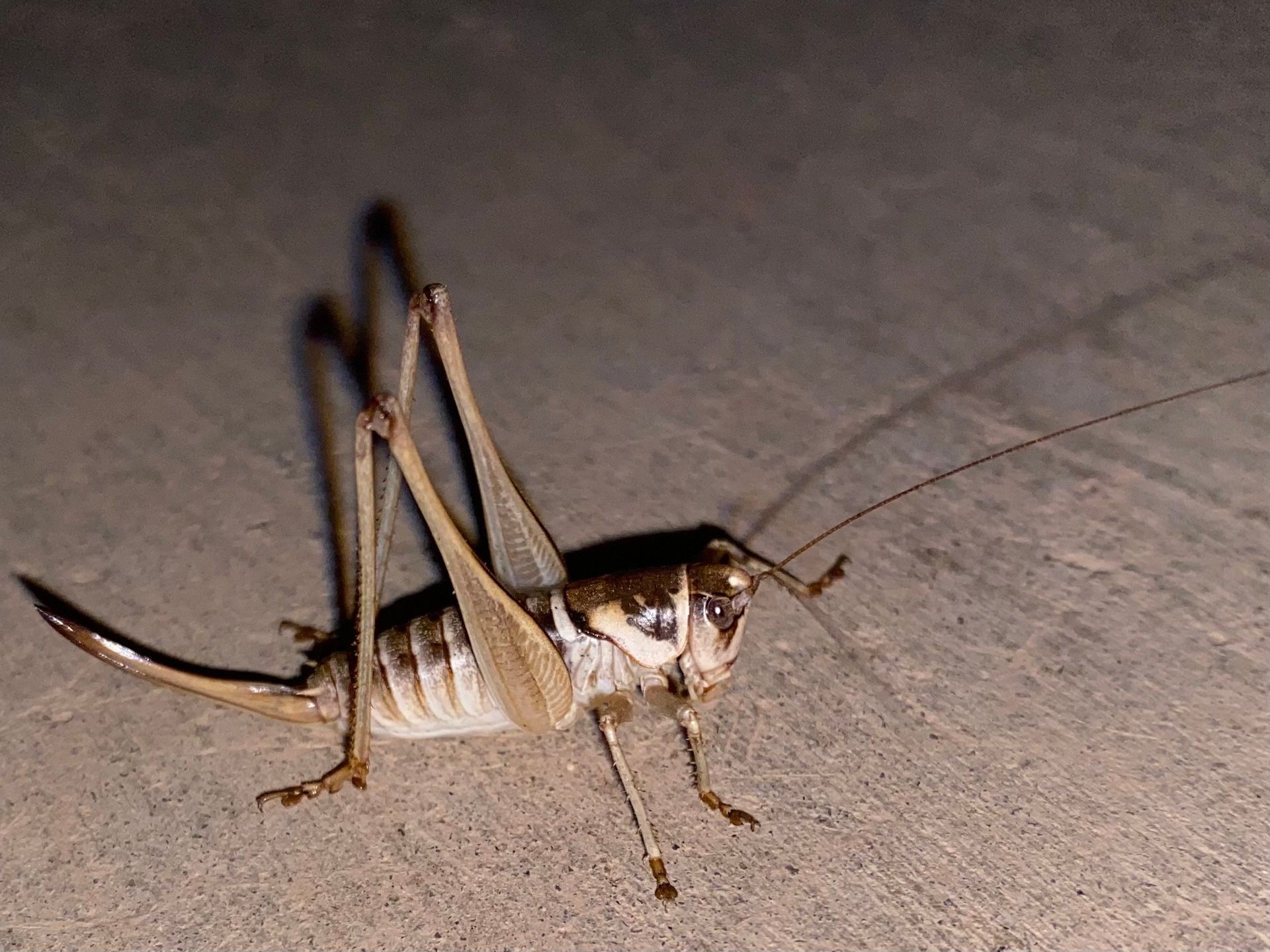
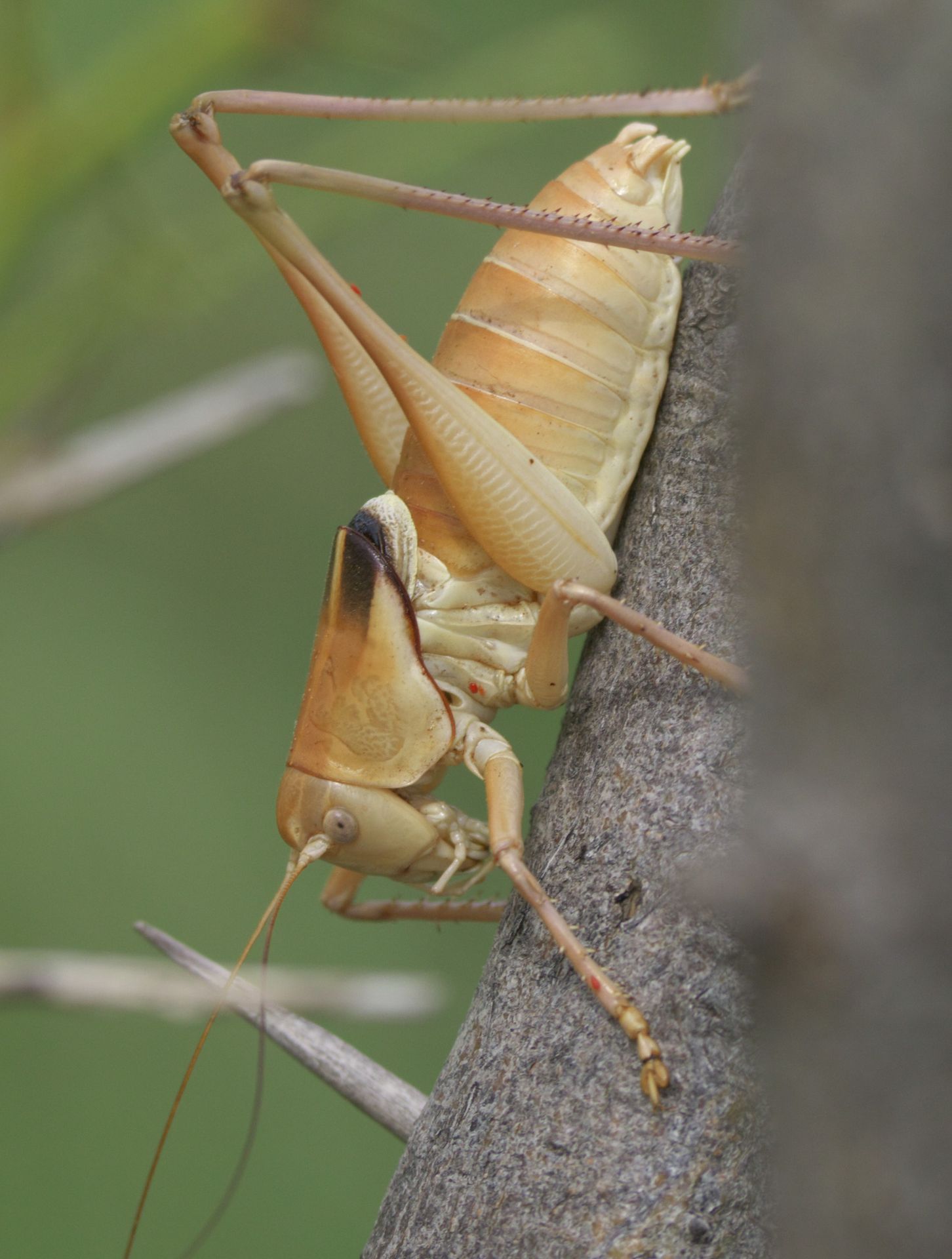
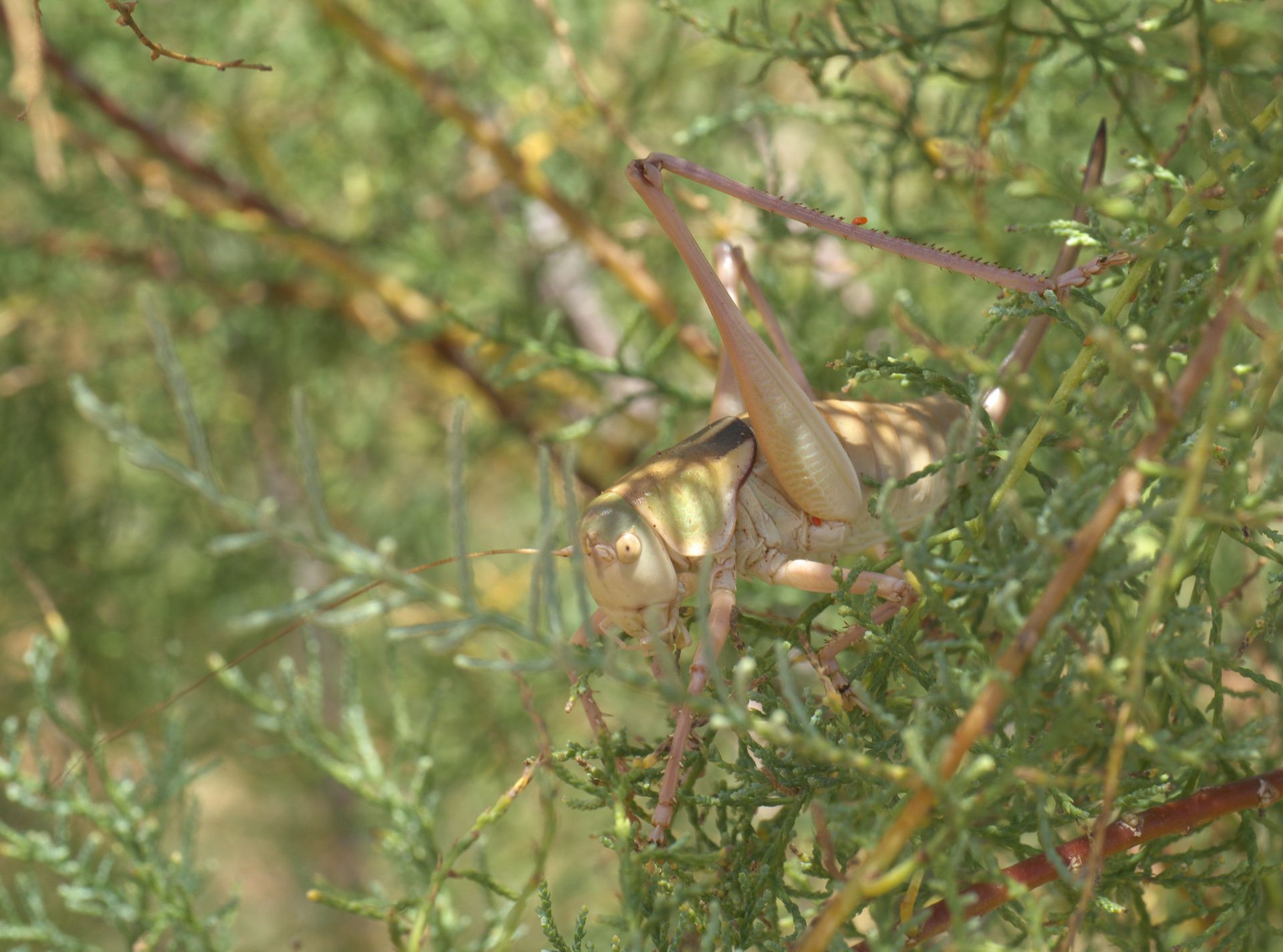
Pediodectes is a of shield-backed katydids in the Tettigoniidae, containing approximately 9-12 described distributed across the Great Plains and adjacent regions of central North America. Members of this genus are characterized by their wingless or short-winged condition, enlarged pronotum that extends backward over the , and often striking color patterns. The genus was established by Rehn and Hebard in 1916 and is classified within the tribe Platycleidini.
Pronunciation
How to pronounce Pediodectes: //ˌpiːdiəʊˈdɛktiːz//
These audio files are automatically generated. While they are not always 100% accurate, they are a good starting point.
Identification
-level identification from photographs alone is difficult due to individual and age-related variation in color patterns. Distribution maps and knowledge of local fauna are essential for accurate determination. are wingless, making it challenging to distinguish them from nymphs of other species. The shield-backed (enlarged pronotum covering ) separates Pediodectes from most other North American katydid . Within the genus, subtle differences in pronotal shape, body proportions, and color pattern are used for species identification.
Images
Habitat
Inhabits grasslands, prairies, and open woodland edges of the Great Plains region. Associated with herbaceous vegetation including forbs and grasses. One (P. haldemani) has been observed in prickly pear cactus (Opuntia macrorhiza) flowers, suggesting utilization of diverse plant structures within open .
Distribution
Central North America, primarily the Great Plains region. Documented from Colorado, Iowa, Kansas, Louisiana, and Montana. The type locality of P. haldemani is Barber County, Kansas. occurrence extends from the Canadian prairies southward to Texas and adjacent regions.
Seasonality
active during summer months, with observations in June documented from Oklahoma. Timing likely varies by latitude and .
Host Associations
- Opuntia macrorhiza - observed in flowersPediodectes haldemani observed sitting inside yellow flowers of prickly pear cactus at Gloss Mountain State Park, Oklahoma
Behavior
are wingless and incapable of . Individuals have been observed to be relatively unresponsive to disturbance when feeding or resting in flowers, allowing close approach. Cryptic typical of katydids is reduced in some with conspicuous coloration. Presumed to be primarily or based on -level characteristics, though observations exist.
Similar Taxa
- NeobarrettiaAlso contains large, robust katydids with striking coloration and reduced wings, but Neobarrettia are predatory with enlarged and spiny forelegs, and occur in more arid southwestern
- Other Tettigoniidae generaMost other North American possess well-developed wings in and lack the greatly enlarged pronotum that characterizes Pediodectes
More Details
Taxonomic note
The number of described varies between sources (9 vs. 12), reflecting ongoing taxonomic work and differing species concepts. The is classified within the Platycleidini, a tribe of primarily Old World distribution with Pediodectes representing a New World lineage.
Identification challenges
BugGuide and Singing Insects of North America both note the difficulty of identification from photographs alone in this , emphasizing the need for specimen examination and geographic context.