
Pediodectes haldemanii
(Girard, 1854)
Haldeman's shieldback, American shield-back katydid
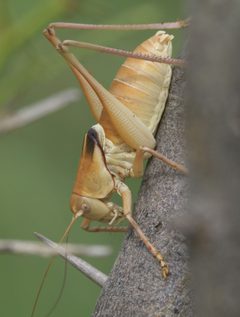
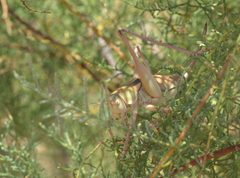
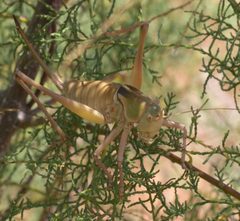
Pediodectes haldemanii is a large, flightless shield-backed katydid native to the Great Plains of North America. lack the leaf-like wings typical of many katydids and exhibit striking dark red markings against a green body. The is known for its relatively docile and has been observed feeding on cactus flowers.
Pronunciation
How to pronounce Pediodectes haldemanii: //ˌpiːdiəˈdɛktiːz ˈhɔːldəˌmeɪniː//
These audio files are automatically generated. While they are not always 100% accurate, they are a good starting point.
Identification
are wingless, making them distinct from most katydids. Body coloration is green with contrasting dark red or reddish-brown markings across the surface. The pronotum is enlarged and shield-like, extending over the . Individuals vary in color pattern with age. Separation from other Pediodectes requires careful examination and may be difficult from photographs alone due to individual variation.
Images
Habitat
Great Plains grasslands and prairies. Documented from prickly pear cactus (Opuntia macrorhiza) in Oklahoma.
Distribution
Great Plains region of central North America. Recorded from Colorado, Kansas, Louisiana, Nebraska, New Mexico, and Oklahoma. Type locality is Barber County, Kansas.
Diet
Has been observed feeding on cactus flower stamens. Specific dietary breadth otherwise poorly documented.
Host Associations
- Opuntia macrorhiza - flower visitor/feeding siteobserved with buried in stamens
Life Cycle
stage unknown. are present in summer (June observations in Oklahoma).
Behavior
Exhibits notably docile temperament; one individual allowed close approach and photography without fleeing. Lacks cryptic typical of many katydids, sitting conspicuously in open flowers rather than concealed in foliage.
Similar Taxa
- Other Pediodectes specieswingless with similar body plan; color patterns vary individually and with age, making photographic identification difficult
- Neobarrettia spinosalarge, robust, flightless with striking coloration and reduced wings, but distinguished by spiny forelegs, large predatory , and aggressive defensive posture