
Neobarrettia
Rehn, 1901
arid-land katydid, spiny predatory katydid
Species Guides
2- Neobarrettia spinosa(Greater Arid-land Katydid)
- Neobarrettia victoriae(lesser arid-land katydid)
Neobarrettia is a of nine North American predatory katydids distinguished by prominent spines and powerful adapted for carnivory. These insects inhabit arid and semi-arid regions from the southwestern United States through Mexico. They are known for aggressive threat displays and the ability to inflict painful bites when handled.
Pronunciation
How to pronounce Neobarrettia: //ˌniːoʊ.bəˈrɛ.ti.ə//
These audio files are automatically generated. While they are not always 100% accurate, they are a good starting point.
Identification
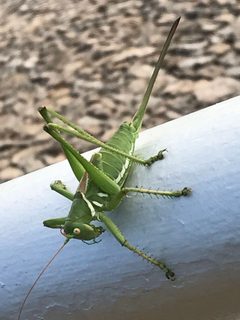
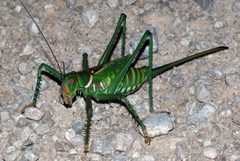
Distinguished from other Tettigoniidae by combination of: robust body with prominent thoracic and abdominal spines; large, heavily sclerotized with sharp dentes and incisors visible even in closed position; relatively small, round, high-set ; and flattened facial profile lacking the conical shape of cone-headed katydids. are long and multi-segmented. Coloration in life is typically green, fading to yellow-brown after death.
Images
Habitat
Arid and semi-arid environments including desert scrub, grasslands, and open rocky areas.
Distribution
Southwestern United States (Arizona, New Mexico, Oklahoma, Kansas) and Mexico.
Diet
Predatory on other insects; has been observed capturing and consuming caterpillars and other prey.
Behavior
Performs conspicuous threat displays when disturbed; capable of inflicting painful defensive bites with enlarged .
Ecological Role
in arid-land insect .
Human Relevance
Bites can draw blood and cause pain; caution advised when handling.
Similar Taxa
- PterophyllaBoth are North American Tettigoniidae, but Pterophylla lacks the prominent body spines and enlarged predatory of Neobarrettia.
- OrchelimumSimilar body plan, but Orchelimum are not spiny and have less developed mandibular armature.
- StenopelmatidaeSimilar robust build and spiny appearance, but Jerusalem crickets have different shape (more bulbous), different proportions, and lack the flattened facial profile.