
Tanaocerus
Bruner, 1906
desert long-horned grasshoppers
Species Guides
1- Tanaocerus koebelei(Koebele's desert long-horned grasshopper)
Tanaocerus is a of desert-dwelling grasshoppers in the Tanaoceridae, containing at least two described : T. koebelei and T. rugosus. These insects are restricted to arid regions of the southwestern United States and northwestern Mexico. The genus is notable for its elongated , a distinctive trait that separates it from most other groups.
Pronunciation
How to pronounce Tanaocerus: //ˌtænəˈsɪərəs//
These audio files are automatically generated. While they are not always 100% accurate, they are a good starting point.
Identification
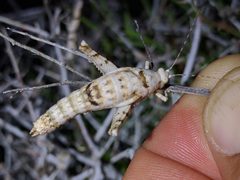
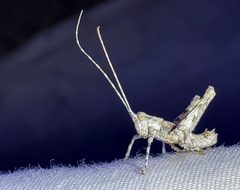
Distinguished from other by exceptionally long, thread-like that exceed body length. Members of Tanaoceridae are the only grasshoppers with antennae this elongated; most other grasshopper families (Acrididae, Romaleidae, etc.) have short, stout antennae. The Tanaocerus itself lacks obvious external characters separating it from the only other genus in the family, Tanaoceroides, and requires examination of male genitalia for definitive identification.
Images
Habitat
Restricted to desert environments, particularly sandy or rocky arid lands with sparse vegetation.
Distribution
Recorded from California, Nevada (USA), and northwestern Mexico.
Similar Taxa
- TanaoceroidesOnly other in Tanaoceridae; shares the diagnostic long- trait but differs in male genitalia structure and geographic distribution.
- Acrididae (short-horned grasshoppers)Commonly confused due to general body plan, but immediately distinguished by short versus the extremely long antennae of Tanaocerus.
More Details
Family placement note
Tanaoceridae has been placed in different superfamilies by various authorities; Catalogue of Life places it in , while some sources (including NCBI) have historically placed it in . The is now generally accepted as distinct and basal within Caelifera.
Species diversity
Only two are formally described, but the may be under-collected due to its or habits and remote desert .