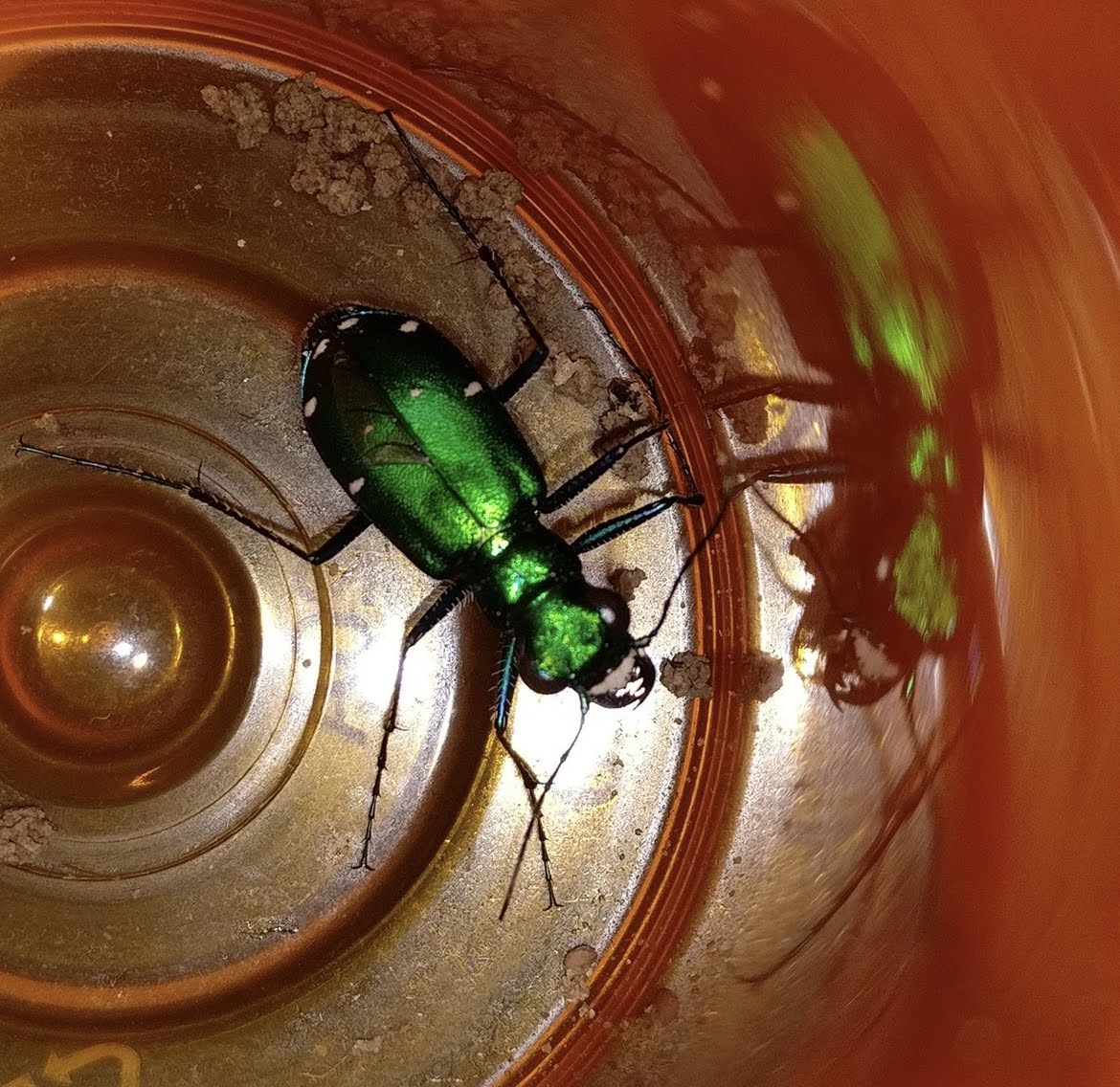
Chrysobothris breviloba is a metallic wood-boring beetle in the family Buprestidae, first described by Fall in 1910. It is known from western North America, with records from Alberta and British Columbia in Canada. Like other members of the genus Chrysobothris, it is presumed to develop as a larva in dead or dying wood, though specific host associations for this species remain poorly documented.
Chrysobothris californica is a metallic wood-boring beetle in the family Buprestidae. The species was described by LeConte in 1860 and occurs in North America. Like other members of the genus Chrysobothris, it is associated with woody plants, though specific host records for this species are not well documented in the available literature.
metallic wood-boring beetle
Chrysobothris chlorocephala is a species of metallic wood-boring beetle in the family Buprestidae, first described by Gory in 1841. It is found in North America, with confirmed records from Vermont and other parts of the United States. Like other members of the genus Chrysobothris, it is a wood-boring beetle whose larvae develop in woody plants.
Chrysobothris convexa is a species of jewel beetle in the family Buprestidae, described by Fall in 1907. As a member of the hyperdiverse genus Chrysobothris, it belongs to one of the most taxonomically challenging groups of North American beetles. The genus is characterized by cryptic coloration, alert behavior, and association with woody plants. Available information about this specific species is extremely limited, with only a single observation record documented in iNaturalist and no detailed biological studies published.
Chrysobothris eriogoni is a metallic wood-boring beetle in the family Buprestidae, described by Westcott in 2005 from specimens collected in Oregon and Washington. As a member of the speciose genus Chrysobothris, it belongs to a group of jewel beetles known for their metallic coloration and association with woody plants. The species epithet 'eriogoni' suggests a potential association with Eriogonum (wild buckwheat), though this host relationship has not been explicitly documented in the available literature.
Chrysobothris fiskei is a species of metallic wood-boring beetle in the family Buprestidae. It was described by Fisher in 1942. The species is known to occur in Central America and North America, though specific details regarding its biology, host associations, and morphology remain poorly documented in the available literature. Like other members of the genus Chrysobothris, it likely develops as a larva in woody plant tissue.
Chrysobothris harrisi is a metallic wood-boring beetle in the family Buprestidae. The species was described by Hentz in 1827 and is sometimes misspelled as "harrisii". It belongs to the large genus Chrysobothris, which contains numerous species of jewel beetles in North America. Like other members of its genus, this species exhibits metallic coloration typical of buprestid beetles.
Chrysobothris hubbardi is a species of metallic wood-boring beetle (family Buprestidae) described by Fisher in 1942. The species is part of the large genus Chrysobothris, which contains numerous North American jewel beetles, many of which are associated with specific host plants. Available information about this species is extremely limited, with only basic taxonomic documentation and distribution records confirming its presence in North America.
Chrysobothris lateralis is a metallic wood-boring beetle in the family Buprestidae, first described by Waterhouse in 1887. The species is distributed across Central America and North America. As with other members of the genus Chrysobothris, it is presumed to have wood-boring larvae that develop within host plants, though specific biological details for this species remain poorly documented in the available literature.
Chrysobothris ludificata is a metallic wood-boring beetle in the family Buprestidae, described by George Henry Horn in 1886. It is a member of the large genus Chrysobothris, which contains numerous species that are often difficult to distinguish from one another. The species is known to occur in Central America and North America, though specific details about its biology, host associations, and habitat preferences remain poorly documented in the available literature.
Chrysobothris micromorpha is a species of jewel beetle in the family Buprestidae, described by Fall in 1907. It belongs to the large genus Chrysobothris, which contains numerous wood-boring species in North America. Like other members of this genus, it is likely associated with dead or dying woody plants, though specific biological details for this species remain poorly documented. The species is known from both North America and Middle America based on occurrence records.
Chrysobothris pseudacutipennis is a species of metallic wood-boring beetle (Buprestidae) described by Obenberger in 1940. It belongs to the large genus Chrysobothris, which contains numerous North American species often associated with woody host plants. The species is recorded from both North America and Central America. Like other members of its genus, it likely develops as a larva in dead or dying wood, though specific biological details remain poorly documented.
Chrysobothris purpureovittata purpureovittata is a subspecies of jewel beetle in the family Buprestidae, distributed primarily in the central and south-central United States. This taxon is notable for its exceptional polyphagy, having been reared from more than two dozen species of deciduous trees across eleven plant families. Adults are typically encountered by beating foliage, particularly of hackberry (Celtis spp.) and other members of Ulmaceae, though larval hosts span multiple families including Rosaceae, Fagaceae, and Rhamnaceae.
A metallic wood-boring beetle in the family Buprestidae, native to North America. The species name 'rotundicollis' refers to its rounded pronotum. Like other members of the genus, it likely develops in woody plants, though specific host associations remain poorly documented. The species is recognized from scattered records across Canada and the United States.
A metallic wood-boring beetle in the family Buprestidae, described by LeConte in 1860. It occurs in North America. Like other members of the genus Chrysobothris, it is likely associated with woody plants, though specific host associations for this species have not been documented in the available sources.
Chrysobothris serripes is a species of jewel beetle in the family Buprestidae, described by Schaeffer in 1905. It belongs to the large genus Chrysobothris, which contains numerous wood-boring species associated with various host plants. The specific epithet "serripes" refers to the serrated or saw-like nature of the legs, though detailed biological information for this particular species appears limited in the available literature. As with many Chrysobothris species, it is presumed to develop in woody plant material, though specific host associations have not been documented in the sources consulted.
Chrysobothris viridicyanea is a species of metallic wood-boring beetle in the family Buprestidae, first described by Horn in 1886. It is distributed across North America. Like other members of the genus Chrysobothris, it is a jewel beetle characterized by metallic coloration and wood-boring larval habits. The specific epithet combines Latin roots meaning "green-blue," likely referring to its metallic coloration.
Chrysobothris wickhami is a jewel beetle (family Buprestidae) described by Fisher in 1942. The species belongs to the large genus Chrysobothris, a group of wood-boring beetles commonly known as flatheaded borers. Like other members of the Chrysobothris femorata species-group, it is likely associated with woody host plants, though specific biological details remain poorly documented. The species is recognized as valid and accepted in current taxonomic databases.
Chrysobothris woodgatei is a metallic wood-boring beetle in the family Buprestidae, first described by Champlain and Knull in 1922. It belongs to the large genus Chrysobothris, a group of jewel beetles known for their metallic coloration and association with woody plants. The species is recorded from North America, though specific details regarding its biology, host associations, and distribution remain poorly documented compared to better-known congeners such as those in the C. femorata species-group.
Chrysolina basilaris is a leaf beetle in the family Chrysomelidae. It was described by Thomas Say in 1824. The species occurs in North America, with records from western Canada including Alberta, British Columbia, and Yukon Territory. As a member of the genus Chrysolina, it belongs to a group of leaf beetles known for feeding on various plants, though specific details for this species are limited.
Chrysolina schaefferi is a species of leaf beetle in the family Chrysomelidae, first described by Brown in 1962. The species is known from North America. As a member of the genus Chrysolina, it belongs to a group of leaf beetles commonly associated with herbaceous plants, though specific ecological details for this species remain poorly documented. The species appears to be rarely collected, with limited observation records available.
Chrysolina subsulcata is a leaf beetle species in the family Chrysomelidae, first described by Mannerheim in 1853. It has a Holarctic distribution, occurring across Europe, Northern Asia (excluding China), and North America. The species is one of approximately 150 recognized species in the genus Chrysolina, a group of leaf beetles often associated with specific host plants.
alder leaf beetle
Chrysomela interrupta, the alder leaf beetle, is a leaf beetle in the family Chrysomelidae found in North America. It is one of several species in the genus Chrysomela associated with woody host plants. The species is documented in entomological records and citizen science observations, though detailed biological studies appear limited in the accessible literature.
Chrysomela lineatopunctata is a leaf beetle in the family Chrysomelidae. It is native to North America and has been recorded in several Canadian provinces including Alberta, British Columbia, and Manitoba. The species belongs to a genus of leaf beetles that are primarily associated with woody host plants, particularly willows and related Salicaceae.
Chrysomela schaefferi is a species of leaf beetle in the family Chrysomelidae. It was described by W.J. Brown in 1956 and is found in North America, with records from Canadian provinces including Alberta, British Columbia, and Manitoba. As a member of the genus Chrysomela, it belongs to a group of leaf beetles that are typically associated with willow and poplar host plants.
Ring-clawed Deer Fly
Chrysops cincticornis is a deer fly in the family Tabanidae, first described by Walker in 1848. It is commonly known as the Ring-clawed Deer Fly. The species has been documented in Vermont and other parts of the United States, with 291 observations recorded on iNaturalist. Research on this species has focused on its oviposition behavior and fecundity, with laboratory studies showing females deposit eggs in gelatinous masses on mud substrates near water, averaging 156 eggs per female.
Cibdelis is a genus of darkling beetles in the subfamily Stenochiinae, distributed in the Nearctic region. The genus includes at least one well-documented species, Cibdelis blaschkei, which inhabits forested regions of California. Larvae and pupae develop in soft, rotten, dry wood of dead branches on living trees or recently fallen sections. Both life stages possess antipredator defense structures, including urogomphi (pinching organs) on the terminal abdominal segments.
Lake Bonneville Tiger Beetle
Cicindela decemnotata bonnevillensis is a subspecies of the Badlands Tiger Beetle described in 2012 based on morphological and molecular evidence. It is one of four recognized subspecific entities within C. decemnotata, a species that has undergone rapid phylogenetic radiation following glacial recession approximately 10,000 years ago. The subspecies name refers to its association with the former Lake Bonneville basin.
Dispirited Tiger Beetle
Cicindela depressula depressula is a subspecies of tiger beetle in the family Carabidae, known by the common name Dispirited Tiger Beetle. As a member of the Cicindelinae subfamily, it shares the characteristic traits of tiger beetles: large eyes, long legs, and predatory habits. This subspecies is part of the nominate form of C. depressula.
Mescalero Sand Tiger Beetle
Cicindela formosa rutilovirescens is a sand dune endemic subspecies of tiger beetle restricted to the Mescalero Sands region of southeastern New Mexico and adjacent Texas. First described by Rumpp in 1986, it is distinguished from other C. formosa subspecies by its distinctive greenish-red to coppery coloration. The subspecies is active in late summer and fall, with adults running on open sandy surfaces. It is considered uncommon and patchily distributed within its restricted habitat range.
Boreal Long-lipped Tiger Beetle, long-lipped tiger beetle
Cicindela longilabris is a North American tiger beetle found in boreal and high-elevation habitats. The species is characterized by elongated mouthparts, reflected in both its scientific and common names. Three subspecies are recognized: C. l. longilabris, C. l. laurentii, and C. l. perviridis. Populations exhibit physiological adaptations to thermal and hydric conditions in their respective habitats.
Dappled Tiger Beetle
Cicindela oregona guttifera is a subspecies of the Western Tiger Beetle, a ground-dwelling predatory beetle in the family Carabidae. The subspecies occurs in western North America, where adults are active hunters in sandy riparian and coastal habitats. Like other tiger beetles, it is characterized by large eyes, long legs, and prominent mandibles adapted for capturing small prey. The species exhibits the typical tiger beetle behavior of fast running, intermittent stopping to refocus vision, and rapid flight when disturbed.
festive tiger beetle
Cicindela scutellaris, commonly known as the festive tiger beetle, is a widespread North American tiger beetle species occupying deep, dry sand habitats east of the Rocky Mountains. The species exhibits extraordinary geographic variability in coloration and maculation patterns across its range, with seven generally accepted subspecies recognized. Populations in Missouri represent a notable intergrade zone between northern and southeastern subspecies. The species is frequently associated with Cicindela formosa (big sand tiger beetle) in suitable habitats.
Prairie Tiger Beetles, Limestone Tiger Beetles, Miami Tiger Beetle (for C. floridana), Highlands Tiger Beetle (for C. highlandensis), Scabrous Tiger Beetle (for C. scabrosa)
Cicindelidia is a genus of small to medium-sized tiger beetles primarily distributed in North America, with greatest diversity in the southern and western United States. The genus includes several notable species groups, most prominently the abdominalis species-group containing four sand-dwelling species (C. abdominalis, C. floridana, C. highlandensis, C. scabrosa) with red venters. Many species exhibit specialized habitat associations, including thermal springs (C. haemorrhagica), limestone outcrops (C. politula), pine rocklands (C. floridana), and sand scrub habitats (C. scabrosa, C. highlandensis). Several species are of conservation concern due to restricted ranges and habitat loss.
Melissa's Tiger Beetle
Cicindelidia melissa, commonly known as Melissa's Tiger Beetle, is a species of tiger beetle in the family Cicindelidae. The species was described by Duran and Roman in 2014 and is currently classified under the genus Cicindelidia. Tiger beetles in this genus are known for their fast-running predatory behavior and often striking coloration. The specific epithet 'melissa' honors an individual, though the exact namesake is not documented in available sources.
Limestone Tiger Beetle
Cicindelidia politula viridimonticola is a subspecies of the Limestone Tiger Beetle, a member of the tiger beetle family Cicindelidae. The species C. politula is primarily distributed in Texas and adjacent Oklahoma, where it inhabits dry to xeric upland areas with limestone outcroppings. Adults are typically active beginning in late September. The nominate subspecies C. p. politula is characterized by shiny black to blue-black elytra with white markings absent or limited to the apices, and a red abdomen. The subspecific epithet "viridimonticola" suggests an association with green mountains or hills, though specific distinguishing characters from the nominate subspecies are not detailed in available sources.
Mexican Red-bellied Tiger Beetle
Cicindelidia rufiventris cumatilis is a subspecies of the eastern red-bellied tiger beetle found in the south-central United States, ranging from southwestern Louisiana into eastern Texas. It represents the southwestern extreme of a clinal variation in the species, characterized by reduced elytral maculations and blue rather than brown or black upper body coloration. Populations in southern Missouri represent intergrades between this subspecies and the nominate form to the east. The subspecies shares the distinctive red-orange abdomen that is fully exposed during flight, a key identifying feature of the species.
tiger beetles
Cicindelinae is a subfamily of predatory beetles commonly known as tiger beetles. Adults are characterized by large eyes, long slender legs, and powerful mandibles adapted for capturing fast-moving prey. They exhibit a distinctive run-stop-run hunting pattern necessitated by their visual processing limitations at high speeds. The subfamily contains approximately 2,822 species in 120 genera distributed worldwide, though they are most diverse in tropical and subtropical regions. Many species show strong habitat specificity, with some restricted to particular sand dune systems, riparian zones, or rock outcrops.
Pale-winged Pine Flower Weevil
Cimberis pallipennis is a species of primitive weevil in the family Nemonychidae, commonly known as the Pale-winged Pine Flower Weevil. The species was described by Blatchley in 1916 and is currently placed in the genus Cimberis, though it was previously classified under Rhinomacer. It belongs to a small family of weevils characterized by their association with coniferous plants.
pine flower snout beetle
Cimberis turbans is a species of pine flower snout beetle in the family Nemonychidae, described by Kuschel in 1989. It is distributed in North America. Members of this family are characterized by elongated rostrums and association with coniferous hosts.
Cinacanthus coquilletti is a small dung beetle species in the family Scarabaeidae, subfamily Aphodiinae. It occurs in the southwestern United States, specifically in Arizona, California, and Nevada. The species was described by Linell in 1896 and belongs to a genus of aphodiine scarabs.
Cinacanthus hirsutus is a species of dung beetle in the family Scarabaeidae, subfamily Aphodiinae. It was described by Brown in 1928. The species is known from the Nearctic region, with records from western North America including British Columbia, Idaho, Montana, Nevada, Oregon, and Washington. As a member of the Aphodiinae, it is presumed to be associated with dung decomposition, though specific ecological details remain poorly documented.
Cinacanthus ulkei is a species of scarab beetle in the family Scarabaeidae, subfamily Aphodiinae. It was described by Robert Gordon in 2006. The species is known from the central United States, with confirmed records from Colorado and Nebraska. As a member of the Aphodiinae, it belongs to a group commonly known as dung beetles, though many aphodiines are also associated with decaying plant matter.
Cionini is a tribe of weevils (Curculionidae: Curculioninae) distributed across the Palaearctic region. The tribe includes at least two well-studied genera, Cionus and Stereonychus, with 61 species currently recognized in Cionus alone. Larvae of this tribe exhibit distinctive morphological features that distinguish them from related groups, including reduced numbers of cranial and epipharyngeal setae, one-segmented labial palpi, absent labral rods, and swollen pedal lobes. Members are primarily associated with plants in the family Scrophulariaceae.
Cionopsis lineola is a species of true weevil in the beetle family Curculionidae. It was described by Burke in 1981. The species is found in North America. As a member of the weevil family, it possesses the characteristic elongated snout (rostrum) typical of Curculionidae.
Cis americanus is a species of minute tree-fungus beetle in the family Ciidae. Like other members of this family, it is associated with decaying wood and the fungi that colonize it. The species was described by Mannerheim in 1852 and is known from North America.
minute tree-fungus beetle, Darkfooted Cis Beetle
Cis fuscipes is a species of minute tree-fungus beetle in the family Ciidae. It has a broad geographic distribution spanning Australia, the Caribbean, North America, Oceania, and Europe. The species is associated with fungal habitats, typical of ciid beetles that inhabit wood-decaying fungi.
Cis quadridentatus is a species of minute tree-fungus beetle in the family Ciidae, a group of small beetles specialized for life on fungal fruiting bodies. The species was described by Dury in 1917 and is known from North America. Like other members of the genus Cis, it is associated with wood-decaying fungi, particularly polypore bracket fungi. Information on this species is limited, with only one observation documented in iNaturalist.
Cis rotundulus is a minute tree-fungus beetle in the family Ciidae, described by Lawrence in 1971. It is known from North America and belongs to a group of beetles specialized for life on fungal substrates in wood. The species is one of approximately 500 described species in the genus Cis, which are among the most common and widespread members of the Ciidae family.