
Cionini
Genus Guides
1- Cionus(Target Weevils)
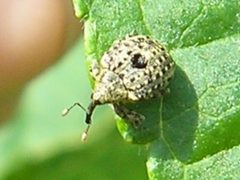
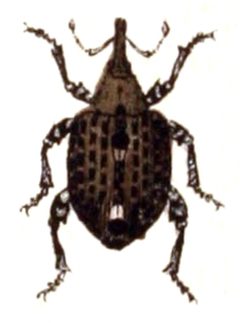
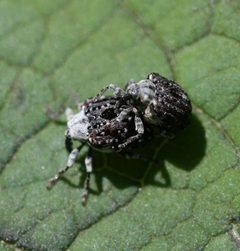
Cionini is a tribe of weevils (Curculionidae: Curculioninae) distributed across the Palaearctic region. The tribe includes at least two well-studied , Cionus and Stereonychus, with 61 currently recognized in Cionus alone. Larvae of this tribe exhibit distinctive morphological features that distinguish them from related groups, including reduced numbers of cranial and epipharyngeal setae, one-segmented labial palpi, absent labral rods, and swollen pedal lobes. Members are primarily associated with plants in the Scrophulariaceae.
Pronunciation
How to pronounce Cionini: //kioˈniːni//
These audio files are automatically generated. While they are not always 100% accurate, they are a good starting point.
Identification
Mature larvae of Cionini can be distinguished from related tribes by six diagnostic features: (1) labial palpi one-segmented; (2) labral rods absent; (3) pedal areas swollen to form large lobes or ; (4) with sharp teeth; (5) reduced number of frontal setae (only one or two fs); and (6) reduced epipharyngeal setae (two or three als, two or three ams, no mes). These features, when considered together, separate Cionini from the hypothesized sister tribe Mecinini and other Curculioninae. Cionus are small weevils with characteristic body shapes, though specific adult diagnostic features for the tribe as a whole are not established in available sources.
Images
Habitat
Associated with temperate and montane environments in the Palaearctic region. Specific information exists for Cionus olivieri: mountain slopes at 1546-1577 m altitude in central Asia (Kyrgyzstan, Kazakhstan), with plants occurring in the temperate zone of Eurasia.
Distribution
Palaearctic region: central and southern Europe and Asia from Portugal and Spain eastward through Anatolia, Transcaucasus, Middle East, central Asia, western China (Xinjiang), Afghanistan, and Pakistan. Absent from northern Europe, northern and eastern Asia, and North Africa.
Similar Taxa
- MecininiHypothesized sister tribe to Cionini; distinguished by larval characters including different setal patterns on the epicranium and epipharyngeal lining, and different mandibular structure.
Sources and further reading
- BugGuide
- GBIF taxonomy match
- iNaturalist taxon
- NCBI Taxonomy
- Revision of Palaearctic species of the genus Cionus Clairville (Coleoptera: Curculionidae: Cionini)
- Description and biological notes of the larva of Cionus olivieri Rosenschoeld, 1838 (Coleoptera, Curculionidae), with a comparison with other species of the tribe Cionini