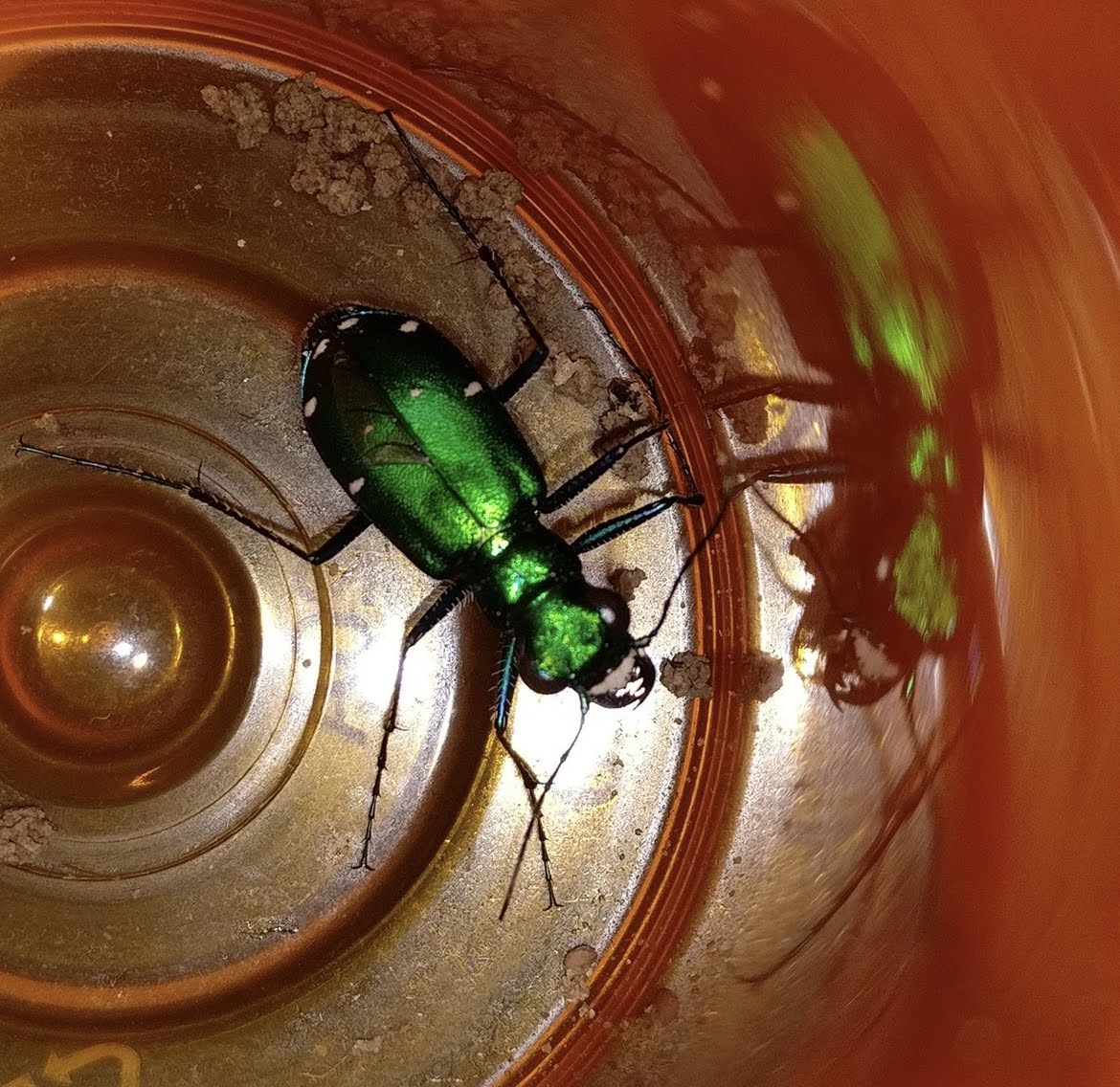
Groovy Cis Beetle
Cis striatulus is a small beetle in the family Ciidae, commonly known as the Groovy Cis Beetle. It belongs to a group of insects commonly called minute tree-fungus beetles, which are associated with decaying wood and fungal growth. The species was described by Mellié in 1848.
Minute Beetles, Fringe-winged Beetles
Clambidae is a family of minute beetles in the superfamily Clamboidea, comprising approximately 70 described species across five genera. Adults range from 0.7 to 2 mm in body length and exhibit distinctive fringe-winged morphology with long hairs lining the wing margins. The family has a cosmopolitan distribution excluding Antarctica, with the genus Clambus being the most widespread. Some species exhibit a conglobate body form capable of rolling into a ball.
Clambus gibbulus is a minute beetle in the family Clambidae, commonly known as fringe-winged beetles. The species was described by LeConte in 1850 and occurs in both North America and parts of Europe. Like other members of its family, it is characterized by reduced wing venation with long marginal setae. Very few observations of this species have been documented.
Clambus simsoni is a small beetle in the family Clambidae, first described by Blackburn in 1902. The genus Clambus comprises minute beetles often associated with leaf litter and decaying organic matter. Records indicate presence in Austria with uncertain status in Belgium. The species has limited observation data, with 22 records on iNaturalist.
Clamoris americana is a species of darkling beetle in the family Tenebrionidae. Originally described by Horn in 1874 as Phthora americana, this species is currently accepted under the genus Clamoris. Records indicate occurrence in British Columbia, Canada. As with many Tenebrionidae, specific natural history details for this species remain poorly documented in accessible literature.
Clarkhydrus roffii is a species of predaceous diving beetle in the family Dytiscidae, subfamily Hydroporinae. It belongs to a genus of small diving beetles distributed in the Western Hemisphere. The species was described by Clark in 1862 and is known from limited collection records in North and Middle America. Like other members of Dytiscidae, it is an aquatic predator, though specific ecological details remain poorly documented.
Clarkhydrus spectabilis is a diving beetle species in the family Dytiscidae, described by Zimmerman in 1982. The genus Clarkhydrus belongs to the tribe Hydroporini within the subfamily Hydroporinae. As a member of the Dytiscidae family, this species is adapted to aquatic habitats. The specific epithet 'spectabilis' suggests notable or showy characteristics, though detailed biological information remains limited in available sources.
unmargined rove beetle
Clavilispinus rufescens is a species of unmargined rove beetle in the family Staphylinidae. It is distributed across the southeastern United States, Mexico, Guatemala, and Brazil. The species was described by John Lawrence LeConte in 1863. As a member of the Osoriinae subfamily, it belongs to a group of small, typically soil-dwelling rove beetles with reduced or absent elytral margins.
Clemnius is a genus of diving beetles in the family Dytiscidae, established in 2017 to accommodate species previously placed in related genera. The genus belongs to the tribe Hygrotini within the subfamily Hydroporinae. Species in this genus are small to medium-sized diving beetles adapted to aquatic habitats. The genus has been documented from Southeast Asia based on collection records.
Bark-gnawing, Checkered, and Soft-winged Flower Beetles
Cleroidea is a superfamily of beetles comprising over 10,000 species across approximately 24 families. Members are generally slender with soft, flexible elytra and typically bear hairy or scaly integuments. The superfamily exhibits diverse feeding strategies: predation (Cleridae, Trogossitinae), pollen/nectar consumption (melyrid lineage), and fungivory (many Trogossitidae and smaller families). Aposematic coloration occurs in some groups, particularly Cleridae and Malachiinae, mimicking unpalatable arthropods such as blister beetles, net-winged beetles, and stinging Hymenoptera.
Clivina alabama is a ground beetle species in the subfamily Scaritinae, described by Bousquet in 2012. It is known from the southeastern United States. As a member of the genus Clivina, it belongs to a group of small, fossorial ground beetles commonly referred to as ant-like beetles due to their compact body form and short elytra. The species was established relatively recently, reflecting ongoing taxonomic refinement within this morphologically conservative genus.
Clivina fossor fossor is a subspecies of ground beetle in the family Carabidae, first described by Linnaeus in 1758. It belongs to a genus characterized by fossorial (digging) adaptations, with females possessing modified forelegs for excavating burrows in soil. The subspecies has been recorded across parts of North America and Europe, though detailed biological studies remain limited.
Clivinini is a tribe of ground beetles (Carabidae: Scaritinae) containing over 70 genera and more than 1,200 described species. Members are predominantly soil-dwelling or subterranean, with many species adapted to endogean (buried soil) or troglobitic (cave) habitats. The tribe includes several subtribes, most notably Ardistomina (containing Aspidoglossa, Semiardistomis, and Ardistomis) and Reicheiina. Species occur across all major biogeographic regions, with significant radiations in tropical and subtropical karst systems.
Clypastraea biguttata
Clypastraea biguttata is a minute hooded beetle in the family Corylophidae, first described by LeConte in 1879. It belongs to a family commonly known as minute hooded beetles or minute fungus beetles, characterized by extremely small body size and a pronotum that conceals the head. The species is documented from North America, with specific records from Alberta and British Columbia in Canada. Like other members of its genus, it is likely associated with fungal substrates in decaying wood and bark.
A minute beetle in the family Corylophidae (minute fungus beetles), Clypastraea obesa was described by Casey in 1900. The species is documented from North America with records from British Columbia, Canada and Alaska, United States. Corylophidae are among the smallest beetles, typically associated with fungal substrates.
minute hooded beetle, minute fungus beetle
Clypastraea sp-one is a minute beetle in the family Corylophidae, measuring approximately 2 millimeters in length. It belongs to a genus typically associated with fungi and mold in rotting wood and under bark on dead trees. The beetle was discovered in a residential Colorado Springs neighborhood, crawling on the base of a utility box beneath a cottonwood tree. This record represents a notable discovery of a poorly known group of beetles in an urban setting.
clytine longhorn beetles
Clytus is a genus of longhorn beetles (Cerambycidae) in the tribe Clytini. These beetles are characterized by their wasp-mimicking coloration, typically featuring yellow and black banded patterns on the elytra. The genus is taxonomically well-established, having been described by Laicharting in 1784. Clytus species are found across the Northern Hemisphere, with records from Europe, North America, and other temperate regions.
Clytus blaisdelli is a longhorn beetle species in the family Cerambycidae, first described by Van Dyke in 1920. It belongs to the genus Clytus, a group of cerambycids often noted for wasp-mimicking coloration and patterns. The species occurs in North America, with records from the United States. As with many Clytus species, it likely exhibits Batesian mimicry of Hymenoptera as a defensive adaptation.
Round-necked Longhorn Beetle
Clytus ruricola is a longhorn beetle in the family Cerambycidae, first described by Olivier in 1795. It belongs to the tribe Clytini, a group known for wasp-mimicking coloration. The species occurs across North America and is one of several Clytus species with distinctive yellow and black patterned elytra. It is a hardwood-associated beetle whose larvae develop in dead or decaying wood.
Cnemidoprion oblongus is a species of weevil in the family Curculionidae, described by Anderson in 1998. The genus Cnemidoprion is part of the diverse Curculionoidea superfamily, which comprises the largest family of beetles. Very little specific information is available about this species, which has been documented in only a handful of observations. The species name "oblongus" refers to its elongated body shape.
Cnemodinus testaceus is a species of darkling beetle in the family Tenebrionidae. Described by Horn in 1870, this species is among the lesser-documented members of the genus Cnemodinus. The genus belongs to a diverse family of beetles primarily associated with arid and semi-arid environments. Available occurrence data for this species is extremely limited.
minute seed weevils
Cnemogonini is a tribe of minute seed weevils within the weevil family Curculionidae. The tribe comprises 15 genera, including economically notable genera such as Auleutes and Cnemogonus. Members are small beetles associated with seeds of various plants. The tribe is primarily distributed in the Nearctic and Palearctic regions.
minute seed weevil
Cnemogonus lecontei is a species of minute seed weevil in the family Curculionidae. It is native to North America and has been recorded from multiple Canadian provinces including Alberta, British Columbia, Manitoba, and New Brunswick. The species was described by Dietz in 1896. As a member of the seed weevil group, it is presumed to be associated with seeds, though specific ecological details remain poorly documented.
Cneorhinini is a tribe of weevils in the subfamily Entiminae, family Curculionidae. The tribe was established by Lacordaire in 1863 and contains multiple genera distributed across West Africa and other regions. Members of this tribe are broad-nosed weevils, a characteristic feature of the Entiminae subfamily. The genus Ascopus, included in this tribe, has been documented from Guinea, Liberia, Ivory Coast, and Sierra Leone.
Cnopus is a genus of ant-like leaf beetles in the family Aderidae, established by Champion in 1893. The genus contains at least four described species distributed in North America. Members of this genus exhibit the characteristic ant-mimicking morphology common to many Aderidae, though specific ecological details remain poorly documented.
ladybird, ladybug, lady beetle
Coccinella is a genus of lady beetles recognized by their convex, hemispherical bodies and typically red or orange elytra marked with black spots or bands. The genus contains approximately 94 species and occurs throughout the Northern Hemisphere, with greater diversity in Eurasia than North America. Several species, particularly C. septempunctata, are valued as biological control agents due to their predatory habits.
Hieroglyphic Lady Beetle, Hieroglyphic Ladybird, Hieroglyphic Ladybug
Coccinella hieroglyphica is a Palearctic lady beetle species associated with heath and moorland habitats, particularly on Ericaceae plants. It is distributed across northern Europe, extending beyond the Arctic Circle, through Russia and Siberia to East Asia. The species is aphidophagous, with populations showing considerable annual fluctuation. Adults are active from May through October and overwinter in coarse woody debris beneath pines and birches.
Coccinella hieroglyphica humboldtiensis is a subspecies of lady beetle (family Coccinellidae) described by Nunenmacher in 1912. It belongs to a species complex within the genus Coccinella that includes beetles with distinctive spot patterns. The subspecies designation humboldtiensis suggests a geographic association, likely with the Humboldt region of western North America. Very few observations of this subspecies have been documented, with only 3 records in iNaturalist as of the data cutoff.
Coccinella hieroglyphica kirbyi is a subspecies of hieroglyphic lady beetle in the family Coccinellidae. It is classified within the diverse genus Coccinella, which includes numerous aphid-feeding species distributed across North America, Europe, and Asia. This subspecies represents part of the broader C. hieroglyphica complex found across northern regions.
Coccinella hieroglyphica mannerheimi is a subspecies of hieroglyphic lady beetle in the family Coccinellidae. It is part of the Coccinella hieroglyphica species complex, which is characterized by distinctive elytral markings. The subspecies was described by Mulsant in 1850. It occurs across parts of Europe, Northern Asia, and North America.
Coccotorus hirsutus is a species of weevil in the family Curculionidae, first described by Bruner in 1888. It belongs to the tribe Coccotorini, a group of seed-feeding weevils associated with various plants. The species epithet "hirsutus" refers to the hairy appearance of this beetle. Like other members of its genus, it is likely associated with specific host plants for feeding and reproduction, though detailed biological studies remain limited.
Codocera is a genus of scarab beetles in the family Ochodaeidae, commonly referred to as sand-loving scarab beetles. The genus contains at least three described species distributed across the Palaearctic region. Members of this genus are associated with sandy habitats, reflecting the ecological specialization characteristic of the family Ochodaeidae.
Codocera gnatho is a species of sand-loving scarab beetle in the family Ochodaeidae, first described by Fall in 1907. It belongs to a small family of beetles specialized for sandy habitats. The species occurs in arid and semi-arid regions of the southwestern United States and Mexico.
Coelocephalapion spretissimum is a species of straight-snouted weevil in the family Brentidae. The genus Coelocephalapion comprises small weevils characterized by their elongated rostrum. This species belongs to a group of brentids that are poorly documented in the scientific literature.
Coelocephalapion subornatum is a species of straight-snouted weevil in the family Brentidae. It belongs to a genus characterized by elongated, slender body forms and notably elongated rostrums. The species is documented from a limited number of observations, suggesting it may be uncommon or underreported. As with other members of Brentidae, it likely exhibits the family-typical elongated snout used for feeding and oviposition.
Coelocephalapion ventricosum is a species of straight-snouted weevil in the family Brentidae. As a member of this family, it possesses the characteristic elongated snout (rostrum) typical of brentid weevils. The genus Coelocephalapion is part of the diverse apionine radiation within Brentidae. Very little specific information about this particular species is available in published sources.
Coelocnemis sulcata is a nocturnal tenebrionid beetle found in coniferous woodlands of the southwestern United States. The species has been documented on the trunks of Ponderosa pine (Pinus ponderosa) and Utah juniper (Juniperus osteosperma) at night, where it has been observed in mating pairs. It occurs at moderate to high elevations in southwestern Utah, with records from approximately 6000 feet. Activity peaks in late summer, with observations in September.
Coelotrachelus rudis is a species of scarab beetle in the family Scarabaeidae, specifically within the subfamily Aphodiinae. The species was described by LeConte in 1878 and is native to the southwestern United States and northern Mexico. It belongs to a genus of dung beetles, though specific ecological details about this particular species remain limited in the available literature.
Colaspidea smaragdula is a species of leaf beetle in the family Chrysomelidae, first described by J.L. LeConte in 1857. The species is found in North America. It belongs to the genus Colaspidea, which comprises leaf beetles within the diverse chrysomelid family.
broad-nosed weevils
Colecerus is a genus of broad-nosed weevils in the family Curculionidae, established by Schönherr in 1840. The genus contains approximately nine described species distributed in the Americas, with records from the southwestern United States through Central America to northern South America. Members of this genus are classified in the subfamily Entiminae and tribe Eudiagogini. The genus includes the Texas marbled weevil (Colecerus marmoratus), a species with documented occurrence in Texas.
round fungus beetles
Colenis is a genus of round fungus beetles in the family Leiodidae, first described by Erichson in 1842. The genus comprises approximately eight described species. These small beetles are classified within the subfamily Leiodinae and tribe Pseudoliodini. Distribution records indicate presence in Denmark, Norway, and Sweden.
Colenis ora is a species of small carrion beetle in the family Leiodidae, first described by Peck in 1998. It belongs to the subfamily Leiodinae and tribe Pseudoliodini. The species has been recorded from multiple states across the southeastern and eastern United States.
spotted pink lady beetle, spotted lady beetle, pink spotted lady beetle, twelve-spotted lady beetle
Coleomegilla maculata is a native North American coccinellid beetle widely used in biological control programs. Adults and larvae are primarily aphid predators, though this species is unusual among North American lady beetles in its facultative pollen-feeding habit—pollen may constitute up to 50% of adult diet. The species shows increasing abundance and westward range expansion while many native coccinellids are declining, possibly due to its dietary flexibility reducing competitive impacts from invasive species. Multiple subspecies exist, with C. m. fuscilabris distinguished by bright orange-red rather than pink coloration.
Spotted Orange Lady Beetle
Coleomegilla maculata fuscilabris is a subspecies of lady beetle in the family Coccinellidae. It belongs to a genus notable for having up to 50 percent of its diet composed of plant pollen, a unique trait among North American lady beetles. The species-level characteristics of this subspecies are not well documented in available sources.
Coleothorpa axillaris quadratominor is a subspecies of case-bearing leaf beetle in the family Chrysomelidae. It was described by Moldenke in 1970. The species is part of the genus Coleothorpa, which belongs to the tribe Clytrini within the subfamily Cryptocephalinae. Members of this genus construct protective cases from fecal material, a characteristic behavior of the Clytrini. The subspecific epithet 'quadratominor' suggests a diminutive or reduced quadrate (square) feature relative to the nominate subspecies.
soft-winged flower beetles
Collops is a genus of soft-winged flower beetles in the family Melyridae, containing at least 20 described species. These beetles are recognized as beneficial predators in agricultural systems, where they feed on pest insects including aphids and plant bug eggs. The genus has been studied extensively for its role in biological control, particularly in cotton and alfalfa systems in the southwestern United States. Collops beetles are frequently found on flowering plants where they hunt prey and may also utilize extrafloral nectaries.
Collops dux is a species of soft-winged flower beetle (family Melyridae). Members of the genus Collops are predatory beetles frequently associated with flowering plants, where they feed on small arthropods and utilize extrafloral nectaries for hydration and nutrients. The species is poorly documented in scientific literature, with minimal published biological or ecological data available.
Collops grandis is a species of soft-winged flower beetle in the family Melyridae. The genus Collops belongs to the subfamily Malachiinae, a group commonly known as soft-winged flower beetles or malachiid beetles. These beetles are typically found in association with flowers and vegetation, though specific biological details for C. grandis remain limited in available literature.
Collops granellus is a species of soft-winged flower beetle in the family Melyridae. Like other members of the genus Collops, it is a predatory beetle associated with flowering plants, where it feeds on small insects and other arthropods. The genus is well-known in agricultural contexts as a beneficial predator in cotton and other crop systems.
Collops insulatus is a species of soft-winged flower beetle in the family Melyridae. The genus Collops comprises predatory beetles commonly found on flowers, where they feed on small insects and other arthropods. Like other members of the genus, C. insulatus likely serves as a beneficial insect in agricultural and natural ecosystems by helping control pest populations. The species epithet "insulatus" (meaning "island" in Latin) may refer to an island-like distribution pattern or type locality, though specific etymological details are not documented in available sources.