
Clytus blaisdelli
Van Dyke, 1920
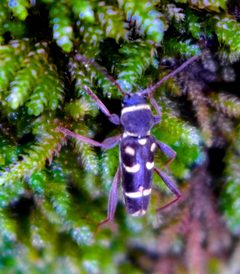
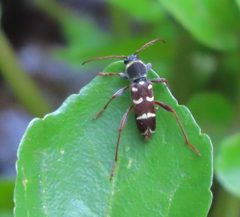
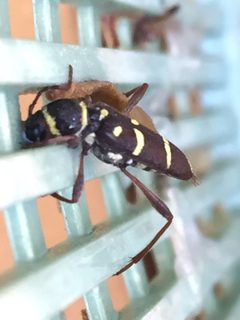
Clytus blaisdelli is a longhorn beetle in the Cerambycidae, first described by Van Dyke in 1920. It belongs to the Clytus, a group of cerambycids often noted for -mimicking coloration and patterns. The species occurs in North America, with records from the United States. As with many Clytus species, it likely exhibits of Hymenoptera as a defensive .
Pronunciation
How to pronounce Clytus blaisdelli: /ˈklaɪ.təs ˈbleɪz.dɛ.laɪ/
These audio files are automatically generated. While they are not always 100% accurate, they are a good starting point.
Identification
Clytus blaisdelli can be distinguished from other Clytus by specific elytral markings and morphological details, though precise diagnostic characters require examination of and original description. Members of the Clytus typically display yellow and black banded patterns on the that resemble coloration. Species-level identification within Clytus often requires close examination of antennal proportions, pronotal shape, and the exact configuration of pale markings on the elytra.
Images
Distribution
North America; recorded from the United States. Specific state-level distribution records are limited in available sources.
Similar Taxa
- Clytus ruricolaShares similar -mimicking coloration with yellow elytral bands; distinguished by details of band shape and antennal proportions
- Clytus arietisEuropean with comparable mimicry pattern; differs in geographic range and subtle morphological characters
- Neoclytus spp.Related clytine cerambycids with similar color patterns; Neoclytus typically has more extensive yellow markings and different antennal structure
More Details
Taxonomic context
The was described by Van Dyke in 1920, placing it among the earlier 20th-century descriptions of North American Cerambycidae. The Clytus was formerly more broadly defined and has undergone taxonomic refinement; some species historically placed in Clytus have been moved to other genera such as Neoclytus and Plagionotus.
Wasp mimicry
Like other members of Clytini, Clytus blaisdelli likely exhibits of stinging Hymenoptera. This defensive strategy involves of coloration and sometimes to resemble unpalatable or dangerous models, reducing risk.