
Clytus ruricola
(Olivier, 1795)
Round-necked Longhorn Beetle
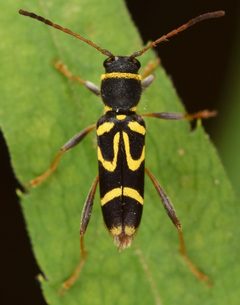
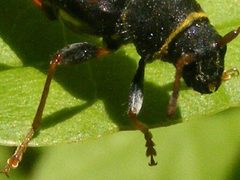
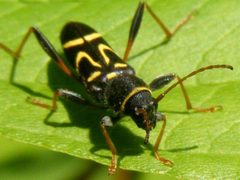
Clytus ruricola is a longhorn beetle in the Cerambycidae, first described by Olivier in 1795. It belongs to the tribe Clytini, a group known for -mimicking coloration. The occurs across North America and is one of several Clytus species with distinctive yellow and black patterned . It is a hardwood-associated whose larvae develop in dead or decaying wood.
Pronunciation
How to pronounce Clytus ruricola: /ˈklaɪtəs ˌrʊrɪˈkoʊlə/
These audio files are automatically generated. While they are not always 100% accurate, they are a good starting point.
Identification
Distinguished from other Clytus by the U-shaped middle yellow band on the . reach approximately mid-elytra in length. Similar species such as Clytus arietis and related share yellow and black banding patterns, but specific band shape and antennal length help separate them. The overall -mimicking appearance is characteristic of the but not unique to this species.
Images
Habitat
Associated with hardwood forests. Larvae develop in dead or decaying hardwood. have been observed on flowers, including goldenrod.
Distribution
North America. Documented in Canadian provinces including Alberta, British Columbia, Manitoba, and New Brunswick. GBIF records indicate presence across North America.
Host Associations
- Amorpha fruticosa - food source attracted to flowers
- hardwoods - larval developmentlarvae develop in dead or decaying wood
Life Cycle
Complete with , larva, pupa, and stages. Larvae are wood-borers in dead hardwood. Specific developmental timing not documented in available sources.
Behavior
are flower visitors and have been observed on goldenrod blooms. Exhibits -mimicking coloration as a defensive strategy.
Ecological Role
Larval wood-boring activity contributes to decomposition of dead hardwood. flower visitation suggests potential pollination role, though not quantified.
Human Relevance
Occasional research subject in studies of cerambycid diversity and mimicry. No significant economic impact documented.
Similar Taxa
- Clytus arietisShared with similar yellow-black banded elytral patterns; distinguished by band shape and antennal proportions
- Neoclytus spp.Related clytine cerambycids with comparable -mimicking appearance; differ in pronotal and elytral pattern details
- Acanthoderes quadrigibbaUnrelated lamiine cerambycid with superficially similar hairy, patterned ; distinguished by characters and body form
More Details
Taxonomic note
Authorship sometimes cited as (Olivier, 1800) in some sources, though 1795 is the accepted original description date.
Collection note
can be found by searching plant stems in fall when associated flowers (such as goldenrod) are in bloom.