
Clivinini
Rafinesque, 1815
Tribe Guides
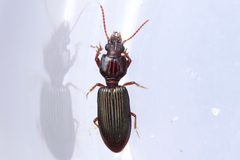
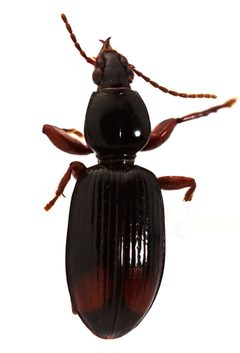
2Clivinini is a tribe of ground beetles (Carabidae: Scaritinae) containing over 70 and more than 1,200 described . Members are predominantly soil-dwelling or subterranean, with many species adapted to endogean (buried soil) or troglobitic (cave) . The tribe includes several subtribes, most notably Ardistomina (containing Aspidoglossa, Semiardistomis, and Ardistomis) and Reicheiina. Species occur across all major biogeographic regions, with significant radiations in tropical and subtropical karst systems.
Pronunciation
How to pronounce Clivinini: /klɪˈvɪnɪnaɪ/
These audio files are automatically generated. While they are not always 100% accurate, they are a good starting point.
Identification
Distinguished from other Scaritinae tribes by mandibular structure and larval character states; subtribe Ardistomina characterized by specific larval features including those of Semiardistomis viridis. Members of subtribe Reicheiina typically exhibit reduced (microphtalmic to anophthalmic) associated with subterranean habits. identification relies on male genitalia structure, particularly lobe .
Images
Habitat
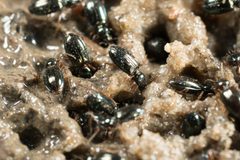
Predominantly soil-associated including leaf-litter layers, burrows, and caves. Many are endogean (living within soil) or troglobitic (exclusively cave-dwelling). Documented from limestone karst caves in China (Guiodytes), Brazilian caves (eight including Aspidoglossa and Whiteheadiana), and montane endogean environments in the Balkans (Chaetomargoreicheia).
Distribution
distribution with records from all major biogeographic regions. Documented occurrences include: Oriental region (Sulciclivina in Asia; Guiodytes to Guangxi, China); Neotropical region (Ardistomis in Cuba and Mexico; Whiteheadiana and Ardistomis in Brazilian caves); Palearctic region (Parareicheia in Portugal; Chaetomargoreicheia in Croatia, Bosnia and Herzegovina, and Montenegro); Afrotropical region (Antireicheia in Cameroon and east/southern Africa, Madagascar); Nearctic region (Ardistomina in America north of Mexico).
Life Cycle
Larval development documented for subtribe Ardistomina; first instar larvae of Semiardistomis viridis described. Complete with , larval, pupal, and stages. Pupae described for Ardistomis quixotei.
Behavior
Subterranean and cryptic habits prevalent across the tribe. Many exhibit troglomorphic adaptations including reduction or loss (microphtalmia to anophthalmia) and elongated appendages. Chaetomargoreicheia species are exceptionally rare, with only single specimens collected by hand for each known species. Some Brazilian cave species are described as 'eventual cave-restricted,' indicating facultative rather than obligate cave association.
Ecological Role
Predatory ground beetles; specific functions largely undocumented but consistent with Carabidae as in soil and litter .
Similar Taxa
- Other Scaritinae tribesClivinini distinguished within Scaritinae by mandibular and larval character states; subtribe Ardistomina supported as distinct by larval .
- Clivina (genus)Ardistomis morio was erroneously placed in Ardistomis but returned to Clivina based on evidence that it does not belong to subtribe Ardistomina; highlights importance of genitalia and biogeographic data for correct tribal assignment.
Sources and further reading
- BugGuide
- Wikipedia
- iNaturalist taxon
- NCBI Taxonomy
- Catalogue of Life
- Revision of the genus Sulciclivina Balkenohl, 2022 from Asia (Coleoptera, Carabidae, Clivinini)
- Three new species of the subterranean genus Guiodytes from Guangxi, China (Coleoptera: Carabidae: Clivinini)
- New Records of Ground Beetles Genera (Coleoptera: Carabidae: Scaritinae: Clivinini) from Brazilian Caves
- The first cave-dwelling species of Whiteheadiana Perrault, 1994 (Carabidae: Clivinini) from Brazil
- Review of the species of Ardistomina (Coleoptera: Carabidae: Clivinini) in America north of Mexico
- A peculiar new beetle from Brazil associated with a cave habitat (Coleoptera, Carabidae, Clivinini)
- A new hypogean species of the genus Chaetomargoreicheia Magrini & Bulirsch, 2005 (Carabidae: Scaritinae: Clivinini) from Croatia
- Two new species of the genus Parareicheia Jeannel, 1957 (Coleoptera: Carabidae: Scaritinae: Clivinini: Reicheiina) from Portugal, with faunistic notes on Anillini
- Discovery of Antireicheia in Cameroon with description of four new species and discussion on phylogeny and distribution of endogean Reicheiina (Coleoptera: Carabidae: Scaritinae: Clivinini)
- Ardistomis quixotei (Coleoptera: Carabidae: Clivinini), a new species from Cuba and Mexico: structural and habitat features of adults, larvae and pupae, comparisons with previously described species, and notes about classification and biogeography