
Ardistomis
Putzeys, 1846
Species Guides
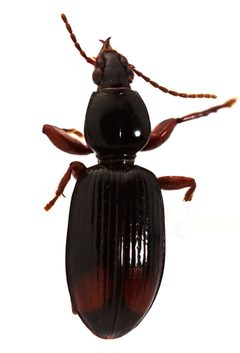
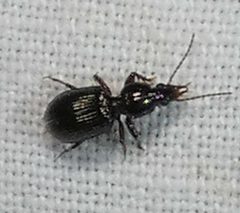
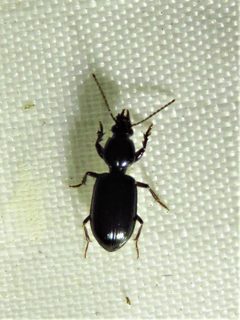
2Ardistomis is a of pedunculate ground beetles (Carabidae: Scaritinae) comprising more than 40 described distributed across North, Central, and South America. Larval supports classification of ardistomines (Ardistomis, Semiardistomis, and Aspidoglossa) as a subtribe (Ardistomina) within the tribe Clivinini. The genus includes species with documented range extensions, such as A. quixotei, which likely colonized Cuba from Mexico during the .
Pronunciation
How to pronounce Ardistomis: /ˈɑrdɪˌstoʊmɪs/
These audio files are automatically generated. While they are not always 100% accurate, they are a good starting point.
Identification
Members of Ardistomis can be distinguished from other clivinine by features of the male genitalia; for West Indian , diagnostic keys are available. The genus is characterized by pedunculate body form typical of the subtribe Ardistomina. Species-level identification requires examination of genitalic structures and comparison with described type material.
Images
Habitat
Specific associations have been documented for some ; Cuban of A. quixotei have associated natural history data, though detailed habitat descriptions are not specified in available sources. As ground beetles, species likely occur in soil and leaf litter environments.
Distribution
Widespread in the Western Hemisphere, with documented in North America, Central America, South America, and the West Indies (including Cuba).
Life Cycle
Complete with documented larval and pupal stages for at least one (A. quixotei); larval has been used to support higher-level classification within Clivinini.
Similar Taxa
- SemiardistomisShares subtribe Ardistomina; distinguished by morphological features including body proportions and male genitalia structure
- AspidoglossaShares subtribe Ardistomina; larval features support grouping with Ardistomis, though differs
- Other Clivinini generaArdistomis distinguished by pedunculate form and specific male genitalic features; placed in separate subtribe Ardistomina based on larval characteristics
More Details
Taxonomic Classification
Larval morphological features support recognition of ardistomines (Ardistomis, Semiardistomis, and Aspidoglossa) as the subtribe Ardistomina within tribe Clivinini, rather than as a separate tribe.
Biogeographic History
At least one , A. quixotei, appears to have extended its geographic range from Mexico to Cuba during the , suggesting active and dynamics in the .
Sources and further reading
- BugGuide
- Wikipedia
- GBIF taxonomy match
- iNaturalist taxon
- NCBI Taxonomy
- Catalogue of Life
- Ardistomis quixotei (Coleoptera: Carabidae: Clivinini), a new species from Cuba and Mexico: structural and habitat features of adults, larvae and pupae, comparisons with previously described species, and notes about classification and biogeography