
Ardistomis schaumii
LeConte, 1857
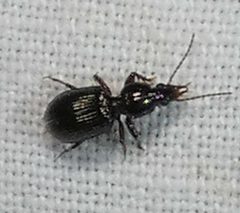
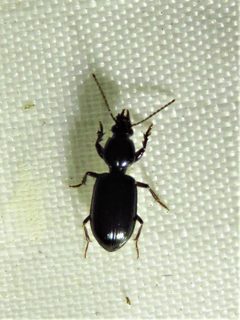
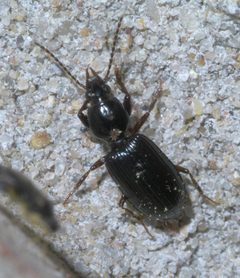
Ardistomis schaumii is a of ground beetle first described by John Lawrence LeConte in 1857. It belongs to the tribe Clivinini within the Scaritinae, a group characterized by (burrowing) adaptations. The species occurs in both North America and Central America. Published records remain sparse, with only 12 observations documented on iNaturalist as of the knowledge cutoff.
Pronunciation
How to pronounce Ardistomis schaumii: /ˌɑrdɪˈstoʊmɪs ˈʃaʊmiː/
These audio files are automatically generated. While they are not always 100% accurate, they are a good starting point.
Identification
Members of the Ardistomis can be distinguished from other ground beetles by their small size, compact body form, and modified forelegs adapted for digging. Within the genus, A. schaumii is distinguished from primarily by subtle differences in elytral microsculpture and male genitalia; specific diagnostic features require examination of or literature.
Images
Habitat
As a member of the burrowing ground beetle tribe Clivinini, it likely occupies sandy or loose soil substrates in terrestrial environments. Exact microhabitat preferences have not been documented in published sources.
Distribution
Recorded from the United States and Central America. GBIF distribution records indicate presence in North America and Middle America, with specific localities in the USA.
Behavior
As a member of Clivinini, it has been observed to exhibit , using modified forelegs to excavate burrows in soil.
Ecological Role
Ground beetles in this are generally predatory or scavenging in soil , contributing to nutrient cycling and potentially regulating of soil-dwelling .
Similar Taxa
- Other Ardistomis speciesMorphologically similar small burrowing beetles; require examination of genitalia and elytral striation patterns for definitive identification.
- Other Clivinini genera (e.g., Clivina, Dyschirius)Share body plan and preferences; distinguished by differences in pronotal shape, elytral setation, and leg structure.
More Details
Taxonomic note
The was described by LeConte in 1857, a prolific 19th-century American entomologist who described numerous North American Coleoptera. The specific epithet honors Hermann Rudolf Schaum, a German entomologist who worked extensively on Carabidae.