
Aspidoglossa
Putzeys, 1846
Species Guides
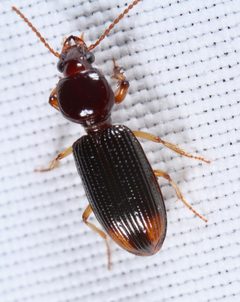
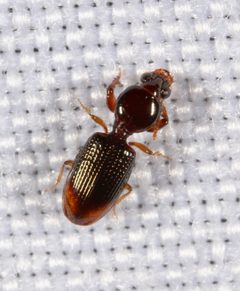
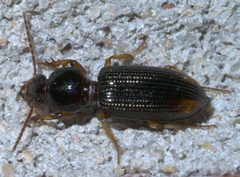
1- Aspidoglossa subangulata(Lesser Tail-light Carabid)
Aspidoglossa is a of ground beetles ( Carabidae) established by Putzeys in 1846. The genus comprises approximately 26 described distributed primarily in the Neotropics, with a single species, Aspidoglossa subangulata, extending into the southern United States. These beetles belong to the subtribe Ardistomina within the tribe Clivinini, a group characterized by (burrowing) adaptations. The genus has been documented through 629 iNaturalist observations, indicating moderate levels of citizen science engagement.
Pronunciation
How to pronounce Aspidoglossa: //ˌæs.pɪ.doʊˈɡlɒsə//
These audio files are automatically generated. While they are not always 100% accurate, they are a good starting point.
Identification
Aspidoglossa can be distinguished from related in the subtribe Ardistomina by combinations of elytral sculpturing, pronotal shape, and male genitalic characters. Species-level identification requires examination of microscopic features including the form of the , elytral and intervals, and the degree of pronotal constriction. The genus shares the general body plan of Clivinini: small to medium size, compact form, and often reduced or modified associated with subterranean habits.
Images
Habitat
Members of this are ground-dwelling beetles associated with soil . Based on the subtribal placement in Ardistomina, likely inhabit leaf litter, soil crevices, and other terrestrial microhabitats. The presence of Aspidoglossa subangulata in the United States suggests for temperate conditions, while Neotropical species occupy tropical and subtropical environments.
Distribution
Primarily Neotropical, ranging from Mexico through Central and South America. The northernmost extent is represented by Aspidoglossa subangulata in the southern United States. The has been documented across multiple countries including Mexico, Brazil, and other South American nations based on epithets and original descriptions.
Ecological Role
As members of Carabidae, likely function as or scavengers in soil and litter . The subtribe Ardistomina is known for burrowing , suggesting these beetles contribute to soil aeration and nutrient cycling through their movement through the substrate.
Similar Taxa
- ArdistomisShares subtribe Ardistomina and similar compact, burrowing ; distinguished by genitalic and pronotal characters
- ClivinaBelongs to same tribe Clivinini but different subtribe; generally more elongated body form and different elytral sculpturing
- SchizogeniusAnother Ardistomina with habits; separation requires detailed examination of mouthpart and genitalic structures
More Details
Taxonomic History
The was erected by François Jules Pictet de la Rive (as Putzeys) in 1846. Multiple were described by 19th-century coleopterists including Dejean, Chaudoir, and Bates. Kult added several species in 1950, representing the most recent significant taxonomic contribution.
Species Richness
The contains 26 accepted names, with no documented . The majority of species were described in the 19th century (1842–1892), with a secondary pulse of descriptions in 1950.