
Clarkhydrus roffii
(Clark, 1862)
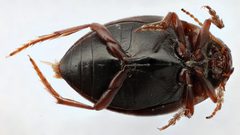
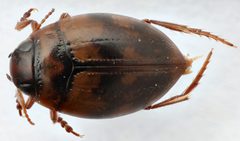
Clarkhydrus roffii is a of predaceous diving beetle in the Dytiscidae, Hydroporinae. It belongs to a of small diving beetles distributed in the Western Hemisphere. The species was described by Clark in 1862 and is known from limited collection records in North and Middle America. Like other members of Dytiscidae, it is an aquatic , though specific ecological details remain poorly documented.
Pronunciation
How to pronounce Clarkhydrus roffii: /klɑrkˈhaɪdrəs ˈrɒfi.aɪ/
These audio files are automatically generated. While they are not always 100% accurate, they are a good starting point.
Identification
Clarkhydrus roffii can be distinguished from other Clarkhydrus by genitalic characters, particularly the shape of the male . Members of this are small diving beetles, generally under 5 mm in length, with the characteristic oval, streamlined body form typical of Hydroporinae. Definitive identification requires examination of microscopic features and comparison with .
Images
Distribution
Recorded from North America and Middle America. Specific localities are sparse in published literature.
Similar Taxa
- Other Clarkhydrus speciesCongeneric share similar small size and general Hydroporinae ; require dissection of male genitalia for reliable separation.
- Small Hydroporinae genera (e.g., Hydroporus, Deronectes)Overlap in size and preference; distinguished by detailed examination of pronotal shape, elytral , and male genitalia.
More Details
Taxonomic Note
Clarkhydrus is a small within the diverse Hydroporinae radiation. The genus was established to accommodate with distinctive male genitalic . C. roffii is one of the earlier-described species in this genus, but it remains rarely collected and poorly represented in museum collections.
Data Limitations
The 11 iNaturalist observations suggest some recent documentation, but published biological and ecological studies are lacking. Most information must be inferred from -level characteristics within Hydroporinae, with caution.