Sonia is a genus of tortricid moths in the family Tortricidae, subfamily Olethreutinae, and tribe Eucosmini. The genus was established by Heinrich in 1923. Like other olethreutine tortricids, species in this genus are small to medium-sized moths with characteristic wing patterns and larval stages that typically develop within plant tissues such as stems, roots, or fruits.
Sonia albimacula is a species of tortrix moth in the family Tortricidae. The specific epithet "albimacula" refers to a white spot marking, suggesting a distinguishing pale maculation on the wings. As with other members of the genus Sonia, this species belongs to a group of small moths whose larvae typically develop within plant tissues. The genus Sonia is placed within the diverse tortricid fauna, though detailed biological information for this particular species remains limited in available sources.
constricted sonia moth
Sonia constrictana is a small moth species in the family Tortricidae, commonly known as the constricted sonia moth. It occurs across eastern and central North America, with records from the United States and southern Canada. Adults are active from late spring through early autumn. The species is one of approximately 10,000 described tortricid moths worldwide, a family known for including many economically significant agricultural pests.
Sophronia is a genus of small moths in the family Gelechiidae, first described by Hübner in 1825. These moths are part of the diverse gelechioid lineage, one of the largest superfamilies of Lepidoptera. The genus contains multiple species distributed across various regions, though individual species are often poorly documented in scientific literature.
Sosipatra anthophila is a species of snout moth in the family Pyralidae, subfamily Phycitinae. Described by Harrison G. Dyar in 1925, this species belongs to the genus Sosipatra, which comprises small to medium-sized pyralid moths. The specific epithet 'anthophila' (flower-loving) suggests an association with flowers, though detailed ecological studies remain limited. As a member of the Phycitinae, it likely exhibits typical characteristics of this diverse subfamily, which includes many species with concealed larval habits and varied host associations.
Spargania aurata is a species of geometrid moth in the family Geometridae, first described by Grote in 1882. It occurs in Central America and North America. The species is assigned Hodges number 7310 in the North American Moth Photographers Group system.
Netted Sparganothis Moth
Sparganothis caryae is a small tortricid moth with a wingspan of approximately 17–18 mm. The species is widely distributed across the eastern and central United States, ranging from Massachusetts to Florida and west to Texas and Oklahoma. Despite its specific epithet referencing Carya (hickory), the common name "Netted Sparganothis Moth" suggests a distinctive wing pattern. The species was first described by Robinson in 1869 from the original combination Tortrix caryae.
Sparganothis lindalinea is a tortricid moth species described in 2012 from the southeastern United States. It belongs to a genus containing several agricultural pests, including the cranberry fruitworm (Sparganothis sulfureana). The species is known from only eight iNaturalist observations and appears to have a restricted range in the Gulf Coast region.
Sparganothis praecana is a tortricid moth with a transcontinental distribution spanning northern Europe and western North America. Adults are active during summer months in northern Europe. The species has been documented feeding on birch, blueberry, and rhododendron as larvae. Two subspecies are recognized: the nominate form and S. p. habeleri restricted to the Austrian Alps.
Beautiful Sparganothis, Aproned Sparganothis
A tortricid moth of eastern North America, historically confused with Sparganothis niveana. The species occurs from Florida to Texas and north to at least Iowa and Ontario. Its common name "aproned" likely refers to a distinctive wing pattern feature. The distribution remains incompletely documented due to past taxonomic confusion with congeners.
Speyeria aphrodite is a butterfly species in the family Nymphalidae, native to North America. It belongs to a genus commonly known as greater fritillaries, characterized by their orange-brown wing coloration with black markings and silver spots on the underside. The species has been documented in Canadian provinces including Alberta, Manitoba, and Saskatchewan, as well as in Vermont, USA.
Speyeria callippe gallatini is a subspecies of fritillary butterfly in the family Nymphalidae. The taxon is currently recognized as a synonym of Speyeria nevadensis. It was described by McDunnough in 1929. No specific biological information for this subspecies is documented in the provided sources.
Speyeria callippe meadii is a subspecies of the Callippe fritillary butterfly, a member of the brush-footed butterfly family Nymphalidae. It belongs to the greater fritillary genus Speyeria, which comprises large, orange-brown butterflies with distinctive silvery spots on the wing undersides. The subspecies was described by W.H. Edwards in 1872. Like other Speyeria fritillaries, it maintains an obligate relationship with violet plants (Viola spp.) as larval host plants.
Coronis fritillary
Speyeria coronis, the Coronis fritillary, is a North American butterfly in the family Nymphalidae. It ranges from Baja California to Washington and eastward to Colorado and western South Dakota, with one historical report from Alberta. The species exhibits apparent migratory behavior in central Washington populations. Larvae feed on Viola species.
Great Spangled Fritillary
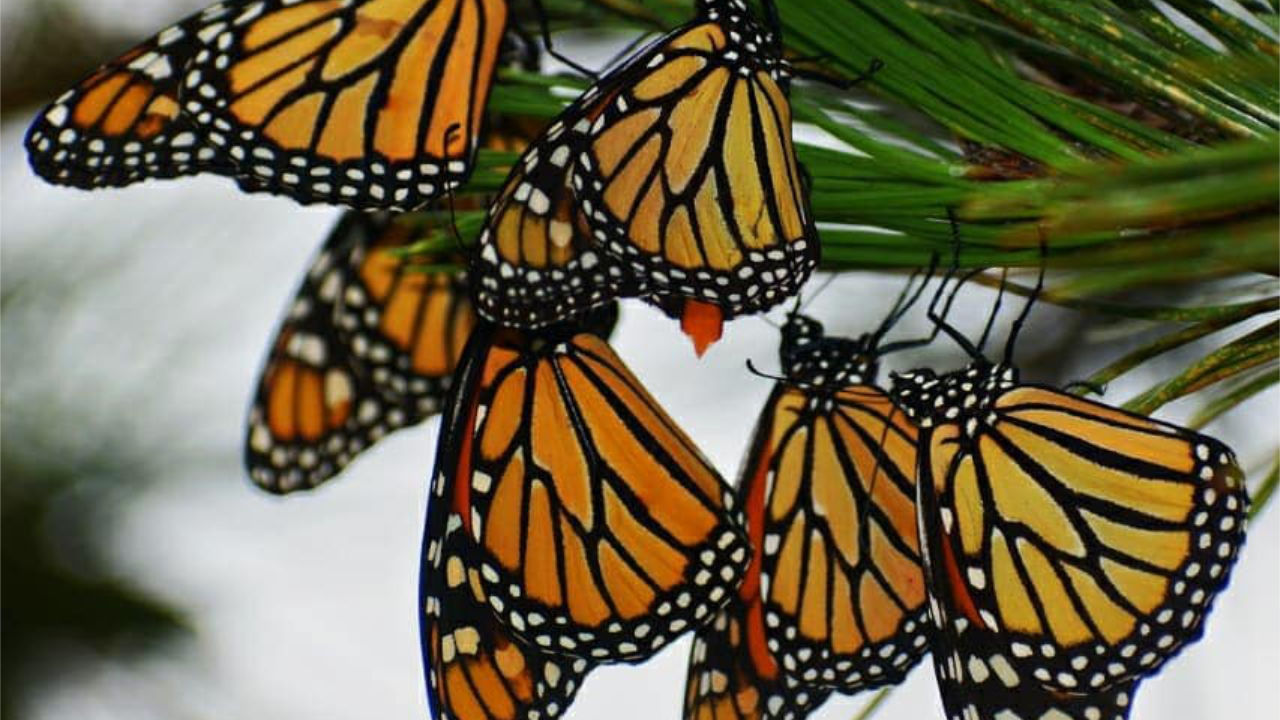
Speyeria cybele, the great spangled fritillary, is a large brush-footed butterfly native to North America. Adults have a wingspan of 2.25 to 4 inches, with orange-brown upper wings marked by black chevrons and distinctive silvery spots on the undersides. The species exhibits pronounced geographic variation: eastern populations are more orange, while western populations are browner. Females are slightly darker than males and have longer lifespans, often surviving into October. The butterfly has an obligate relationship with violets (Viola spp.) as larval host plants. Research has demonstrated that S. cybele relies primarily on vision for habitat detection and navigation, with flash-blinded individuals showing 30 times lower success in locating habitat patches.
Great Spangled Fritillary
Speyeria cybele krautwurmi is a subspecies of the great spangled fritillary butterfly, recognized by Holland in 1931. It belongs to a species complex known for visual-based navigation to habitat patches and close ecological ties to violet host plants. The subspecies occurs in northern North America, with records from the Canadian Prairie provinces and Vermont.
Great Spangled Fritillary (subspecies)
Speyeria cybele leto is a subspecies of the great spangled fritillary butterfly, a large and striking member of the brush-footed butterfly family Nymphalidae. This subspecies belongs to a species complex renowned for its silvery wing spots and close ecological association with violets as larval host plants. Research on Speyeria cybele has demonstrated that visual perception is the primary sense used for navigation to suitable habitat patches, with individuals capable of detecting and orienting toward habitat from distances of at least 60 meters. The species exhibits pronounced geographic variation in coloration, with western populations typically browner than their more orange eastern counterparts.
Speyeria hesperis hutchinsi is a subspecies of fritillary butterfly described in 1947. It is currently treated as a synonym of Speyeria atlantis, indicating taxonomic uncertainty or reclassification. The species belongs to the genus Speyeria, commonly known as greater fritillaries, which are large, orange-brown butterflies with silvery spots on the wing undersides.
Speyeria hesperis irene is a subspecies of the Hesperis fritillary, a North American butterfly in the family Nymphalidae. It belongs to the greater fritillary group within the genus Speyeria, which are medium to large butterflies with characteristic silver spots on the undersides of their wings. The subspecies designation indicates geographic variation within the broader species S. hesperis. Like other Speyeria species, it is associated with violets (Viola spp.) as larval host plants. GBIF currently lists this taxon as a synonym of Speyeria atlantis, reflecting ongoing taxonomic revision in this complex group.
Speyeria hesperis nausicaa is a subspecies of the northwestern fritillary butterfly, first described by W.H. Edwards in 1874. It is currently recognized as a synonym of Speyeria atlantis. The species belongs to the brush-footed butterfly family Nymphalidae. Research on related Speyeria species has demonstrated that visual perception is the primary sense used for navigation to suitable habitat patches.
Speyeria mormonia bischoffii is a subspecies of Mormon fritillary butterfly in the family Nymphalidae. It is part of the greater fritillary genus Speyeria, which includes numerous species distributed across North America. Like other Speyeria, it likely exhibits the characteristic orange and black wing patterning with silvery spots on the undersides typical of the genus. The subspecific epithet honors an individual associated with its discovery or study.
Sphacelodes is a genus of geometrid moths established by Achille Guenée in 1857. The genus contains at least three recognized species: S. vulneraria, S. fusilineatus, and S. haitiaria. It is classified within the subfamily Ennominae of the family Geometridae. The genus has accumulated over 2,900 observations on iNaturalist, indicating moderate documentation of its species.
Sphinx oslari is a species of sphinx moth in the family Sphingidae. It is one of numerous species in the genus Sphinx, which includes several North American hawkmoths. The species is poorly documented in available literature, with limited information on its biology, distribution, and ecology. Like other sphinx moths, adults likely have strong flight capabilities and are nocturnal or crepuscular in activity.
Sphinx vanbuskirki is a species of sphinx moth in the family Sphingidae, described by Haxaire in 2020. As a recently described species, detailed information about its biology and ecology remains limited. It belongs to the genus Sphinx, which includes medium to large-sized moths commonly known as sphinx or hawk moths.
Pearl Moths
Spilomelinae is a species-rich subfamily of Crambidae (crambid snout moths) containing approximately 4,180 described species in 351 genera worldwide, making it the most diverse group among pyraloid moths. Formerly treated as tribe Spilomelini within Pyraustinae, it was elevated to subfamily status based on phylogenetic studies. The subfamily includes numerous agricultural pests as well as the invasive box tree moth (Cydalima perspectalis).
Spilomelini is a tribe of moths in the family Crambidae, subfamily Spilomelinae, erected by Achille Guenée in 1854. The tribe currently comprises 17 genera containing approximately 135 described species. Members are distributed across tropical and subtropical regions worldwide. The tribe includes several economically significant agricultural pests, particularly in the genus Cnaphalocrocis.
Agreeable Tiger Moth
Spilosoma congrua, commonly known as the agreeable tiger moth, is a white tiger moth species native to North America. Adults are distinguished from similar species by their pronounced black eyes, white abdomen, and orange "bib" or collar. The species tents its wings when at rest, a characteristic shared with its congener the Virginia tiger moth. It is one of three common white tiger moth species in the United States.
Vestal tiger-moth, Vestal Tiger Moth
Spilosoma vestalis, the Vestal tiger-moth, is a species of tiger moth in the family Erebidae. Described by Alpheus Spring Packard in 1864, it occurs along the Pacific coast of western North America. Adults are active from May to June, with forewing lengths of 19–26 mm. The larvae feed on various woody and herbaceous plants.
Spilosomina is a subtribe of tiger moths within the tribe Arctiini of the family Erebidae. Members are commonly known as tiger moths and often exhibit aposematic coloration. The subtribe was formerly classified as the tribe Spilosomini in the family Arctiidae before taxonomic revision. It contains numerous genera, though the complete list remains unresolved due to unassigned arctiine genera.
Gray-streaked Armyworm Moth, Unbarred Spodoptera Moth, Gray-streaked Armyworm
Spodoptera albula is a noctuid moth distributed from the southern United States through South America. The adult has a wingspan of 33–35 mm. Larvae are polyphagous but show a preference for Amaranthus species, and have been documented as a minor pest of soybean in Brazil. The species is one of several Spodoptera armyworms affecting agricultural crops in the Americas, though it remains less economically significant than congeners such as S. eridania or S. cosmioides.
androgea armyworm moth
Spodoptera androgea is a noctuid moth species found in North America and parts of South America. It belongs to the genus Spodoptera, commonly known as armyworms, which contains several economically significant agricultural pests. The species is one of many Spodoptera that can occur on soybean and other crops, though it is generally considered less economically important than congeners such as S. frugiperda (fall armyworm) or S. eridania (southern armyworm). The MONA or Hodges number for this species is 9671.1.
Yellow-striped Armyworm, Cotton Cutworm
Spodoptera ornithogalli is a noctuid moth widely distributed across the Americas, ranging from southern Canada through the United States, Mexico, Central America, and throughout much of South America. The species is primarily known as a polyphagous agricultural pest whose larvae feed on numerous crop plants. While occasionally damaging to soybean in the southeastern United States, it is generally considered a minor pest compared to other Spodoptera species. The larva is distinctive among armyworms for its relatively uniform black velvety appearance with contrasting bright yellow longitudinal stripes.
Sriferia cockerella is a small gelechiid moth described by August Busck in 1903. It is characterized by striking wing coloration with a sharp diagonal boundary between yellow and dark brown forewing areas, marked by three metallic golden spots. The species occurs in arid and semi-arid regions of the southwestern United States.
Stamnodes fergusoni is a species of moth in the family Geometridae, described in 2020 by Matson & Wagner. It belongs to the subfamily Larentiinae, a diverse group commonly known as carpet moths. The species has been documented through 63 observations on iNaturalist, indicating it is recognized in citizen science databases. As a recently described species, detailed natural history information remains limited.
Scallopwings
Staphylus is a genus of skipper butterflies (family Hesperiidae, subfamily Pyrginae, tribe Carcharodini) commonly known as scallopwings. The genus is found primarily in the Neotropical region, with species distributed across South America, the Caribbean, Mexico, Central America, and the southern United States. The subgenus Capilla was revised in 2023, with four new species described and female genitalia illustrated for six species for the first time.
Stegasta is a genus of small moths in the family Gelechiidae. The genus includes economically significant agricultural pests, notably the rednecked peanutworm (Stegasta bosqueella), which is the primary lepidopteran pest of peanut crops in South and Central America. Species in this genus are characterized by their small size and association with leguminous host plants.
Red-necked Peanutworm Moth, Rednecked Peanutworm
Stegasta bosqueella is a gelechiid moth whose larvae are significant pests of peanut crops, particularly in South and Central America. The species has also been documented in North America from Alabama to Virginia. Adults are small moths attracted to light, while larvae feed concealed within closed peanut leaflets, producing distinctive symmetrical damage patterns upon leaf expansion. The species has been successfully managed using attract-and-kill strategies targeting adults.
Teaweed Moth
Stegasta capitella, commonly known as the teaweed moth, is a small gelechiid moth described by Fabricius in 1794. The species occurs in the West Indies and southeastern United States, with confirmed records from Florida, Georgia, and Texas. Adults are active from February through August, with additional activity in October and December in Florida. The larvae feed on peanut (Arachis hypogaea) and Sida spinosa.
Stegea powelli is a moth in the family Crambidae, first described by Munroe in 1972. It is known from California in western North America. The species belongs to the subfamily Glaphyriinae, a group of small to medium-sized moths often associated with grasses and other herbaceous plants. Very little is known about its biology or ecology.
Stenomatine moths
Stenomatinae is a subfamily of small moths in the family Depressariidae, first described by Meyrick in 1906. The subfamily includes diverse genera distributed primarily in tropical and subtropical regions, with notable representation in the Neotropics including the Brazilian Cerrado and Mascarene islands. Members are characterized by their small size and often inconspicuous appearance. Some species have been documented with specialized host plant associations, particularly with woody plants in families such as Malpighiaceae.
Colorado Plume Moth
Stenoptilia coloradensis is a plume moth in the family Pterophoridae, commonly known as the Colorado Plume Moth. It is characterized by the distinctive wing structure typical of plume moths, where wings are divided into feathery lobes. The species has been documented across a broad North American range including western and northern regions.
Exclamatory and Colorado Plume Moths
Stenoptilia exclamationis is a moth complex in the family Pterophoridae, commonly known as the Exclamatory and Colorado Plume Moths. It occurs in the western United States, with records from California and Oregon. The complex designation indicates this taxon may encompass multiple closely related species or subspecies that require further taxonomic clarification. As a plume moth, it belongs to a family characterized by distinctive wing morphology.
Waves and Mochas
Sterrhinae is a large subfamily of geometer moths (Geometridae) comprising approximately 3,000 described species, with exceptional diversity in the tropics decreasing toward higher latitudes and elevations. The subfamily was established by Edward Meyrick in 1892 and includes the taxonomically challenging genera Idaea and Scopula, which together account for more than half of all species. Members are commonly known as 'waves' due to their characteristic wing patterns. The group exhibits notable morphological synapomorphies including forewing areoles and specific venation patterns that distinguish it from other geometrid subfamilies.
Sterrhini is a tribe of geometer moths comprising approximately 825 species across 19 genera, with an additional 6 genera and 36 species tentatively associated. The tribe was established by Edward Meyrick in 1892 and represents one of the major lineages within the subfamily Sterrhinae. Members of this tribe are predominantly small to medium-sized moths with relatively broad wings. The genus Idaea is the most species-rich and widely distributed within the tribe.
Stigmella altella is a minute leaf-mining moth in the family Nepticulidae, known from Ohio and Maine in the United States. The species has a wingspan of 5.6–6.4 mm. It completes one generation per year in Ohio, with larvae mining oak leaves in autumn and adults emerging the following spring. The larvae are specialized feeders on two oak species: Quercus imbricaria and Quercus palustris.
Stigmella lapponica is a minute moth in the family Nepticulidae, described by Maximilian Ferdinand Wocke in 1862 from northern Norway. The species is notable for its leaf-mining larvae that feed exclusively on birch leaves, creating distinctive slender galleries. Adults are active in May with a single generation per year, though partial second broods have been suggested. The moth occurs across the Holarctic region, including Europe, Asia, and North America.
Hazel leaf miner moth, Hazel Leafminer Moth
Stigmella microtheriella is a minute leaf-mining moth in the family Nepticulidae, with a wingspan of only 3–4 mm. The species is native to Europe and Asia, and was introduced to New Zealand from Britain between 1850 and 1860, likely via imported hazel trees. Its larvae create distinctive narrow, angular mines in the leaves of hazel (Corylus species) and hornbeams (Carpinus species). Adults are parthenogenetic and fly in May and August.
ironwood leafminer moth, ironwood leafminer
Stilbosis ostryaeella is a small moth in the family Cosmopterigidae. Its larvae are leafminers specialized on ironwood (Ostrya virginiana), creating distinctive blotch mines between leaf veins. The species is distributed across eastern North America, with adults active from late spring through summer. It overwinters as a pupa in leaf litter.
Morrison's skipper
Stinga morrisoni, commonly known as Morrison's skipper, is a species of grass skipper butterfly in the family Hesperiidae. It was first described by William Henry Edwards in 1878, originally placed in the genus Pamphila. The species is distributed across North America and parts of Middle America. As a member of the Hesperiinae subfamily, it exhibits the characteristic rapid, darting flight pattern typical of grass skippers.
Stretchia inferior is a species of cutworm or dart moth in the family Noctuidae. It is found in North America. The species belongs to the genus Stretchia, a group of noctuid moths. Available information is limited to basic taxonomic and distributional data.