
Stegasta
Stegasta is a of small in the Gelechiidae. The genus includes economically significant agricultural pests, notably the rednecked peanutworm (Stegasta bosqueella), which is the primary lepidopteran pest of peanut crops in South and Central America. in this genus are characterized by their small size and association with leguminous plants.
Identification
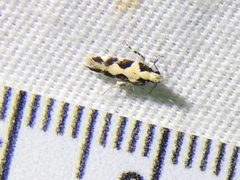
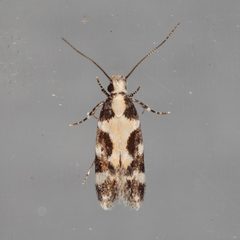
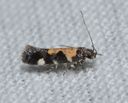
Members of Stegasta can be distinguished from related gelechiid by their small size and, in the case of S. bosqueella, the distinctive dark brown coloration of the and that gives the rednecked peanutworm its . The genus can be differentiated from similar peanut-feeding pests such as S. capitella by this dark coloration pattern.
Images
Distribution
in the Stegasta occur in South and Central America, with S. bosqueella distributed throughout peanut-producing regions of these areas.
Host Associations
- peanut - primary Stegasta bosqueella is the main lepidopteran pest of peanut (Arachis hypogaea) in South and Central American peanut fields
Human Relevance
Stegasta bosqueella is a major agricultural pest causing significant economic damage to peanut production. Larval feeding affects production of new shoots, pegs, and pods, potentially leading to yield loss at high densities. Chemical control is currently the primary management tool, though approaches including -plant resistance and are being explored.
Similar Taxa
- Stegasta capitellaAnother caterpillar pest of peanut plants that can be distinguished from S. bosqueella by lacking the dark brown and coloration characteristic of the rednecked peanutworm
More Details
Nomenclatural note
The name S. bosqueella was misspelled in historical literature as both 'basqueella' and 'bosquella', with the latter incorrect spelling still more frequently cited than the correct 'bosqueella'