
Stegasta
Meyrick, 1904
rednecked peanutworm moths
Species Guides
3- Stegasta bosqueella(Red-necked Peanutworm Moth)
- Stegasta capitella(Teaweed Moth)
- Stegasta
Stegasta is a of small in the Gelechiidae, established by Edward Meyrick in 1904. The genus contains approximately 15 described distributed across tropical and subtropical regions worldwide, including the Americas, Africa, Asia, and Australia. The best-known species, Stegasta bosqueella (rednecked peanutworm), is a significant agricultural pest of peanut crops in South and Central America. Larvae of this species feed within closed leaflets, causing characteristic symmetrical damage patterns. Other species in the genus appear to be associated with various plants, though detailed remains poorly documented for most.
Pronunciation
How to pronounce Stegasta: //stɛˈɡæstə//
These audio files are automatically generated. While they are not always 100% accurate, they are a good starting point.
Identification
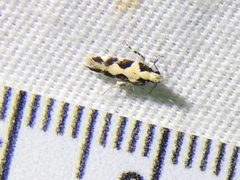
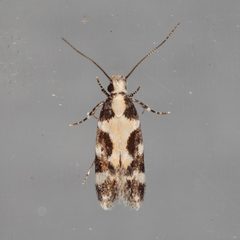
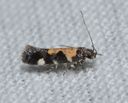
Stegasta are small gelechiid moths, typically with wingspans under 15 mm. The can be distinguished from related Gelechiidae by genitalia characters, though external requires expert examination. Stegasta bosqueella is recognizable among by the dark brown coloration of the and , which gives rise to its . Accurate species identification within the genus generally requires dissection and comparison with .
Images
Habitat
vary by . Stegasta bosqueella occurs in agricultural peanut fields and adjacent weedy areas in South and Central America. Other species have been recorded from diverse environments including tropical forests, savannas, and disturbed habitats. The shows broad ecological , with species found from sea level to moderate elevations.
Distribution
Pantropical and subtropical distribution. Documented from: North America (southern USA), West Indies, Central America, northern South America (Colombia, Ecuador, Peru, Brazil), Africa (Congo, Ethiopia, Madagascar, Namibia, Tanzania, Zambia), Asia (Siberia, Korea, Japan, Southeast Asia), and Australia. Several are to restricted regions, including S. francisci from the Galápagos Islands.
Host Associations
- peanut - primary Stegasta bosqueella is a major pest of peanut (Arachis hypogaea) in South and Central America. Larvae feed on leaflets, shoots, pegs, and pods.
Life Cycle
For Stegasta bosqueella: Females lay up to 230 singly or in small groups on peanut plant stems. Larvae pass through five instars, feeding within closed leaflets where they are sheltered. occurs either on the plant or in soil. Developmental timing varies with temperature and latitude. details for other Stegasta are undocumented.
Behavior
Stegasta bosqueella larvae exhibit cryptic feeding , remaining concealed within closed leaflets during development. are and have been captured in -baited traps, indicating response to olfactory cues. The adult stage represents the most mobile phase, with movement patterns peaking between 6 pm and 9 pm.
Ecological Role
Stegasta bosqueella functions as a primary herbivore in peanut agroecosystems, with larval feeding reducing plant growth and yield at high densities. The serves as prey for natural enemies including and microorganisms, though quantitative ecological data are limited. Other Stegasta species likely occupy similar herbivore in their respective .
Human Relevance
Stegasta bosqueella is economically significant as the main lepidopteran pest of peanuts in South and Central America, causing yield losses through defoliation and damage to reproductive structures. Management relies heavily on calendar-based applications, often combined with . Research has demonstrated successful attract-and-kill strategies targeting as an alternative to broad-spectrum larval insecticides. The otherwise has minimal direct human impact.
Similar Taxa
- S. capitellaAlso a caterpillar pest of peanut plants; distinguished from S. bosqueella by lacking the dark brown and coloration characteristic of the rednecked peanutworm
More Details
Nomenclatural history
The epithet bosqueella was historically misspelled in literature as both 'basqueella' and 'bosquella'; the latter incorrect spelling remains more frequently cited than the correct form.
Research needs
levels for S. bosqueella are not well established, compromising adoption. -plant resistance mechanisms (antixenosis, , ) and tactics require further development.
Sources and further reading
- BugGuide
- Wikipedia
- GBIF taxonomy match
- iNaturalist taxon
- NCBI Taxonomy
- Catalogue of Life
- Stegasta bosqueella Archives - Entomology Today
- Rednecked Peanutworm: New Guide Examines Management Options for Peanut Pest
- Bug Eric: National Moth Week 2021 Review
- Bug Eric: 2021
- rednecked peanutworm feeding damage - Entomology Today
- rednecked peanutworm adult - Entomology Today
- Successful management of Stegasta bosqueella (Lepidoptera Gelechiidae) in peanut with an attract‐and‐kill strategy