
Stegasta capitella
(Fabricius, 1794)
Teaweed Moth
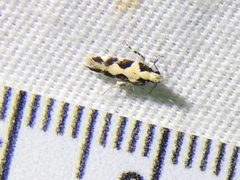
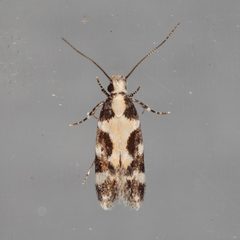
Stegasta capitella, commonly known as the teaweed , is a small gelechiid moth described by Fabricius in 1794. The occurs in the West Indies and southeastern United States, with confirmed records from Florida, Georgia, and Texas. are active from February through August, with additional activity in October and December in Florida. The larvae feed on peanut (Arachis hypogaea) and Sida spinosa.
Pronunciation
How to pronounce Stegasta capitella: //stɛˈɡæstə kæpɪˈtɛlə//
These audio files are automatically generated. While they are not always 100% accurate, they are a good starting point.
Identification
Distinguished from the related Stegasta bosqueella (rednecked peanutworm) by the latter's dark brown and coloration; S. capitella lacks this distinctive dark brown coloration on the head and thorax. The two overlap as caterpillar pests of peanut plants. Forewing length of approximately 4 mm provides a size reference for field identification.
Images
Appearance
A small gelechiid with forewings approximately 4 mm in length. Specific coloration and pattern details are not documented in available sources.
Habitat
Associated with agricultural and weedy environments where plants occur. Specific preferences beyond host plant presence are not documented.
Distribution
West Indies and southeastern United States. Confirmed records from Florida, Georgia, and Texas.
Seasonality
active February to August, with additional activity in October and December in Florida.
Diet
Larvae feed on peanut (Arachis hypogaea) and Sida spinosa. feeding habits are not documented.
Host Associations
- Arachis hypogaea - larval food plantpeanut
- Sida spinosa - larval food plantteaweed
Life Cycle
Complete with , larva, pupa, and stages. Specific details of developmental duration, stage, and number of per year are not documented for this .
Behavior
are attracted to light. Specific behavioral details beyond period are not documented.
Ecological Role
Larval herbivore on peanut and Sida spinosa. Specific ecological impacts or interactions beyond direct herbivory are not documented.
Human Relevance
A minor pest of peanut crops, less significant than the congeneric Stegasta bosqueella, which is the main lepidopteran pest in South and Central American peanut fields. The has been documented in peanut-growing regions of the southeastern United States.
Similar Taxa
- Stegasta bosqueellaOverlaps as caterpillar pest of peanut; distinguished by dark brown and coloration in S. bosqueella, which is absent in S. capitella.
More Details
Taxonomic history
Described by Johan Christian Fabricius in 1794.
Observation data
iNaturalist records 382 observations of this as of data compilation date.
Sources and further reading
- BugGuide
- Wikipedia
- GBIF taxonomy match
- iNaturalist taxon
- Catalogue of Life
- Rednecked Peanutworm: New Guide Examines Management Options for Peanut Pest
- Stegasta bosqueella Archives - Entomology Today
- Bug Eric: National Moth Week 2021 Review
- Bug Eric: A Spider Wasp, Aporus luxus
- Bug Eric: 2021
- rednecked peanutworm feeding damage - Entomology Today