
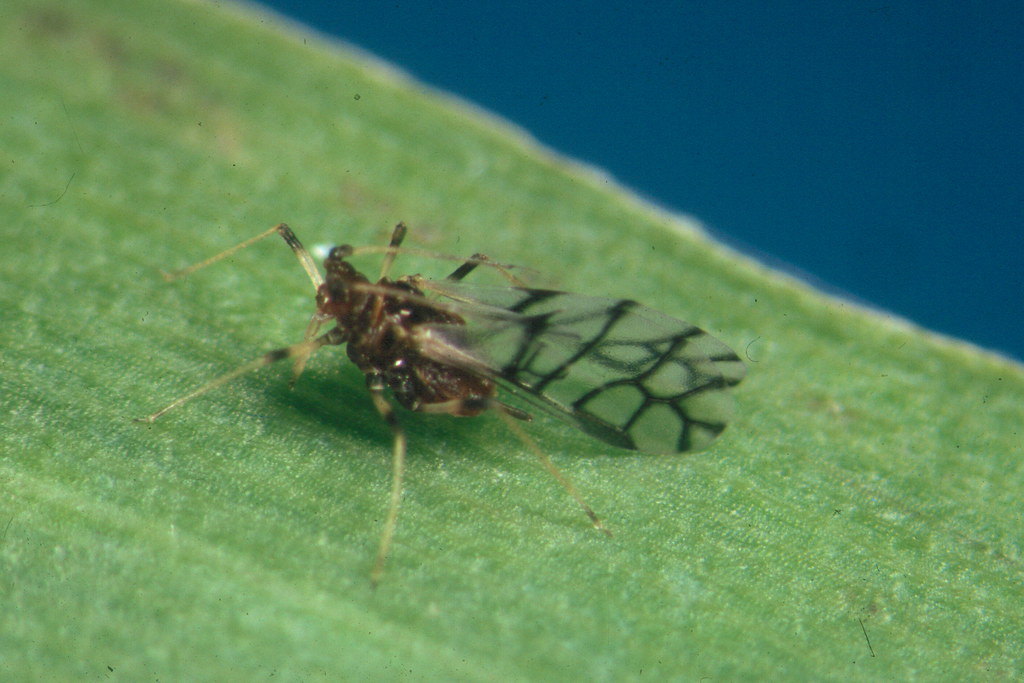
People usually talk about aphids like they are already explained. Tiny green bugs. Bad for the roses. Spray them, squish them, move on. That is not wrong. It is just a very small version of the story.
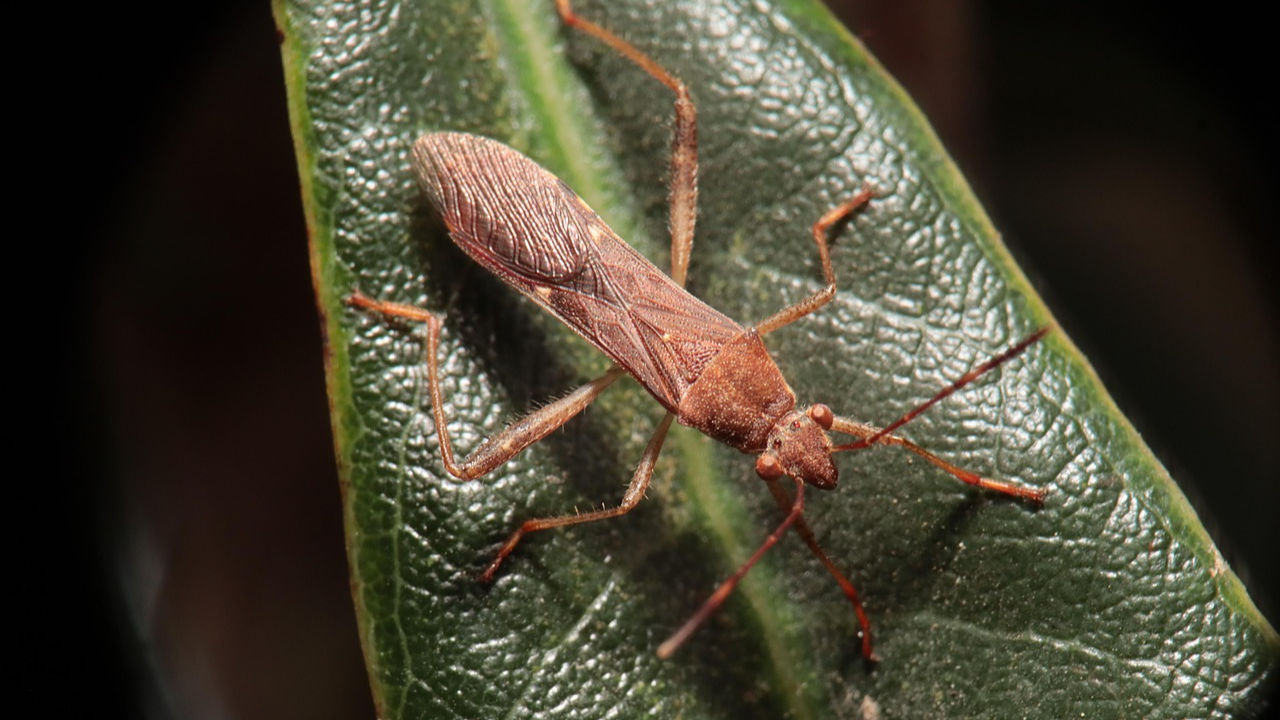
Decorated Cactus-Dodger
Cacama longirostris is a cicada species in the family Cicadidae, described by Distant in 1881. It is known from Central America, particularly Mexico. The species belongs to the genus Cacama, commonly referred to as "cactus dodgers" due to their association with cactus hosts. Like other members of this genus, it likely exhibits adaptations for navigating spiny vegetation.
Black-bellied Cactus-Dodger
Cacama maura is a cicada species in the family Cicadidae, first described by Distant in 1881. It is found in Central America, with records from Mexico including Morelos, Oaxaca, and Yucatán. The common name "Black-bellied Cactus-Dodger" suggests a likely ecological association with cactus habitats similar to its congener Cacama valvata, though specific details about this species remain sparse in the literature.
Moore's cactus dodger
Cacama moorei, commonly known as Moore's cactus dodger, is a species of cicada in the family Cicadidae. It is found in the southwestern United States and northern Mexico, including Arizona, California, Nevada, Texas, and the Mexican state of Sonora. As a member of the genus Cacama, it is associated with cactus habitats and shares the common name 'cactus dodger' with related species such as Cacama valvata.
Golden-winged Cactus-Dodger
Cacama pygmaea is a cicada species described by Sanborn in 2011 during a taxonomic revision of the genus Cacama. It is one of three new species described in that work, which brought the total known species in the genus to 12. The species is found in Central America, with confirmed records from Jalisco, Mexico. Like other members of the genus Cacama, it is commonly referred to as a 'cactus-dodger' cicada.
Variegated Cactus Dodger
Cacama variegata is a large cicada species in the family Cicadidae, commonly known as the variegated cactus dodger. The species is distributed across the southwestern United States and Mexico, with records from Texas and Mexican states including Coahuila, Durango, Nuevo León, and Tamaulipas. Like other members of the genus Cacama, this species is associated with cactus habitats.
Cacopsylla curta is a species of jumping plant louse in the family Psyllidae, first described by Tuthill in 1943. Like other members of the genus Cacopsylla, it is a small sap-feeding insect associated with woody plants. The species has been documented in western North America, with records from California, Colorado, and Oregon. As with many psyllid species, detailed biological information remains limited in published sources.
Cacopsylla fatsiae is a psyllid species in the family Psyllidae, described by Jensen in 1957. It belongs to the genus Cacopsylla, which includes numerous phloem-feeding insects associated with woody plants. The species has been recorded in Japan, China (Hong Kong), and California (USA). Like other Cacopsylla species, it is presumed to feed on plant phloem sap, though specific host associations for C. fatsiae remain poorly documented in published literature.
apple leaf sucker, apple psylla, apple sucker
Cacopsylla mali is a psyllid species in the family Psyllidae, native to Eurasia and introduced to North America. Commonly known as the apple leaf sucker or apple psylla, it is associated with apple (Malus) host plants. The species belongs to the subfamily Psyllinae and is one of several Cacopsylla species involved in apple-associated insect-plant interactions.
Cacopsylla nana is a species of jumping plant louse (psyllid) in the family Psyllidae, first described by Tuthill in 1938. Like other members of the genus Cacopsylla, it is a phloem-feeding hemipteran that feeds on plant sap. The species is part of a large genus containing many economically important pests, though specific information about C. nana's biology and ecology remains limited. It belongs to the suborder Sternorrhyncha, which includes other sap-feeding insects such as aphids, whiteflies, and scale insects.
Cacopsylla notapennis is a species of psyllid in the family Psyllidae, described by Jensen in 1956. As a member of the genus Cacopsylla, it belongs to a group of phloem-feeding insects commonly known as jumping plant lice. The species is part of the diverse psyllid fauna of the Holarctic region, though specific ecological details remain poorly documented.
Cacopsylla quadrilineata is a psyllid species (family Psyllidae) in the order Hemiptera, originally described by Fitch in 1851. Psyllids in this genus are small plant-feeding insects commonly known as jumping plant lice, which feed on phloem sap using piercing-sucking mouthparts. This species belongs to a group of insects whose landscape movements and host associations can be tracked through molecular gut content analysis, a technique that has revealed their use of diverse non-host plants as temporary refuges.
Cacopsylla sinuata is a species of psyllid, or 'jumping plant louse,' described by Crawford in 1914. Like other members of the genus Cacopsylla, it is a small, phloem-feeding hemipteran with siphon-like mouthparts. The species belongs to the family Psyllidae within the suborder Sternorrhyncha, which includes other sap-sucking insects such as aphids, scales, and whiteflies. Specific ecological details for this species remain poorly documented.
Calacanthia is a genus of shore bugs in the family Saldidae, established by Reuter in 1891. The genus contains seven described species distributed across alpine and montane regions of Europe and Asia, including the Himalayas, Tibet, and Sichuan. Species in this genus are associated with high-elevation aquatic or semi-aquatic habitats. The genus is part of the tribe Saldoidini within the subfamily Saldinae.
Calacanthia trybomi is a species of shore bug in the family Saldidae. It was described by Sahlberg in 1878, originally placed in the genus Salda. The species has a transcontinental distribution spanning Europe, Northern Asia (excluding China), and North America. Like other members of Saldidae, it inhabits shoreline environments.
Caladonus coquilletti is a species of leafhopper in the family Cicadellidae, subfamily Deltocephalinae, tribe Platymetopiini. The species was described by Van Duzee in 1890. It belongs to a genus of leafhoppers characterized by distinctive morphological features typical of the Platymetopiini. Leafhoppers in this family are generally small to medium-sized insects with piercing-sucking mouthparts adapted for feeding on plant vascular tissues.
Calaphidinae is the second-largest subfamily in the family Aphididae, comprising more than 60 genera and over 360 described species. The subfamily includes aphids primarily associated with woody host plants, particularly birches (Betula), oaks (Quercus), and related tree species in the families Fagaceae and Betulaceae. Recent molecular phylogenetic studies have substantially revised the classification of Calaphidinae, establishing eight tribal divisions and revealing that the group is paraphyletic with respect to the former 'Saltusaphidinae'. The subfamily shows complex evolutionary patterns involving host plant shifts and geographic expansion from an Eastern Palaearctic origin.
Streaked River Birch Aphid
Calaphis betulella is an aphid species in the family Aphididae, commonly known as the Streaked River Birch Aphid. It belongs to the subfamily Calaphidinae and tribe Calaphidini. The species was described by Walsh in 1863. As a member of the genus Calaphis, it is associated with birch host plants.
Yellow Dark-veined Birch Aphid
Calaphis flava is a species of aphid in the family Aphididae, first described by Mordvilko in 1928. It is commonly known as the Yellow Dark-veined Birch Aphid. The species has been recorded in parts of Europe including Belgium, Denmark, Norway, and the Azores (São Miguel). As a member of the genus Calaphis, it is associated with birch (Betula) host plants, though specific host records for this species are limited in the available sources.
Calidroides is a genus of plant bugs in the family Miridae, described by Schwartz in 2005. It belongs to the diverse suborder Heteroptera, commonly known as true bugs. The genus is part of the large and ecologically significant family Miridae, which contains thousands of species worldwide. Very few observations of this genus exist in public databases.
Caliscelini is a tribe of small planthoppers within the family Caliscelidae (Hemiptera: Fulgoroidea). Members are distributed across Asia, with documented genera including bamboo-feeding specialists in southwestern China and taxa from montane regions of Vietnam. The tribe has been studied primarily through taxonomic descriptions of new genera and species, with limited biological data available for most representatives.
Caliscelis bonellii is a planthopper species in the family Caliscelidae, originally described as Fulgora bonellii by Latreille in 1807. It belongs to the infraorder Fulgoromorpha, a group known for their enlarged frons and distinctive head morphology. The species has been recorded across Mediterranean Europe and has been introduced to North America, with observations in California. It is one of the more frequently documented species in its genus, with over 250 iNaturalist observations.
Calophya minuta is a species of jumping plant louse in the family Calophyidae, first described by Tuthill in 1942. The species belongs to the order Hemiptera, suborder Sternorrhyncha, and is part of the psyllid superfamily Psylloidea. Like other members of its genus, it is likely associated with specific host plants, though detailed ecological information remains limited. The species has been documented in observation records, with 12 observations recorded on iNaturalist.
Camirus moestus is a species of shield-backed bug in the family Scutelleridae, first described by Stål in 1862. The species belongs to a family commonly known as shield-backed bugs or jewel bugs, characterized by their enlarged scutellum that covers most of the abdomen and wings. Records indicate presence in Middle America and North America, though detailed biological information appears limited in available sources.
Thistle Aphid, Artichoke Aphid, Oleaster-Thistle Aphid
Capitophorus elaeagni is a species of aphid in the family Aphididae, commonly known as the thistle aphid, artichoke aphid, or oleaster-thistle aphid. It is found in Europe, with distribution records also from the Azores (São Miguel), Brazil (Paraná, São Paulo), Czech Republic, Denmark, and Norway. The specific epithet 'elaeagni' suggests an association with plants in the genus Elaeagnus, though this relationship requires confirmation.
Capsus cinctus is a species of plant bug in the family Miridae, a group commonly known as plant bugs or mirids. The species has a Holarctic distribution, occurring across Europe, Northern Asia (excluding China), and North America. As a member of the Miridae, it possesses the characteristic piercing-sucking mouthparts typical of true bugs. Specific details regarding its biology, host associations, and ecology remain poorly documented in the available literature.
Cariniocoris geminatus is a species of plant bug in the family Miridae, first described by Knight in 1929 under the basionym Plagiognathus geminatus. It belongs to the infraorder Cimicomorpha, a diverse group of true bugs that includes many plant-feeding species. The genus Cariniocoris is part of the large and economically significant family Miridae, commonly known as plant bugs or capsid bugs. Information specific to the biology and ecology of C. geminatus is limited in available sources.
Carpilis barberi is a species of dirt-colored seed bug in the family Rhyparochromidae, first described by Blatchley in 1924. It belongs to the true bug order Hemiptera, characterized by piercing-sucking mouthparts and incomplete metamorphosis. The species is documented from North America, with specific records from the United States. As a member of the seed bug family Rhyparochromidae, it is presumed to feed on seeds, though specific dietary details for this species remain unconfirmed.
Carthasis decoratus is a species of damsel bug in the family Nabidae. It is found in North America. The species was described by Uhler in 1901. As a member of the damsel bug family, it belongs to a group of predatory true bugs.
Carulaspis is a genus of armored scale insects in the family Diaspididae, comprising six recognized species. The genus is associated with coniferous hosts in the orders Pinidae and Magnoliidae, particularly junipers (Juniperus spp.). Carulaspis juniperi is a documented pest causing significant damage to ornamental and landscape juniper plantings, including growth reduction, needle chlorosis, and branch death. Species occur in Europe and have been introduced to other regions including New Zealand.
Carynota is a genus of treehoppers in the family Membracidae, subfamily Smiliinae, established by Fitch in 1851. The genus contains four described species: C. maculata, C. marmorata, C. mera, and C. stupida. Treehoppers in this genus exhibit the enlarged pronotum characteristic of Membracidae, which extends over the body like a thorn or helmet.
Castolus is a genus of assassin bugs (family Reduviidae) comprising approximately 16 described species. Members of this genus belong to the subfamily Harpactorinae, a diverse group of predatory true bugs. The genus was established by Carl Stål in 1858. Like other reduviids, species in this genus are predatory, though specific natural history details for most Castolus species remain poorly documented.
Catonia bicinctura is a species of planthopper in the family Achilidae, described by Van Duzee in 1915. It belongs to a family whose members are often associated with fungal hosts. The species has been documented in the southeastern and northeastern United States.
Catonia carolina is a species of planthopper in the family Achilidae, first described by Metcalf in 1923. It belongs to the tribe Plectoderini within the subfamily Myconinae. The species has been documented in several eastern and midwestern U.S. states. As with other achilid planthoppers, it is presumed to feed on plant vascular fluids, though specific host associations remain unstudied.
Catonia nava is a species of planthopper in the family Achilidae, described by Thomas Say in 1830. It belongs to the order Hemiptera and is part of the diverse group of true bugs known as fulgoroid planthoppers. The species has been recorded across multiple states in the eastern and southeastern United States.
Catonia pumila is a species of planthopper in the family Achilidae, first described by Van Duzee in 1908. It belongs to the tribe Plectoderini within the subfamily Myconinae. The species is known from the eastern United States, with distribution records from Alabama, Connecticut, Delaware, District of Columbia, Georgia, and Maryland. As a member of the Fulgoromorpha, it is part of a group of Hemiptera characterized by their distinctive head morphology and plant-feeding habits.
leaf-footed bug
Catorhintha apicalis is a leaf-footed bug in the family Coreidae, distributed across Central America and southwestern North America. First described by Dallas in 1852, this species occurs in Mexico, the southwestern United States (Arizona, California, Colorado), and El Salvador. As a member of the Hypselonotini tribe, it shares the characteristic leaf-like expansions of the hind tibiae typical of many coreids.
Catorhintha divergens is a species of leaf-footed bug in the family Coreidae, described by Barber in 1926. It belongs to the tribe Hypselonotini within the subfamily Coreinae. The species is distributed across parts of South America and the Caribbean, with records from Argentina, Bolivia, Brazil, Colombia, and the Bahamas. Like other members of its genus, it is likely associated with host plants, though specific ecological details remain poorly documented.
Catorhintha flava is a species of leaf-footed bug in the family Coreidae, described by Fracker in 1923. It is distributed in Central America and North America, with records from Mexico and Texas. Like other members of Coreidae, it possesses the characteristic leaf-like expansions on the hind tibiae that give the family its common name. The specific epithet 'flava' refers to its yellow coloration.
Ceanothia essigi is a species of jumping plant louse (family Psyllidae) described by Jensen in 1957. The genus Ceanothia is associated with plants in the genus Ceanothus, and this species is known from California. It belongs to a group of hemipterans that feed on plant sap using piercing-sucking mouthparts.
Cedusa arizonensis is a species of planthopper in the family Derbidae, first described by Flynn & Kramer in 1983. As a member of the order Hemiptera, it possesses piercing-sucking mouthparts characteristic of true bugs. The species epithet indicates its association with Arizona, which is confirmed by distribution records. Like other derbid planthoppers, it likely feeds on plant vascular fluids. Very little specific biological information has been published for this species.
Cedusa balli is a species of planthopper in the family Derbidae, described by Flynn and Kramer in 1983. The species epithet honors Dr. George E. Ball, a distinguished carabidologist. Derbid planthoppers are known for their distinctive wing venation and association with fungal-feeding habits. This species is part of the diverse Neotropical fauna of Derbidae, a family predominantly found in tropical and subtropical regions.
Cedusa maculata is a planthopper species in the family Derbidae, first described by Van Duzee in 1912. It belongs to the diverse group of true bugs (Hemiptera) known as fulgoromorphs. The species has been documented across multiple eastern and midwestern U.S. states based on distribution records.
Cedusa mallochi is a species of planthopper in the family Derbidae, described by McAtee in 1924. It belongs to the genus Cedusa, a group of small, delicate derbids characterized by elongated wings and slender bodies. The species is documented from scattered localities in the eastern and midwestern United States. Like other derbids, it likely feeds on fungal hyphae or plant sap, though specific ecological details remain poorly documented.
Cedusa minuenda is a planthopper species in the family Derbidae, first described by Ball in 1928. It belongs to a group of fulgoroid insects commonly known as derbids, which are characterized by their distinctive wing morphology and association with host plants. The species has been recorded from the southeastern United States.
Cedusa obscura is a species of planthopper in the family Derbidae, first described by Ball in 1902. It belongs to the tribe Cedusini within the subfamily Breddiniolinae. Like other derbids, it is likely associated with fungal-feeding habits in nymphal stages and plant-sap feeding in adults, though specific ecological details for this species remain poorly documented. The species has been recorded across multiple U.S. states including Arkansas, California, Colorado, Connecticut, and the District of Columbia.
Cedusa vanduzeei is a species of planthopper in the family Derbidae, first described by Flynn and Kramer in 1983. It belongs to the subfamily Breddiniolinae and tribe Cedusini. The genus Cedusa is part of the diverse planthopper superfamily Fulgoroidea, which contains many economically important agricultural pests. This species is one of numerous small, often overlooked insects within the Hemiptera that inhabit various plant communities.
blue Derbid planthopper
Cedusa vulgaris is a planthopper in the family Derbidae, commonly known as the blue Derbid planthopper. First described by Fitch in 1851, this species is native to North America but has been recently documented as an emerging pest in Indian grape vineyards since May 2024. Adults feed on phloem sap of grape plants through piercing-sucking mouthparts. The species belongs to a group of planthoppers often characterized by distinctive coloration and association with woody host plants.
Cedusa xenga is a species of planthopper in the family Derbidae, first described by Kramer in 1986. It belongs to the tribe Cedusini within the subfamily Breddiniolinae. The species has been recorded in the southern United States, specifically in Florida and Texas. Like other derbid planthoppers, it is likely associated with woody vegetation and may feed on plant sap.
water boatman
Cenocorixa bifida is a species of water boatman (family Corixidae) first described by Hungerford in 1926. It is found in North America and possesses the characteristic rowing hind legs typical of water boatmen, which it uses for propulsion through synchronous swimming strokes. The species has been studied for its swimming hydrodynamics and Malpighian tubule ultrastructure, revealing specialized adaptations for aquatic life.
Cenocorixa dakotensis is a species of water boatman (family Corixidae) described by Hungerford in 1928. It belongs to a genus of aquatic true bugs found in northern regions. The species is known from North America, particularly in the Nearctic region.