Rare sheet-web-weaving spider, sole representative of monotypic genus Saltonia. Restricted to salt crusts of intermittent or dry lakes, streams, and rivers in desert southwestern North America. Previously presumed extinct following 1905 flooding of type locality at Salton Sea, but rediscovered in 1990s at multiple sites. Genetic analyses reveal significant population structure with two major clades (New Mexico versus California-northern Baja California) and minimal gene flow among isolated populations in fragmented desert salt flat habitats.
Satilatlas marxi is a species of sheet-web weaving spider in the family Linyphiidae, described by Keyserling in 1886. It is a Holarctic species with documented occurrences in Alaska, Canada (Alberta, British Columbia, Manitoba), and South Siberia, Russia. The genus Satilatlas belongs to the diverse dwarf spider family, whose members construct horizontal sheet webs to capture prey. Very little is known about the specific biology of this species.
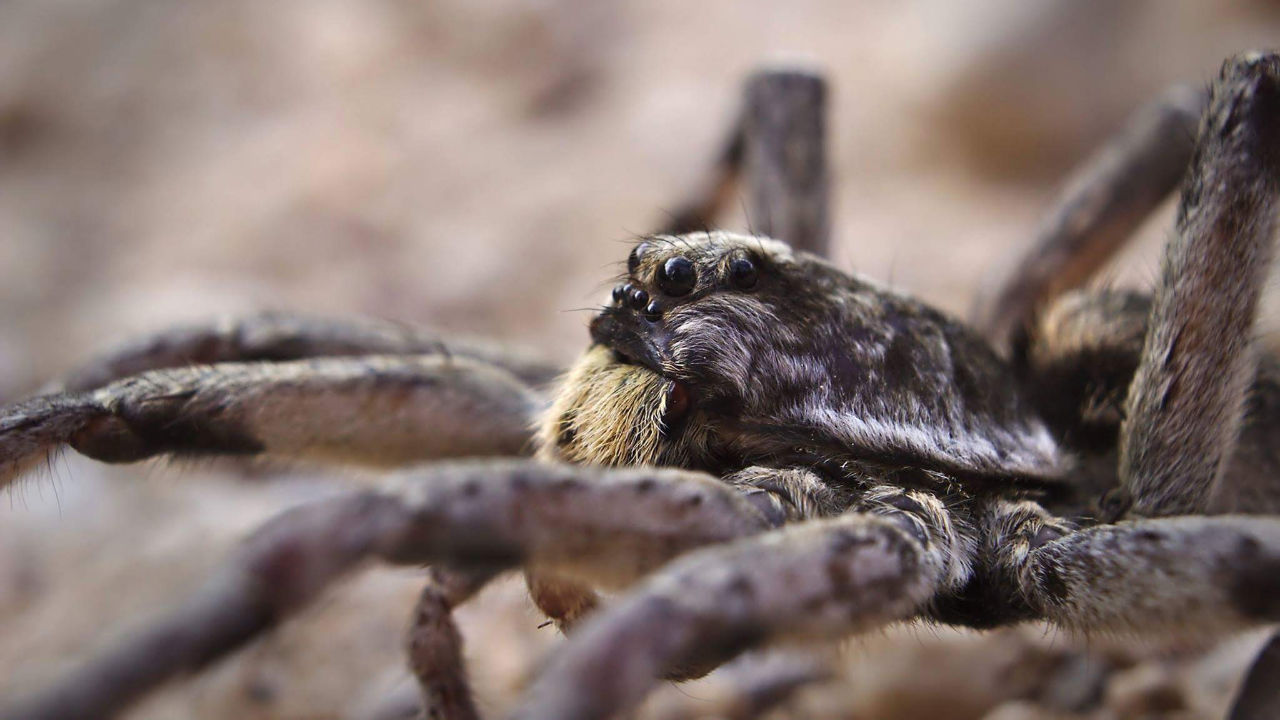
Schizocosa crassipalpata is a species of wolf spider (family Lycosidae) described by Roewer in 1951. It belongs to the genus Schizocosa, which comprises medium-sized wolf spiders often recognized by their distinct dorsal color patterns. The species is known from the United States and Canada, though specific details about its biology remain limited in published literature. It has been documented as a host for the mantidfly Climaciella brunnea, whose larvae parasitize wolf spider egg sacs.
A wolf spider species in the family Lycosidae, found in the United States. Males perform complex courtship displays involving visual signals and substrate vibration. The species exhibits an "edge effect" tendency to aggregate at forest-field interfaces. It has been documented as a host for mantisfly larvae (Climaciella brunnea), which parasitize spider egg sacs.
A wolf spider in the family Lycosidae, Schizocosa mimula is a ground-dwelling species found in Mexico and the southwestern United States. Like other members of its genus, it likely exhibits typical lycosid behaviors including active hunting without webs and maternal care of egg sacs. The species was described by Gertsch in 1934 and remains poorly documented in scientific literature.
Schizocosa retrorsa is a wolf spider species in the family Lycosidae, found in the United States and Mexico. As a member of the genus Schizocosa, it shares characteristics with other wolf spiders including ground-dwelling habits and active hunting behavior. The species has been recorded as a host for the mantidfly Climaciella brunnea, whose larvae parasitize spider egg sacs.
Schizocosa saltatrix is a species of wolf spider in the family Lycosidae, first described by Hentz in 1844. It occurs in North America and shares the characteristic traits of its genus, including ground-dwelling habits and active hunting behavior. The species has been documented as a host for parasitic mantidfly larvae, specifically Climaciella brunnea.
Scopoides cambridgei is a species of ground spider in the family Gnaphosidae. The species was described by Gertsch and Davis in 1940. It is known from the United States and Mexico. No specific ecological or behavioral studies have been documented for this species.
Scotinella is a genus of small araneomorph spiders in the family Phrurolithidae, first described by Nathan Banks in 1911. The genus contains 24 described species distributed across North America, with the highest diversity in the United States and Mexico. Species range from the type species Scotinella pallida in the eastern United States to numerous Mexican endemics. These spiders are ground-dwelling hunters with limited published ecological data.
Scotinella fratrella is a small true spider in the family Phrurolithidae, described by Gertsch in 1935. The species occurs in North America, with records from the United States and Canada. It belongs to a genus of ground-dwelling spiders that are generally associated with leaf litter and soil habitats. Very few observations of this species have been documented, reflecting either genuine rarity or cryptic habits.
Scotinella minnetonka is a small true spider in the family Phrurolithidae, a group of ground-dwelling spiders often associated with leaf litter and soil habitats. The species was described in 1930 and is known from scattered records across the United States and Canada. Like other phrurolithids, it likely exhibits secretive habits and may be undercollected due to its small size and cryptic lifestyle.
Scotinotylus pallidus is a species of sheet web spider in the family Linyphiidae. It was first described by James Henry Emerton in 1882. The species is known from Canada and the United States, with records from Alberta, Manitoba, and Ontario in Canada. Like other linyphiids, it constructs horizontal sheet webs to capture prey. The specific epithet 'pallidus' refers to its pale coloration.
Mouse Spider
Scotophaeus blackwalli, commonly called the mouse spider, is a ground-dwelling spider in the family Gnaphosidae. It is native to Europe, the Caucasus, Turkey, and Iran, and has been introduced to North America, Peru, and Hawaii. The species is nocturnal and does not build webs for prey capture, instead hunting actively or scavenging opportunistically. It is frequently found in and around human dwellings, particularly in Britain during autumn.
Scylaceus is a genus of sheet-weaving spiders in the family Linyphiidae, first described by Bishop and Crosby in 1938. The genus contains two described species: S. pallidus and S. selma. Both species are found in Canada and the United States. Members of this genus are small spiders that construct flat, horizontal sheet webs.
dwarf spider
Scylaceus pallidus is a dwarf spider species in the family Linyphiidae, first described by Emerton in 1882 under the basionym Tmeticus pallidus. The species is distributed across the United States and Canada. As a member of the sheet-web weaving family Linyphiidae, it constructs flat horizontal webs for prey capture. The genus Scylaceus comprises small-bodied spiders, with this species representing one of the Nearctic representatives of this primarily Palearctic genus.
Segestria is a genus of spiders in the family Segestriidae. These spiders are characterized by their elongated, cylindrical bodies and six eyes arranged in a distinctive semicircular pattern. The genus has a primarily Eurasian distribution, with some species extending to the Americas, North Africa, Madagascar, and New Zealand. Segestria species are known for building tubular retreats in cracks and crevices, from which they hunt prey using silk triplines.
Flatties, Crescent-eyed Spiders, Wall Crab Spiders
Selenops is a genus of spiders in the family Selenopidae, commonly known as "flatties" due to their extremely flattened bodies. The genus comprises approximately 132 species distributed across arid and semi-arid regions worldwide, including the southwestern United States, Florida, the Caribbean, and tropical regions of Asia, Africa, and the Americas. These spiders are notable for being the first documented arachnids capable of controlled gliding when falling, using their flattened bodies and laterigrade legs to steer toward tree trunks rather than falling to the ground. They exhibit some of the fastest turning movements recorded in terrestrial legged animals when attacking prey from behind.
flatty
Selenops submaculosus is a species of wall crab spider in the family Selenopidae, commonly known as a "flatty." It exhibits the characteristic extremely flattened body and laterigrade leg posture typical of the family. The species occurs in the southeastern United States, the Bahamas, Cuba, and the Cayman Islands. Like other selenopids, it is nocturnal and typically found on vertical surfaces.
Septentrinna is a genus of corinnid sac spiders established by A. B. Bonaldo in 2000. The genus contains six described species distributed from the southern United States through Mexico to Guatemala. The type species, Septentrinna bicalcarata, was originally described by Simon in 1896. Species in this genus were previously classified under other genera before the revision by Bonaldo.
Septentrinna bicalcarata is a species of true spider in the family Corinnidae, first described by Eugène Simon in 1896. The species is recorded from the United States and Mexico. It belongs to a small genus of ground-dwelling spiders within the ant-mimic spider family Corinnidae. Published information on its biology and ecology remains limited.
Sergiolus angustus is a ground spider in the family Gnaphosidae, native to western North America. Like other members of its genus, it exhibits bold coloration that may represent mimicry of velvet ants (Mutillidae). The species is medium-sized, diurnal, and nomadic, actively hunting rather than building webs to capture prey. It constructs silk retreats for molting, egg guarding, and overwintering.
Sergiolus decoratus is a species of ground spider in the family Gnaphosidae, first described by Kaston in 1945. Like other members of the genus Sergiolus, it is known for its bold, colorful markings that may serve as mimicry of velvet ants (Mutillidae). The species is found in North America, with records from the United States and Canada including Alberta and Manitoba.
Sergiolus minutus is a species of ground spider in the family Gnaphosidae. It belongs to a genus noted for bold coloration and potential mimicry of velvet ants (Mutillidae). As with other Sergiolus species, it is a nomadic hunter that does not construct webs for prey capture. The species has been recorded from the Caribbean region including Cuba and Jamaica, as well as the United States.
Ground Spider
Sergiolus ocellatus is a ground spider in the family Gnaphosidae, found across the United States and Canada. Like other members of its genus, it exhibits bold coloration that may serve as mimicry of velvet ants (Mutillidae). This nomadic, diurnal hunter prowls through leaf litter and climbs vegetation in search of prey rather than constructing capture webs. It constructs silk retreats for molting, egg guarding, and overwintering.
Sergiolus unimaculatus is a ground spider in the family Gnaphosidae, first described by Emerton in 1915. Like other members of its genus, it is a nomadic, diurnal hunter that does not construct webs for prey capture. The species exhibits the characteristic bold coloration of Sergiolus, though specific pattern details for S. unimaculatus are less documented than for congeners such as S. capulatus. It is one of approximately sixteen Sergiolus species known from north of Mexico.
Simitidion is a genus of comb-footed spiders (Theridiidae) described by J. Wunderlich in 1992. The genus contains three recognized species: S. agaricographum, S. lacuna, and S. simile. Native populations occur in Africa, Asia, and Europe, with S. simile introduced to Canada. The genus is part of the diverse cobweb spider family.
Eugen's Orbweaver
Singa eugeni is a species of orb-weaving spider in the family Araneidae. It was described by Levi in 1972. The species is known from the United States, where it has been documented through iNaturalist observations. As a member of the genus Singa, it belongs to a group of small orbweavers. Specific details about its biology, habitat preferences, and ecology remain poorly documented in the available literature.
Singa keyserlingi is a species of orb-weaving spider in the family Araneidae, first described by McCook in 1894. It is known from the United States and Canada. As an orb weaver, it constructs spiral wheel-shaped webs for prey capture. Information regarding its specific biology, habitat preferences, and detailed morphology remains limited in published sources.
Sisicottus quoylei is a species of dwarf spider described by Miller in 1999. It belongs to the family Linyphiidae, one of the largest families of spiders, commonly known as sheet-web weavers or money spiders. The species has been documented in North America.
Sisicus is a genus of sheet web spiders (family Linyphiidae) established in 1938. The genus contains three described species distributed across northern temperate regions including North America, Europe, Siberia, and East Asia. These spiders construct horizontal sheet webs to capture prey.
dwarf spider
Sisicus penifusifer is a species of dwarf spider in the family Linyphiidae, described by Bishop and Crosby in 1938. It belongs to a genus of small sheet-web weavers. The species has been documented in parts of the United States and Canada, with records from Alberta, British Columbia, and Manitoba.
false wolf spiders
Socalchemmis is a genus of spiders in the family Zoropsidae, first described by Norman I. Platnick and D. Ubick in 2001. The genus name derives from "Southern Californian Chemmis," reflecting its original discovery in California. The genus contains seventeen described species distributed in the southwestern United States and Mexico, with most species described from California localities. These spiders are commonly referred to as false wolf spiders due to their resemblance to true wolf spiders (Lycosidae).
Socalchemmis idyllwild is a spider species in the family Zoropsidae, first described by Platnick and Ubick in 2001. The genus Socalchemmis is endemic to southern California and represents a group of spiders previously placed in Tengellidae. The species name references Idyllwild, California, indicating the type locality. This species belongs to a genus characterized by distinctive morphological features separating it from related zoropsid genera.
false wolf spider, wandering spider
Socalchemmis miramar is a species of spider in the family Zoropsidae, described by Platnick and Ubick in 2001. It belongs to a group commonly referred to as false wolf spiders or wandering spiders. The species is known from the United States, with records indicating a distribution in southern California. As a member of Zoropsidae, it represents part of a family of spiders that are generally ground-dwelling and nocturnal hunters.
Socalchemmis shantzi is a species of spider in the family Zoropsidae, commonly referred to as false wolf spiders and wandering spiders. The species was described by Platnick and Ubick in 2001. It is endemic to the United States, specifically known from California. The genus Socalchemmis was established as a new genus in the same 2001 revision, representing a previously unrecognized group of North American spiders.
Funnel-web Wolf Spider
Sosippus janus is a species of wolf spider in the family Lycosidae, first described by Brady in 1972. It is one of six Sosippus species known from the United States. Unlike most wolf spiders, members of this genus are web-builders, constructing sheet-like webs with funnel-like retreats. The species is found in the southern United States.
funnel-web wolf spider
Sosippus mimus is a web-building wolf spider in the family Lycosidae. Unlike most wolf spiders, which are nomadic hunters, species in the genus Sosippus construct sheet-like webs with funnel-shaped retreats. This species is found in the United States and shares the distinctive eye arrangement typical of lycosids: two large posterior median eyes with four smaller eyes below and two lateral eyes flanking them.
Lake Placid Funnel Wolf Spider
Sosippus placidus is a web-building wolf spider in the family Lycosidae, endemic to the United States. Unlike most wolf spiders, which are nomadic hunters, this species constructs thick sheet-like webs with funnel-like retreats. It is described as a habitat specialist compared to its widespread congener Sosippus floridanus. The species is known from relatively few observations (31 records on iNaturalist as of source date), suggesting restricted distribution or specific habitat requirements.
Sosippus texanus is a species of funnel-web wolf spider in the family Lycosidae, distinguished from typical wolf spiders by its web-building behavior. Unlike the nomadic hunting behavior of most lycosids, this species constructs sheet-like webs with funnel-shaped retreats. It is one of six Sosippus species occurring in the United States and has been documented as a host for the mantisfly Mantispa sayi.
Long Island Crevice Ground Spider
Sosticus insularis is a ground spider in the family Gnaphosidae, characterized by its association with rocky crevice habitats. The species was originally described as Prosthesima insularis by Banks in 1895 and later transferred to Sosticus. It occurs in northeastern North America, with records from the United States and Canada. The common name 'Long Island Crevice Ground Spider' reflects both its geographic association and habitat preference. As a member of the Gnaphosidae, it is a wandering hunter rather than a web-builder.
Souessa spinifera is a sheet web weaving spider and the sole member of the monotypic genus Souessa. First described by O. Pickard-Cambridge in 1874 and later placed in its current genus by Crosby & Bishop in 1936, this small arachnid belongs to the dwarf spider family Linyphiidae. It has been documented only from the United States, with records from multiple states.
Dwarf Cellar Spiders
Spermophora is a genus of cellar spiders established by Nicholas Marcellus Hentz in 1841. It belongs to the subfamily Pholcinae within the family Pholcidae. The genus contains 45 recognized species distributed across Africa, Europe, Oceania, Asia, the United States, and Brazil. Members are commonly referred to as Dwarf Cellar Spiders.
Sphodros fitchi is a species of purseweb spider in the family Atypidae. It is known only from the United States. As with other members of the genus, it constructs silk-lined burrows camouflaged with debris, but specific details of its biology remain poorly documented.
Spirembolus mundus is a species of sheet web spider (family Linyphiidae) described by Chamberlin & Ivie in 1933. It is found in the United States and Canada. The species belongs to a genus of small spiders that construct horizontal sheet webs, often with a dome or bowl shape. It was originally described as Spirembolus mundus by Chamberlin & Ivie, though some sources incorrectly cite Millidge (1980).
white-spotted false widow, white-spotted false widow spider
Steatoda albomaculata is a small cobweb spider in the family Theridiidae, commonly known as the white-spotted false widow. It is widely distributed across North America, Europe, Russia, North Africa, the Middle East, Central Asia, and East Asia. The species has been studied for its predation efficiency on various prey types and is recognized as a generalist predator. It was formerly considered to have two subspecies, but Steatoda albomaculata infuscata was synonymized with the nominate form in 2024, leaving no valid subspecies.
Steatoda grandis is a species of cobweb spider in the family Theridiidae, first described by Banks in 1901. It is known from the United States, though specific details about its biology and ecology remain poorly documented in the scientific literature. The species belongs to a genus that includes several well-known spiders, some of which are frequently encountered in human dwellings.
Cupboard spider, Dark comb-footed spider, Brown house spider, False black widow
Steatoda grossa is a cosmopolitan cobweb spider in the family Theridiidae, native to Europe and temperate Asia and introduced globally. It constructs irregular three-dimensional webs in dark, sheltered locations and is frequently mistaken for venomous black widows (Latrodectus spp.) due to its similar body shape and coloration, though it lacks the distinctive red hourglass marking. Bites to humans are rare and generally minor, causing localized pain and blistering with occasional systemic symptoms.
Steatoda mexicana is a cobweb weaver spider (family Theridiidae) described by Herbert W. Levi in 1957. It is native to Mexico and the southwestern United States. Like other Steatoda species, it constructs irregular tangled webs and is a member of the same genus as the well-known Triangulate Cobweb Weaver (S. triangulosa) and the Noble False Widow (S. nobilis). Very little specific information has been published about the biology of this particular species.
Steatoda washona is a cobweb spider in the family Theridiidae, described by Gertsch in 1960. It belongs to a genus that includes several species commonly known as false widows due to their resemblance to black widows (Latrodectus). The species occurs in the southwestern United States and Mexico. Like other Steatoda species, it constructs irregular tangled webs and is typically found in sheltered microhabitats.
Stemonyphantes is a genus of sheet-weaving spiders in the family Linyphiidae, first described by Anton Menge in 1866. The genus comprises approximately 20 species distributed across the Palearctic region, with some species extending into North America. As members of Linyphiidae, they construct flat, horizontal sheet webs for prey capture. The type species, Stemonyphantes lineatus (Linnaeus, 1758), is widespread across Europe and into Central Asia.