
Spermophora
Hentz, 1841
Dwarf Cellar Spiders
Species Guides
1- Spermophora senoculata(shortbodied cellar spider)
Spermophora is a of cellar spiders established by Nicholas Marcellus Hentz in 1841. It belongs to the Pholcinae within the Pholcidae. The genus contains 45 recognized distributed across Africa, Europe, Oceania, Asia, the United States, and Brazil. Members are commonly referred to as Dwarf Cellar Spiders.
Pronunciation
How to pronounce Spermophora: //spɛrˈmɑː.fə.rə//
These audio files are automatically generated. While they are not always 100% accurate, they are a good starting point.
Identification
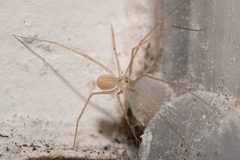
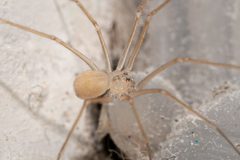
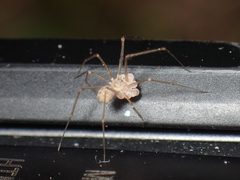
As dwarf cellar spiders, Spermophora are generally smaller-bodied relatives of the more familiar Pholcus and other long-legged cellar spiders. They possess the characteristic elongated legs and small, globular typical of Pholcidae, though specific distinguishing features from other Pholcinae require examination of genital . Identification to species level typically requires microscopic analysis of male and female .
Images
Habitat
Cellar spiders in the Pholcidae, including Spermophora, are generally associated with dark, humid microhabitats such as caves, cellars, rock crevices, and the undersides of rocks and logs. Specific preferences for individual Spermophora are not well documented in the provided sources.
Distribution
of Spermophora occur across six major regions: Africa, Europe, Oceania, Asia, the United States, and Brazil. The shows a wide but patchy global distribution pattern typical of many Pholcidae genera.
Similar Taxa
- PholcusBoth are Pholcinae cellar spiders with long legs and small bodies, but Pholcus are generally larger and more commonly encountered in human dwellings, whereas Spermophora species are smaller and less frequently observed.
- HolocnemusAnother Pholcinae with similar body plan, but Holocnemus tend to have more pronounced abdominal patterning and different arrangements that distinguish them from Spermophora.
More Details
Taxonomic History
The was established by American arachnologist Nicholas Marcellus Hentz in 1841, making it one of the earlier described genera within Pholcidae. It has remained a stable taxonomic entity with 45 currently recognized as of October 2025.
Observation Data
The has accumulated 1,388 citizen science observations on iNaturalist, suggesting moderate detectability despite their small size and cryptic habits.