
Schizocosa saltatrix
(Hentz, 1844)
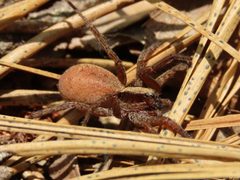
Schizocosa saltatrix is a of wolf spider in the Lycosidae, first described by Hentz in 1844. It occurs in North America and shares the characteristic traits of its , including ground-dwelling habits and active hunting . The species has been documented as a for parasitic mantidfly larvae, specifically Climaciella brunnea.
Pronunciation
How to pronounce Schizocosa saltatrix: /skɪzoʊˈkoʊsə sɔlˈteɪtrɪks/
These audio files are automatically generated. While they are not always 100% accurate, they are a good starting point.
Identification
Members of the Schizocosa can be distinguished from similar wolf spiders by specific color patterns, typically featuring stripes on the and a dark cardiac mark on the . Juveniles bear superficial resemblance to running crab spiders in the genus Thanatus due to similar longitudinal striping, but differ in arrangement and leg proportions. Definitive identification to level requires examination of morphological details not reliably assessed from photographs alone.
Images
Distribution
North America
Host Associations
- Climaciella brunnea - Mantidfly larvae have been recorded boarding Schizocosa spiders, including S. saltatrix, to access spider sacs where they feed on the eggs. At least two unidentified Schizocosa in Illinois were documented as .
Behavior
Ground-dwelling and active hunter, typical of wolf spiders. Overwinters as or .
Similar Taxa
- Thanatus spp.Running crab spiders in this share superficial resemblance due to similar longitudinal striping on the and dark abdominal markings, but differ in arrangement (two rows of four in crab spiders versus three rows in wolf spiders) and leg proportions (crab spiders have laterigrade legs adapted for sideways movement).
- Rabidosa rabidaAnother documented for Climaciella brunnea; both serve as hosts for the same mantidfly , though Rabidosa are generally larger and more robust.
More Details
Parasite Host Record
Redborg and Redborg (2000) documented Climaciella brunnea larvae boarding Schizocosa spiders in Illinois woodlands, representing one of three recorded wolf spider for this mantidfly.