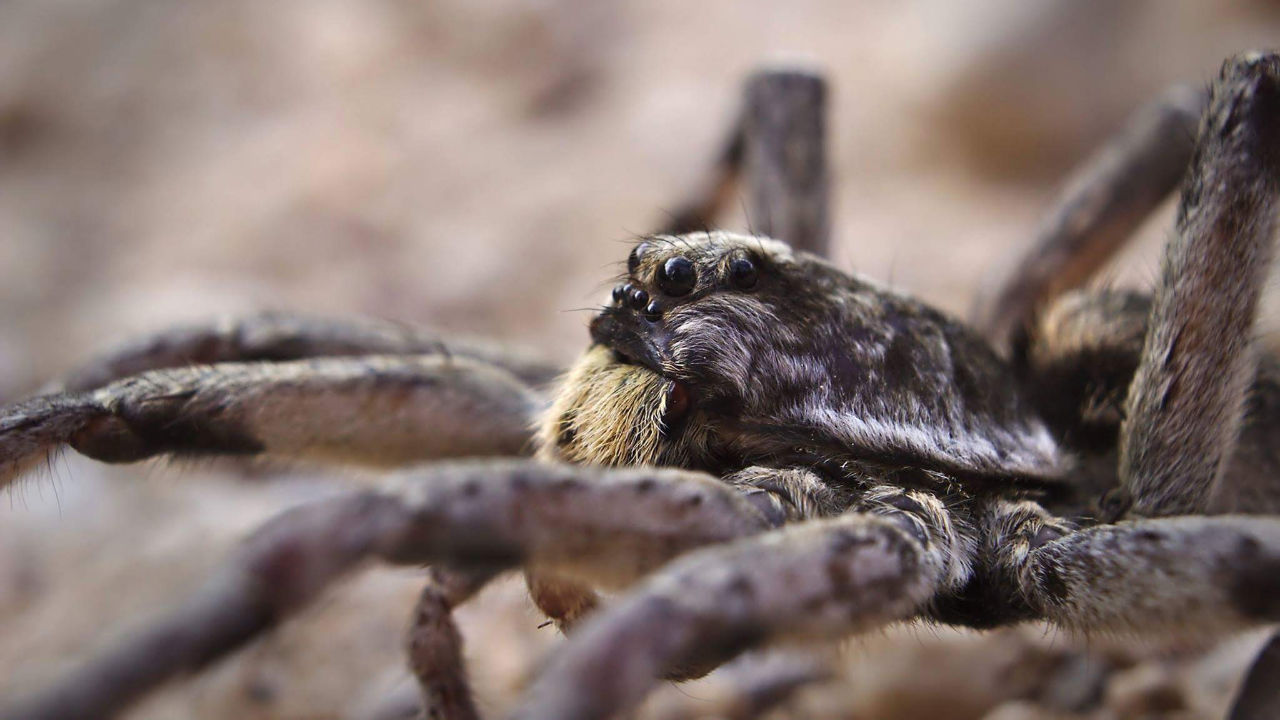
Strotarchus is a genus of araneomorph spiders in the family Cheiracanthiidae, first described by Eugène Louis Simon in 1888. The genus has undergone several family-level reassignments, originally placed in Clubionidae, moved to Miturgidae in 1967, and transferred to Cheiracanthiidae in 2014. It contains approximately 21 species distributed across the Americas and Pakistan, with the majority of species described from Mexico and the United States in 2012. The genus is considered a senior synonym of Marcellina and Coreidon.
Strotarchus beepbeep is a spider species in the family Cheiracanthiidae, described in 2012. The species is characterized by orange coloration on the carapace, legs, and abdomen, with pale margins on the carapace and reddish-brown chelicerae. Its specific epithet references the sound of the Road Runner cartoon character.
Styloctetor purpurescens is a dwarf spider in the family Linyphiidae, first described by Keyserling in 1886. It is known from scattered records across the United States and Canada. The species belongs to a genus of small sheet-web weavers that are poorly studied in North America. Available documentation is limited to basic taxonomic and distributional data.
dwarf orbweavers, micro orb-weavers
Symphytognathidae is a family of extremely small spiders (body size typically 1 mm or less, with Patu digua at 0.37 mm among the smallest known spiders). The family contains approximately 105 species in ten genera, including Crassignatha, Patu, Anapistula, and Micropholcomma. Members construct minute orb webs, often suspended between dead leaves in leaf litter or between vegetation. The family was historically placed in various superfamilies but molecular phylogenetics supports placement within Araneoidea, with affinities to Theridiosomatidae and Anapidae.
Synema viridans is a species of crab spider in the family Thomisidae, found in the United States. As a member of this family, it exhibits the characteristic crab-like posture with laterigrade legs adapted for sideways movement. The genus Synema includes species known for their ambush predation strategy on flowers and vegetation.
Tachygyna vancouverana is a dwarf spider in the family Linyphiidae, first described by Chamberlin and Ivie in 1939. The species is restricted to the Pacific Northwest region of North America. As a member of the sheet-web weaving family Linyphiidae, it constructs horizontal webs for prey capture. Like other members of its genus, it is small-bodied and ground-dwelling.
Tapinesthis inermis is a minute spider species in the family Oonopidae (dwarf goblin spiders). It is the sole member of its genus, which was established by Simon in 1914 based on specimens originally described as Oonops inermis in 1882. The species is native to Europe and has been introduced to North America (Canada and USA).
Tapinocyba cameroni is a species of sheet-web weaving spider in the family Linyphiidae, described in 2007 from Canada. The species is known from the prairie provinces of Alberta, Manitoba, and Saskatchewan. As a member of the dwarf spider family Linyphiidae, it is likely small-bodied with typical linyphiid morphology including reduced eyes and specialized setae on the tarsi.
Simple Sheet-web Weaver
Tapinocyba simplex is a species of dwarf spider in the family Linyphiidae, commonly known as sheet-web weavers due to their characteristic web architecture. The species was described by James Henry Emerton in 1882. It is one of approximately 4,700 species in Linyphiidae, the second-largest spider family. Records indicate presence in the United States and Canada (Alberta, British Columbia, Manitoba).
Tapinopa bilineata is a species of sheetweb spider in the family Linyphiidae, first described by Nathan Banks in 1893. It is a small arachnid found in North America, with records from the United States and Canada. Like other linyphiids, it constructs sheet webs to capture prey. The species is part of one of the most species-rich spider families, though specific ecological details for this particular species remain limited.
Barn Funnel Weaver, Domestic House Spider
Tegenaria domestica is a funnel-web spider in the family Agelenidae, native to Europe but now distributed nearly worldwide through human introduction. It is one of the smaller species in its genus, with females averaging 7.5–11.5 mm and males 6–9 mm in body length. The species is notable for building characteristic funnel-shaped webs and for recently documented colonial behavior in a unique cave environment in Greece/Albania, where thousands of individuals cooperatively maintained a communal web exceeding 100 square meters.
Rural Funnel-web Spider, House Funnel-web Spider
Tegenaria pagana is a small funnel-web spider in the family Agelenidae, first described from Greece in 1840. It is a synanthropic species strongly associated with human habitations, earning it the common name 'house funnel-web spider.' The species is native to the Palearctic region from Europe through North Africa to Central Asia, but has been introduced globally and is now established on multiple continents. A 2013 taxonomic revision substantially reduced its synonymy, consolidating several previously recognized species. It has been studied as a comparative model for eye development and troglomorphic evolution in cave-dwelling spiders.
Teminius is a genus of spiders in the family Miturgidae, first described by Keyserling in 1887. The genus contains four recognized species distributed across the Americas, from the United States through Central America and the Caribbean to Argentina. Teminius species are long-legged wandering spiders that do not build permanent webs for prey capture.
prowling spider
Teminius affinis is a species of prowling spider in the family Miturgidae, first described by Banks in 1897. It occurs in the southern United States and Mexico. As a member of the prowling spider family, it is likely an active hunter rather than a web-builder, though specific behavioral observations for this species are limited in the available literature.
Teminius insularis is a spider species in the family Miturgidae, first described by Lucas in 1857. It is widely distributed across the Americas, ranging from the southern United States through the Greater Antilles to Argentina, with records from multiple Brazilian states and French Guiana. The species has accumulated over 1,100 observations on iNaturalist, indicating it is moderately well-documented. As a member of Miturgidae, it belongs to a family of wandering spiders that do not build permanent webs for prey capture.
Ant Sheet-web Weaver
Tennesseellum formica is a sheet-web weaving spider in the family Linyphiidae. It is native to North America and has been introduced to the Marshall Islands. The species is commonly known as the Ant Sheet-web Weaver.
A minute sheet-web spider native to Europe, Macaronesia, Northern Africa, Turkey, the Caucasus, and Central Asia. It has been introduced to the USA, Chile, Argentina, and New Zealand. Adults measure 2–3 mm in body length and are characterized by a dark brown carapace, brown legs without annulations, and a slender abdomen often bearing distinctive black spots. The species inhabits low vegetation, moss, and leaf litter.
Tenuiphantes zelatus is a small sheetweb spider species in the family Linyphiidae, originally described by Zorsch in 1937. It is known from scattered records across northern North America, particularly in western and central Canada. Like other members of its family, it constructs flat, horizontal sheet webs for prey capture. The species remains poorly documented in scientific literature beyond basic taxonomic and distributional records.
Stretch Spiders, Long-jawed Orb Weavers
Tetragnatha is a large genus of long-jawed orb-weaving spiders with hundreds of species distributed worldwide, though most occur in tropical and subtropical regions. These spiders are characterized by their elongated bodies, extremely long legs, and notably elongated chelicerae (jaws) with well-developed teeth. They construct horizontal orb webs, often near water, and many species can run across water surfaces. The genus exhibits remarkable variation in dispersal ability, with some species being excellent dispersers capable of colonizing islands, while others appear to have secondarily lost this capacity. Hawaiian Tetragnatha species have undergone adaptive radiation, with some lineages evolving cursorial (running) behavior and abandoning web-building entirely.
tailed long-jawed orbweaver
Tetragnatha caudata is a species of long-jawed orb-weaving spider in the family Tetragnathidae. The species is characterized by its elongated body form and exceptionally long chelicerae, traits shared with other members of the genus Tetragnatha. It occurs across a broad geographic range in the Americas and Caribbean. Like other tetragnathids, it constructs orb webs in a horizontal or near-horizontal orientation.
Tetragnatha dearmata is a species of long-jawed orb weaver spider in the family Tetragnathidae. The species was described by Thorell in 1873 and has a transcontinental distribution spanning North America and Eurasia. Like other members of the genus Tetragnatha, it possesses characteristically elongated chelicerae and a slender body form adapted for camouflage in vegetation. Specific details of its biology and ecology remain poorly documented in the available literature.
Common Stretch Spider
Tetragnatha extensa is a long-jawed orb-weaver spider with a Holarctic distribution. It is characterized by an extremely elongated body and legs, with females reaching up to 11 mm in body length. The species constructs horizontal orb webs in damp, vegetated habitats and exhibits a distinctive straight-line defensive posture when alarmed. It is the most common species of Tetragnatha in the United Kingdom and among the most frequently encountered long-jawed orb weavers across its range.
Silver Long-jawed Orbweaver
Tetragnatha laboriosa is a long-jawed orb-weaving spider in the family Tetragnathidae, commonly known as the silver long-jawed orbweaver. It occurs across North and Central America with records extending from Alaska to southern South America. The species passes through nine instars before reaching adulthood. Activity is predominantly crepuscular, with mating occurring at night.
Nitens long-jawed spider
Tetragnatha nitens is a long-jawed orb weaver spider with a cosmotropical distribution spanning tropical and subtropical Asia, where it is native, and numerous introduced regions including the Americas, Macaronesia, Mediterranean Europe, Africa, Madagascar, Pacific islands, and New Zealand. The species constructs horizontal orb webs in vegetation and has demonstrated ecological adaptability across diverse biomes including Fynbos, Grassland, Savanna, and Thicket. Listed as Least Concern due to its wide geographic range and presence in multiple protected areas.
long-jawed orb weaver
Tetragnatha straminea is a species of long-jawed orb weaver spider in the family Tetragnathidae. It is found across northern North America, including the United States, Canada, and Cuba. Like other members of the genus Tetragnatha, it possesses elongated chelicerae and a slender body adapted for camouflage. The species was described by Emerton in 1884.
Green Long-jawed Orbweaver
Tetragnatha viridis is a species of long-jawed orb-weaver spider in the family Tetragnathidae, distinguished by its striking emerald green coloration. It is found in the eastern United States and adjacent southern Canada, with recent records documenting its presence in Quebec, Canada. Like other members of its genus, it constructs horizontal orb webs and possesses characteristically elongated chelicerae and slender body proportions.
false crab spiders, running crab spiders
A genus of running crab spiders (family Philodromidae) described by C.L. Koch in 1837. Adults reach 5–6 mm in body length and are primarily ground-dwelling hunters found on low vegetation and open surfaces. The genus is distinguished from similar Philodromus by eye arrangement differences and is characterized by a prominent leaf-like cardiac mark on the anterior dorsal abdomen. Thanatus species overwinter as adults and are among the most abundant active spiders in early spring in temperate regions.
Cricket Thief Spider
Thanatus vulgaris is a running crab spider in the family Philodromidae with a remarkably wide global distribution spanning native Palearctic ranges and introduced populations across multiple continents. The species occupies diverse terrestrial habitats from natural grasslands and shrublands to agricultural systems. It is known for ground-dwelling behavior and has been observed engaging in ballooning dispersal. Two subspecies are recognized: T. v. vulgaris and T. v. creticus.
Theridion agrifoliae is a species of cobweb spider in the family Theridiidae, described by Levi in 1957. It is native to western North America, with records from the United States and Canada. Like other members of Theridiidae, it constructs irregular, three-dimensional webs to capture prey. The species epithet "agrifoliae" suggests an association with coast live oak (Quercus agrifolia), though specific ecological relationships remain poorly documented.
Theridion arizonense is a species of cobweb weaver spider in the family Theridiidae, described by Herbert W. Levi in 1957. The specific epithet suggests an association with Arizona, though detailed information about this species remains limited in the available literature. As a member of the genus Theridion, it shares the general characteristics of small to medium-sized theridiid spiders that construct irregular, three-dimensional webs.
Theridion australe is a cobweb spider species in the family Theridiidae, first described by Nathan Banks in 1899. The species is part of the large genus Theridion, which contains numerous small spiders that construct irregular, three-dimensional webs. It has been recorded across parts of the Americas including the United States, Mexico, and Caribbean regions. Like other theridiids, it possesses comb-like spines on the hind tarsi used to manipulate silk.
Theridion californicum is a species of cobweb spider in the family Theridiidae. It has been documented in the United States and Canada. As a member of the Theridiidae, it constructs irregular, three-dimensional webs for prey capture.
Different Cobweb Spider
Theridion differens is a species of cobweb spider in the family Theridiidae. It is found in the United States and Canada, with records from Alberta and British Columbia. The species was described by Emerton in 1882. As a member of the genus Theridion, it constructs the irregular, three-dimensional webs characteristic of this group.
Theridion glaucescens is a species of cobweb spider in the family Theridiidae. It occurs in the United States and Canada. As a member of the genus Theridion, it builds irregular three-dimensional webs typical of theridiid spiders. The species was described by Becker in 1879.
Theridion lawrencei is a species of cobweb spider in the family Theridiidae, described by Gertsch and Archer in 1942. It is a small theridiid spider found in the United States. Like other members of its family, it constructs irregular, three-dimensional tangled webs. The species is named in honor of someone (likely R.F. Lawrence, a notable arachnologist), though the specific etymology is not documented in available sources. Very little detailed biological information has been published about this species specifically.
Theridion neomexicanum is a species of cobweb spider in the family Theridiidae. It is found in the United States and Canada. As a member of the Theridiidae, it constructs irregular, three-dimensional webs typical of the family. The species was described by Banks in 1901.
Theridion pennsylvanicum is a cobweb spider in the family Theridiidae, described by Emerton in 1913. It belongs to the infraorder Araneomorphae, the true spiders. The species is known from the United States and Canada. Like other members of Theridiidae, it constructs irregular, three-dimensional webs and possesses the comb-like spines on the hind legs characteristic of this family.
Theridion petraeum is a cobweb spider in the family Theridiidae, described by L. Koch in 1872. The species has a broad distribution spanning North America, Europe, North Africa, the Caucasus, and Russia extending to the Far East and Kazakhstan. Records indicate presence across multiple continents including Africa and northern Asia. As a member of Theridiidae, it constructs irregular three-dimensional webs, though specific details of its biology and ecology remain poorly documented in available sources.
Theridion rabuni is a species of cobweb spider in the family Theridiidae. It is known from the United States and the Bahama Islands. Little specific information is available about its biology, ecology, or behavior beyond its taxonomic placement and geographic distribution.
Theridion submissum is a species of cobweb spider in the family Theridiidae. The species was described by Gertsch and Davis in 1936. It is found in the United States, Mexico, the Bahama Islands, and Jamaica. Like other members of the genus Theridion, it constructs irregular three-dimensional webs.
Common Eastern Ray Spider, Ray Spider
A small Holarctic ray spider distinguished by its unique conical orb web. Females measure 2–3 mm, males 1.5–2 mm. The species constructs a specialized web held under tension by the spider, which is released to snap forward and capture flying prey. Mating involves successive copulations with males providing silk draglines that females ingest as nuptial gifts between copulations.
cobweb spider
Thymoites camano is a species of cobweb spider in the family Theridiidae, first described by Levi in 1957. It is known only from the United States. As a member of Theridiidae, it constructs irregular, three-dimensional webs to capture prey. The species remains poorly documented in scientific literature.
Thymoites maderae is a species of cobweb spider in the family Theridiidae, first described by Gertsch and Archer in 1942. The species occurs from the United States through Panama. Very little is known about its biology or ecology. Available records suggest it inhabits Middle and North America, though specific habitat associations remain undocumented.
Thymoites minero is a species of cobweb spider in the family Theridiidae, first described by Vincent D. Roth in 1992. The species is known from the United States and is part of a genus of small theridiid spiders. Like other members of Theridiidae, it constructs irregular, three-dimensional webs rather than the flat orb webs characteristic of many other spider families. The genus Thymoites contains numerous species, many of which are poorly known and difficult to distinguish without close examination.
Thymoites pallidus is a species of comb-footed spider in the family Theridiidae, first described by Emerton in 1913. This species is known from Cuba, the United States, and the Caribbean region extending to Venezuela. Like other theridiid spiders, it possesses the characteristic comb-like serrated bristles (setae) on the tarsi of the hind legs used for manipulating silk. The species epithet 'pallidus' refers to its pale coloration.
Tent Cobweb Weaver
Tidarren sisyphoides is a tangle web spider (family Theridiidae) known for extreme sexual size dimorphism, with males approximately 10% the size of females. The species exhibits a rare mating system in which males die during copulation and remain attached to females for over two hours, though females do not practice sexual cannibalism. It constructs a distinctive three-dimensional web with a dome-shaped sheet and upper tangle that functions as the primary prey capture structure.
Titanebo is a genus of running crab spiders in the family Philodromidae, first described by Gertsch in 1933. The genus comprises 14 species distributed in the southwestern United States and Mexico. These spiders were historically classified under the genus Ebo but were reassigned to Titanebo based on taxonomic revision. They are characterized by their elongated second pair of legs, a distinctive trait among philodromid spiders.
Titanoeca americana is a species of true spider in the family Titanoecidae, first described by Emerton in 1888. It is one of several species in the genus Titanoeca, which are small to medium-sized spiders characterized by their cribellate silk production. The species is known from North America, with records from the United States.
Titiotus flavescens is a species of spider in the family Zoropsidae, commonly known as false wolf spiders or wandering spiders. The species was described by Chamberlin and Ivie in 1941. It is known from the United States, though specific details about its biology and ecology remain poorly documented in available literature.
Decorated Red-and-black Money Spider
Tmeticus ornatus is a species of dwarf spider in the family Linyphiidae. It is found in the United States and Canada. The species was described by Emerton in 1914. As a member of the money spider family, it belongs to one of the most species-rich spider families globally.