
Tenuiphantes zelatus
(Zorsch, 1937)
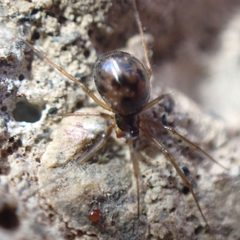
Tenuiphantes zelatus is a small sheetweb spider in the Linyphiidae, originally described by Zorsch in 1937. It is known from scattered records across northern North America, particularly in western and central Canada. Like other members of its family, it constructs flat, horizontal sheet webs for prey capture. The species remains poorly documented in scientific literature beyond basic taxonomic and distributional records.
Pronunciation
How to pronounce Tenuiphantes zelatus: /ˌtɛ.niːuˈfæn.teɪz zɛˈlɑː.təs/
These audio files are automatically generated. While they are not always 100% accurate, they are a good starting point.
Identification
Identification to level requires examination of genitalia under magnification. Tenuiphantes zelatus can be distinguished from by subtle differences in male palpal and female epigynal structures, though these characters require knowledge of Linyphiidae . The Tenuiphantes generally comprises small-bodied spiders with relatively unpatterned, pale to brownish coloration.
Images
Distribution
Recorded from western and central Canada including Alberta, British Columbia, and Manitoba. Distribution records suggest a northern North American range extending into the United States, though specific US state records are not confirmed in available sources.
Behavior
Constructs sheet webs—flat, horizontal silk platforms with a retreat area and threads above—as is characteristic of the Linyphiidae.
Similar Taxa
- Other Tenuiphantes speciesCongeneric share similar small size, pale coloration, and sheetweb-building ; reliable separation requires genitalic examination.
- Other Linyphiidae generaMany sheetweb spiders in Linyphiidae overlap in general ; Tenuiphantes typically have distinctive dental morphology on the and specific trichobothrial arrangements on legs.
More Details
Taxonomic history
Originally described as Lepthyphantes zelatus by Zorsch in 1937, later transferred to Tenuiphantes. The Tenuiphantes was erected to accommodate previously placed in Lepthyphantes that share a distinct set of morphological characters.