
Tenuiphantes
Saaristo & Tanasevitch, 1996
Species Guides
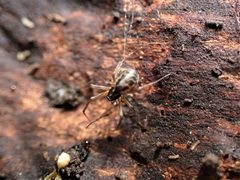
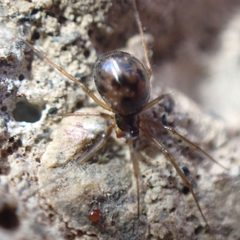
5Tenuiphantes is a of sheet-weaving spiders ( Linyphiidae) comprising 44 described as of 2019. The genus was established by Saaristo and Tanasevitch in 1996 to accommodate species previously placed in other genera, particularly within the Lepthyphantes complex. Species occur across diverse in the Northern Hemisphere and have been introduced to multiple Southern Hemisphere locations, including New Zealand, Chile, and Argentina.
Pronunciation
How to pronounce Tenuiphantes: /ˌtɛ.njuːˈfæn.teɪz/
These audio files are automatically generated. While they are not always 100% accurate, they are a good starting point.
Identification
Tenuiphantes are distinguished from related linyphiid primarily by genitalic characters, particularly male palpal structure and female epigynal . The genus was separated from Lepthyphantes based on detailed morphological analysis. External somatic characters are generally inconspicuous and species identification typically requires microscopic examination of reproductive structures. Body size is small to minute, consistent with other sheet-web weavers.
Images
Habitat
occupy varied terrestrial including grasslands, forest litter, alpine meadows, and coastal zones. Several species show affinity for montane environments, with records from high elevations in the Himalayas and European mountain ranges. The type species T. tenuis demonstrates broad habitat , facilitating its establishment in introduced ranges.
Distribution
Native distribution spans the Palearctic region from Western Europe through Russia and Central Asia to East Asia, with additional native in North Africa, the Middle East, and the Caucasus. The has been introduced to North America, South America (Argentina, Chile), and Oceania (New Zealand, Micronesia). Notable disjunctions include isolated on oceanic islands (Canary Islands, Azores, Madeira).
Behavior
As linyphiid spiders, construct horizontal sheet webs, often with a retreat at the margin or above the sheet. Prey capture involves from the sheet followed by subjugation. Web architecture varies among species but generally follows the -typical pattern of a dense, non-sticky sheet with supporting threads above.
Ecological Role
Function as of small flying and jumping insects in ground-level and vegetation-associated . Their sheet webs contribute to structure in grassland and forest floor . In introduced ranges such as New Zealand, T. tenuis has become established in modified , though its ecological impacts relative to native spider fauna have not been quantified.
Human Relevance
Similar Taxa
- LepthyphantesHistorically confused with Tenuiphantes; distinguished by differences in male palpal structure and female epigynal atrium . Tenuiphantes was erected specifically to accommodate not conforming to Lepthyphantes sensu stricto.
- BathyphantesOverlaps in body form and preference; separated by genitalic characters and details of cheliceral .
- MicrolinyphiaSimilar small body size and sheet-web construction; distinguished by shape and row configuration.
More Details
Taxonomic history
The was erected through revisionary work on the Lepthyphantes complex, a historically problematic group of small linyphiids. The type Tenuiphantes tenuis (Blackwall, 1852) was previously placed in Lepthyphantes. The genus name derives from Latin 'tenuis' (slender/thin) + Greek 'phantes' (appearance), referencing the delicate build typical of these spiders.
Biogeographic patterns
The distribution exhibits classic patterns of Palearctic radiation with subsequent human-mediated . The wide introduced range of T. tenuis contrasts with the restricted of island such as T. fulvus and T. striatiscapus (Canary Islands), T. miguelensis (Azores, Madeira), and T. leprosoides (Canary Islands). Himalayan species (T. altimontanus, T. crassus, T. plumipes) represent high-elevation specializations.