
Microlinyphia
Gerhardt, 1928
platform spider
Species Guides
4- Microlinyphia dana(Dana Sheet-web Micro-weaver)
- Microlinyphia impigra(Diligent Platform Sheetweaver)
- Microlinyphia mandibulata(Common Threaded Sheetweaver)
- Microlinyphia pusilla(Platform spider)
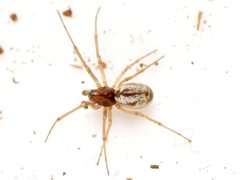
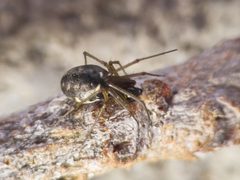
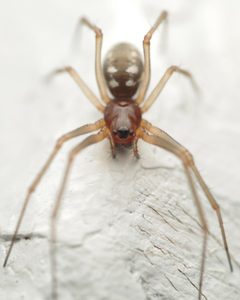
Microlinyphia is a of dwarf spiders in the Linyphiidae, first described by U. Gerhardt in 1928. The genus includes thirteen and one as of October 2025. Members are commonly known as "platform spiders" due to their distinctive sheet-web architecture. Males possess a notable circular filament called an embolus on the , a key diagnostic feature.
Pronunciation
How to pronounce Microlinyphia: //ˌmaɪkroʊlɪnˈɪfɪə//
These audio files are automatically generated. While they are not always 100% accurate, they are a good starting point.
Identification
The is readily identified in males by the circular, filamentous embolus extending from the —the channel through which sperm travels during mating. This hair-like structure is visible in images and distinguishes Microlinyphia from other Linyphiidae genera. Females and immatures require examination of genitalic characters for definitive identification.
Images
Appearance
Small-bodied spiders typical of the Linyphiidae . Males possess a circular, hair-like filament (embolus) extending from the , visible under magnification. Females and males lack this structure. The spiders have the compact build characteristic of dwarf spiders.
Habitat
Found in grassy areas and low vegetation where flat, sheet-like webs are constructed close to the ground. Webs are built amid grasses and low plants, with the spider clinging upside down to the underside. Morning dew can make webs temporarily more visible.
Distribution
Records from Denmark (DK), Norway (NO), and Sweden (SE) in GBIF. Observations documented in North America, specifically Colorado and New Mexico, USA. The has a Holarctic distribution pattern.
Seasonality
active into late autumn in temperate regions; males wander in search of mates during fall. Activity extends into November in unseasonably warm conditions.
Life Cycle
Females produce one or more sacs after mating. Egg sacs provide insulation for embryos and spiderlings during cold months. Eggs often hatch within the sac; spiderlings remain until favorable weather conditions permit .
Behavior
Females and males construct flat, sheet-like platform webs close to the ground and cling upside down to the underside. Males abandon webs in autumn to wander in search of mates. Ballooning for has been observed in related small spiders, though not specifically documented for this .
Ecological Role
Predatory controlling of small insects in grassland and low vegetation . Serves as prey for larger and vertebrates.
Human Relevance
Occasionally encountered in outdoor restrooms and similar structures near natural . No documented economic or medical significance.
Similar Taxa
- MetepeiraBoth build sheet-like webs, but Metepeira (labyrinth spiders) constructs a combination orb web and tangled snare with a tubular retreat, whereas Microlinyphia builds a simple flat platform web without a retreat.
- Other Linyphiidae generaMicrolinyphia males are distinguished by the circular embolus on the ; other lack this specific structure or possess differently shaped embolic filaments.
More Details
Etymology
The "platform spider" refers to the flat, sheet-like web architecture. The name combines the Greek prefix "micro-" (small) with "Linyphia," the type genus of the Linyphiidae, indicating small relatives of that group.
Taxonomic note
The was established by German arachnologist U. Gerhardt in 1928. Thirteen and one are currently recognized, though species-level identification requires detailed examination of genitalic .